icon-dot-gov icon-https Locked padlock icon
USA Flag
An official website of the United States government. Close/span>

Dollar Coins

The dollar coin has a rich history, dating back to the founding days of our Nation.

Congress established the U.S. Mint with the passage of the Coinage Act of 1792. Our new Nation adopted the dollar as the standard money unit based on the popularity of the Spanish milled dollar, which circulated heavily in the colonies due to its consistent metal content. The Act regulated coinage by specifying metallic contents and denominations. The act also directed that coins have an “impression emblematic of liberty,” the inscription “LIBERTY,” and the year of coinage on the obverse side. The reverse of silver coins, such as the dollar, should have a representation of an eagle and the inscription, “UNITED STATES OF AMERICA.”

Coinage of silver dollars and gold eagle coins began shortly after the Coinage Act of 1792. But at first, these coins didn’t circulate. U.S. gold coins were undervalued compared to silver, so they were mostly exported and melted. Silver dollars were also exported for use in international trade or stored as bullion.

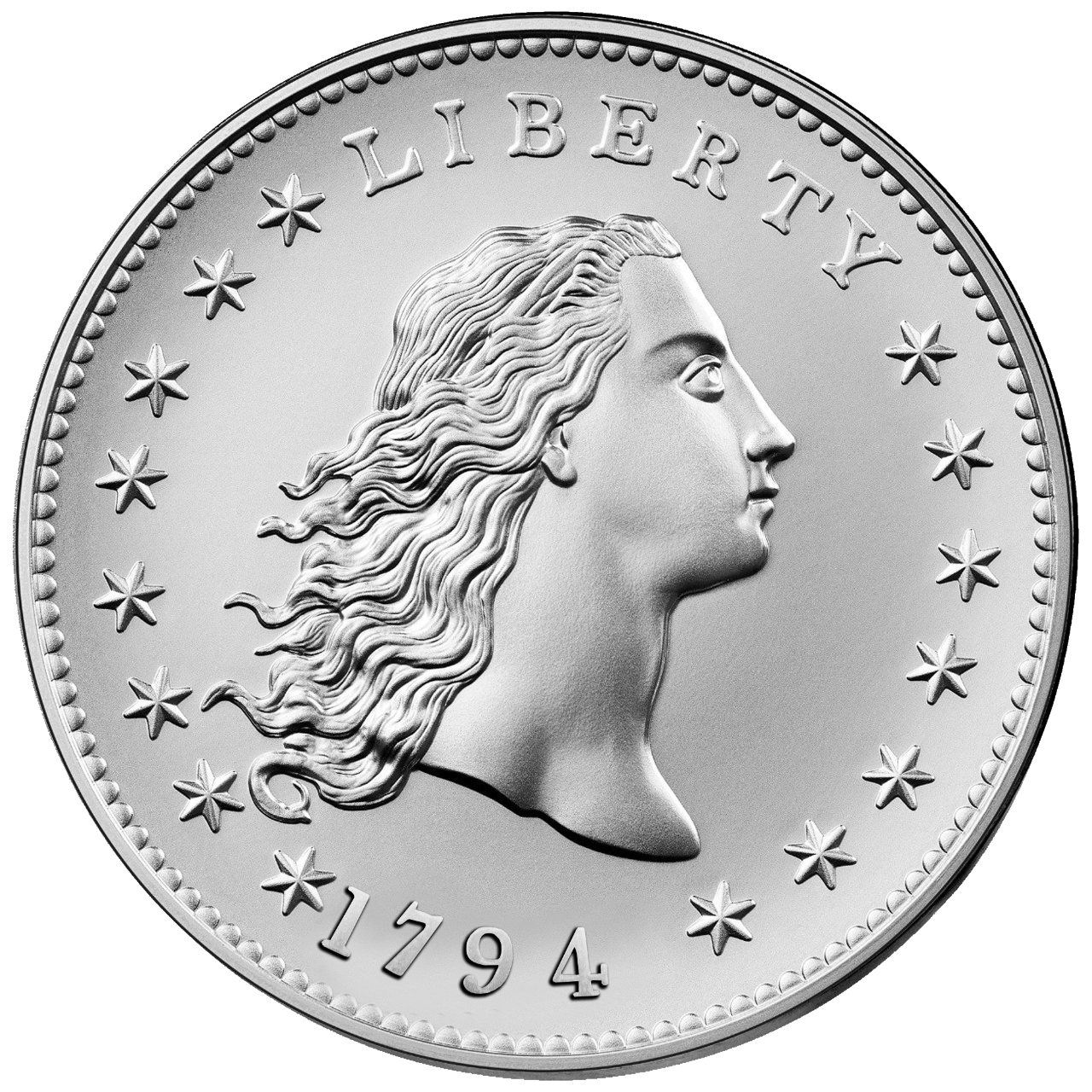
First struck in 1794 by the first U.S. Mint in Philadelphia, the original dollar used the Flowing Hair design, which was resurrected by the Mint for its 230th Anniversary Flowing Hair Gold Coin & Silver Medal in 2024.
Flowing Hair Silver Dollar (1794-1795)

Flowing Hair Obverse

In 1794, the first Mint Engraver, Robert Scot, started designs for the silver dollar coin. The obverse featured a depiction of liberty with flowing hair on the obverse, similar to the Mint’s first coin, the 1793 Flowing Hair cent.


Scot then engraved dies for the designs to conduct a trial strike on copper. After that strike, he updated the obverse to include 15 stars surrounding Liberty, representing the fifteen states that had ratified the Constitution by 1794.

Flowing Hair Obverse


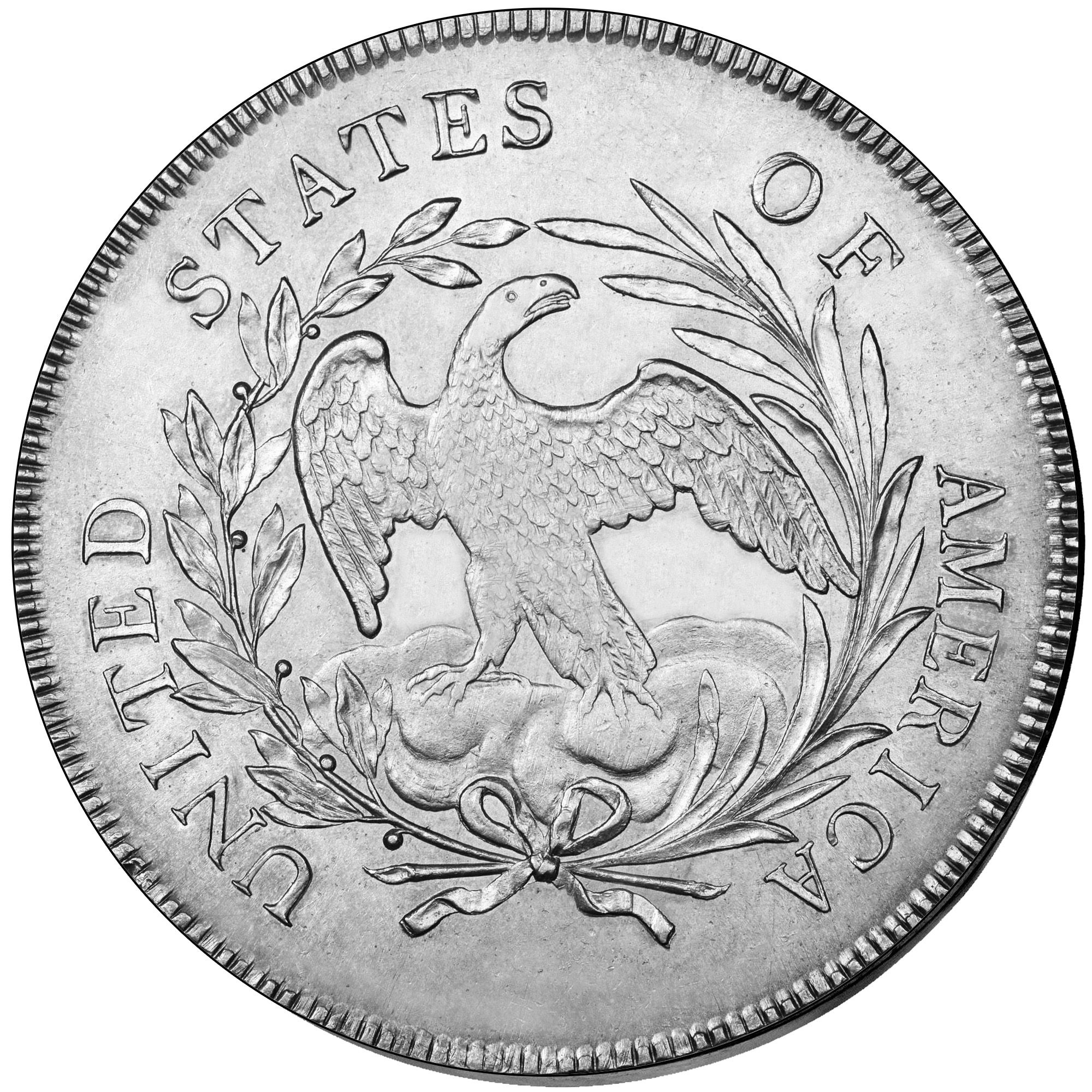
The reverse design depicts a wreath surrounding an eagle with spread wings in the center, an early predecessor of the American heraldic eagle. The inscription is “UNITED STATES OF AMERICA.”

The first silver dollars were struck on October 15, 1794. The Mint made only 1,758 silver dollars for the year 1794. Production increased the next year after the Philadelphia Mint installed a larger coin press.

Draped Bust Silver Dollar (1795-1804)

Mint Engraver Robert Scot also sculpted the successor to the Flowing Hair Dollar in 1795. The Draped Bust Dollar features a more refined and elegant portrait of Liberty, facing right. She wears a bow in her hair and a scooping dress that drapes across her shoulders and bustline.

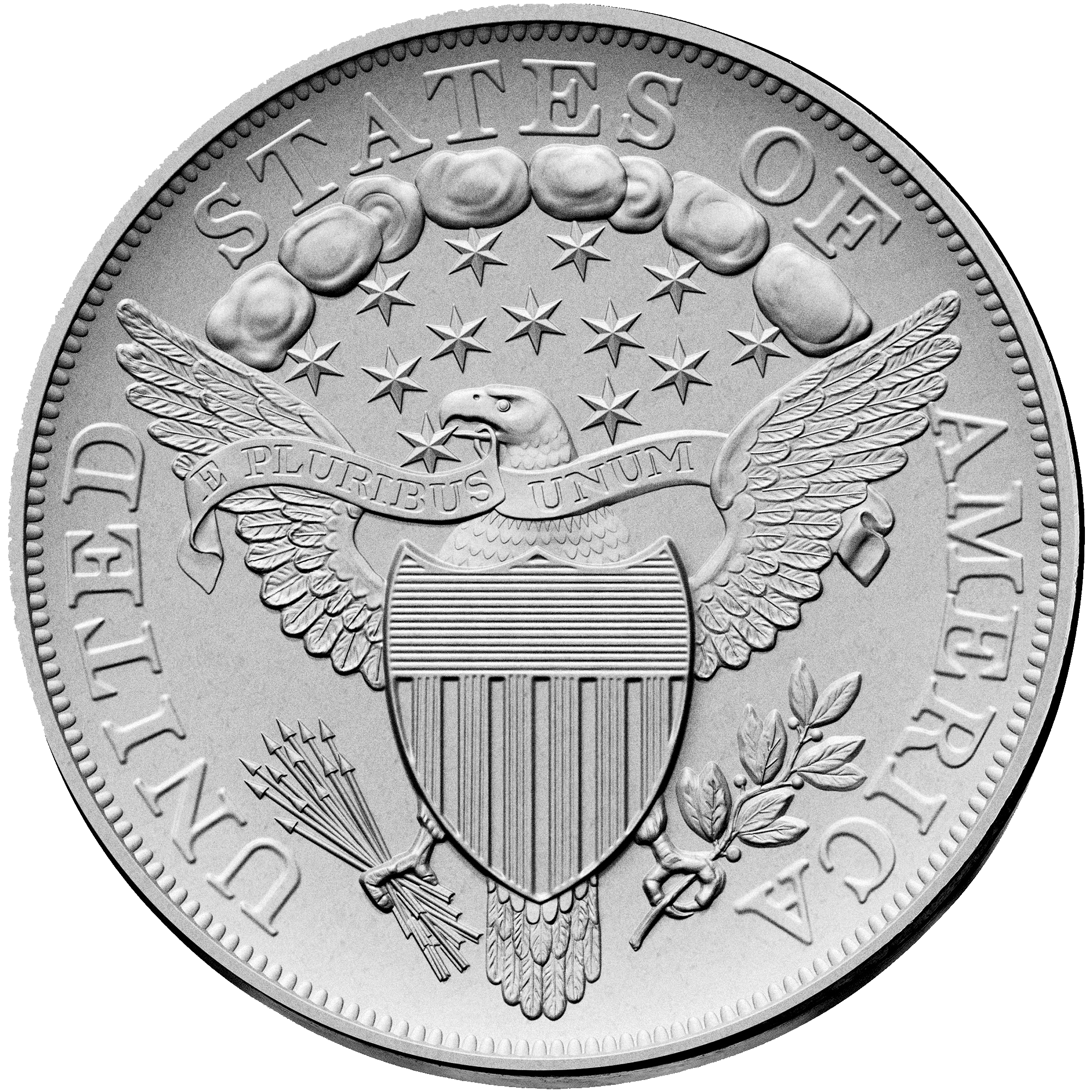
The "Small Eagle" reverse was used from 1795-1798, being replaced by the "Heraldic Eagle," which was used until production ceased in 1803 due to the rising price of silver bullion. The latter resembles the Great Seal of the United States. Although some coins struck in 1803 were meant to be circulated the following year, and thus had an "1804" date, no such coins were struck in the year 1804.

Silver dollar production was suspended after 1803 and would not resume on a large scale until 1840. 

1804 Silver Dollar (1834-1835, 1857-1859)

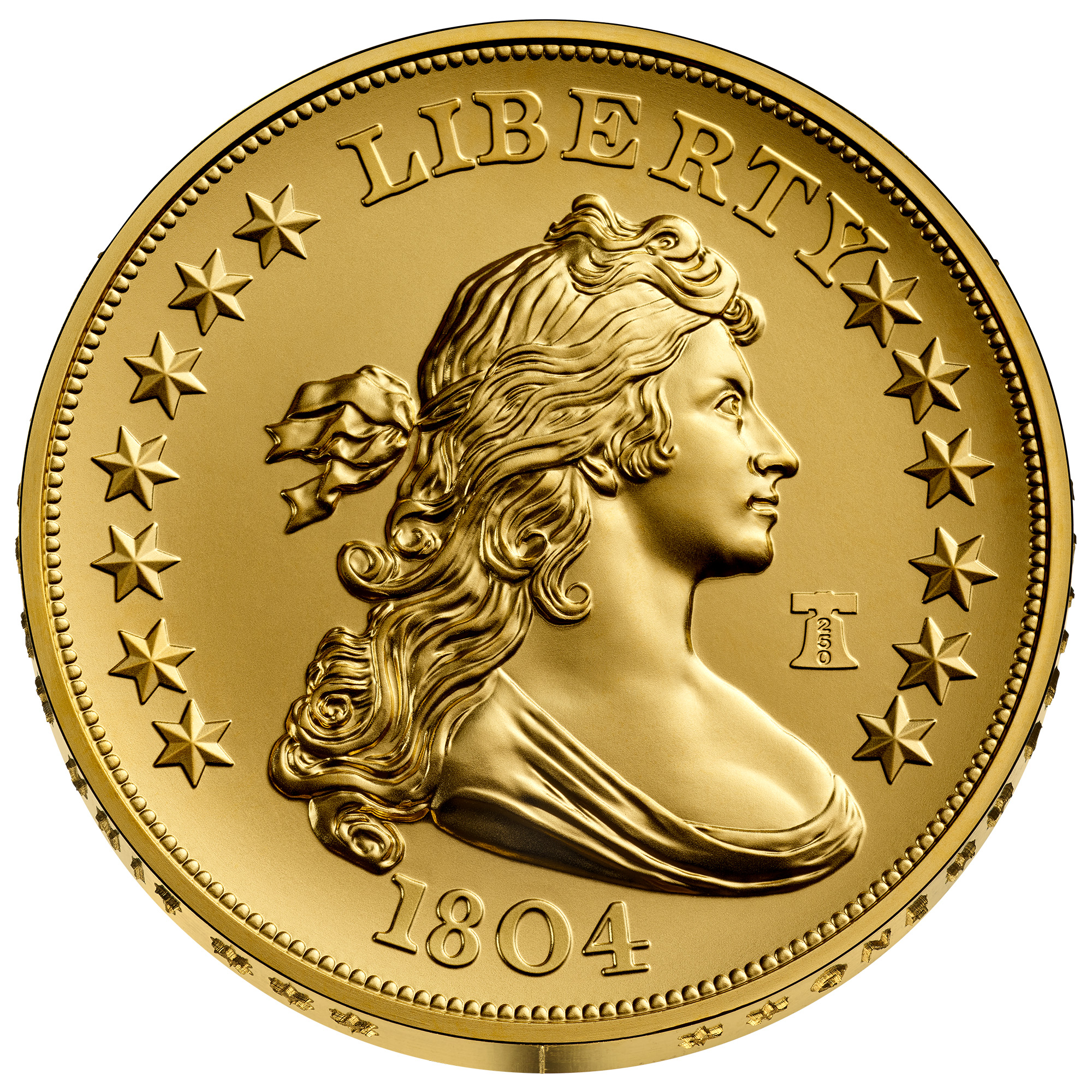
While the ban on silver dollar production had been lifted in 1831, no dollars were officially minted for circulation in the 1830s. In 1834, President Andrew Jackson requested coins be produced as part of a special collection to be gifted to foreign dignitaries including the King of Siam and Sultan of Oman. Since silver dollars had not been made for 30 years, the Mint created new dies using the last known design from 1804.

Eight coins are known to exist from the 1834-1835 time period, collectively called the Class I 1804 dollars.

From 1857 to 1859, at least seven more 1804 silver dollars were struck, which varied slightly from the first class. One unauthorized restrike was created without the use of a collar device, which meant it had a plain edge instead of lettered edge. This is known as the Class II 1804 Silver Dollar.

At least six Class III dollars were struck in the late 1850s, no earlier than 1857. Four Class III dollars known to exist were artificially worn to give them the appearance of coins in circulation. All have the edge lettering missing from the Class II specimen.

in 2026, the Mint will revive the 1804 Silver Dollar design for a Best of the Mint Gold Coin & Silver Medal Set.

Seated Liberty Silver Dollar (1840-1873)

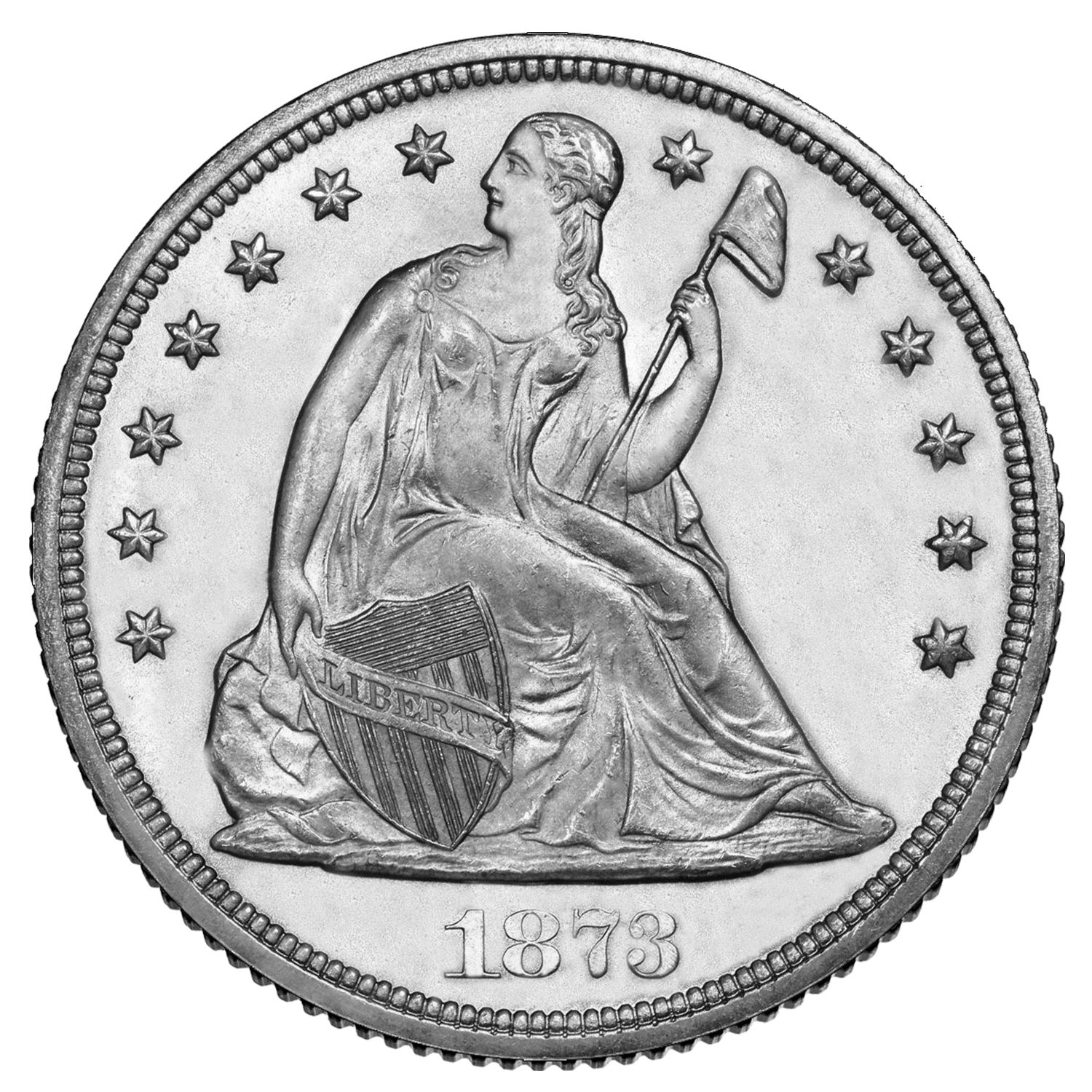
In 1835, Mint Director Robert M. Patterson, an appointee of President Jackson, solicited renowned portrait painter Thomas Sully to design a seated liberty for a new silver dollar obverse and artist Titian Peale for the new silver dollar reverse. Mint assistant engraver Christian Gobrecht then sculpted the Seated Liberty Silver Dollar based on those artists' sketches, adapting them into several variations of the coin throughout the ensuing years.

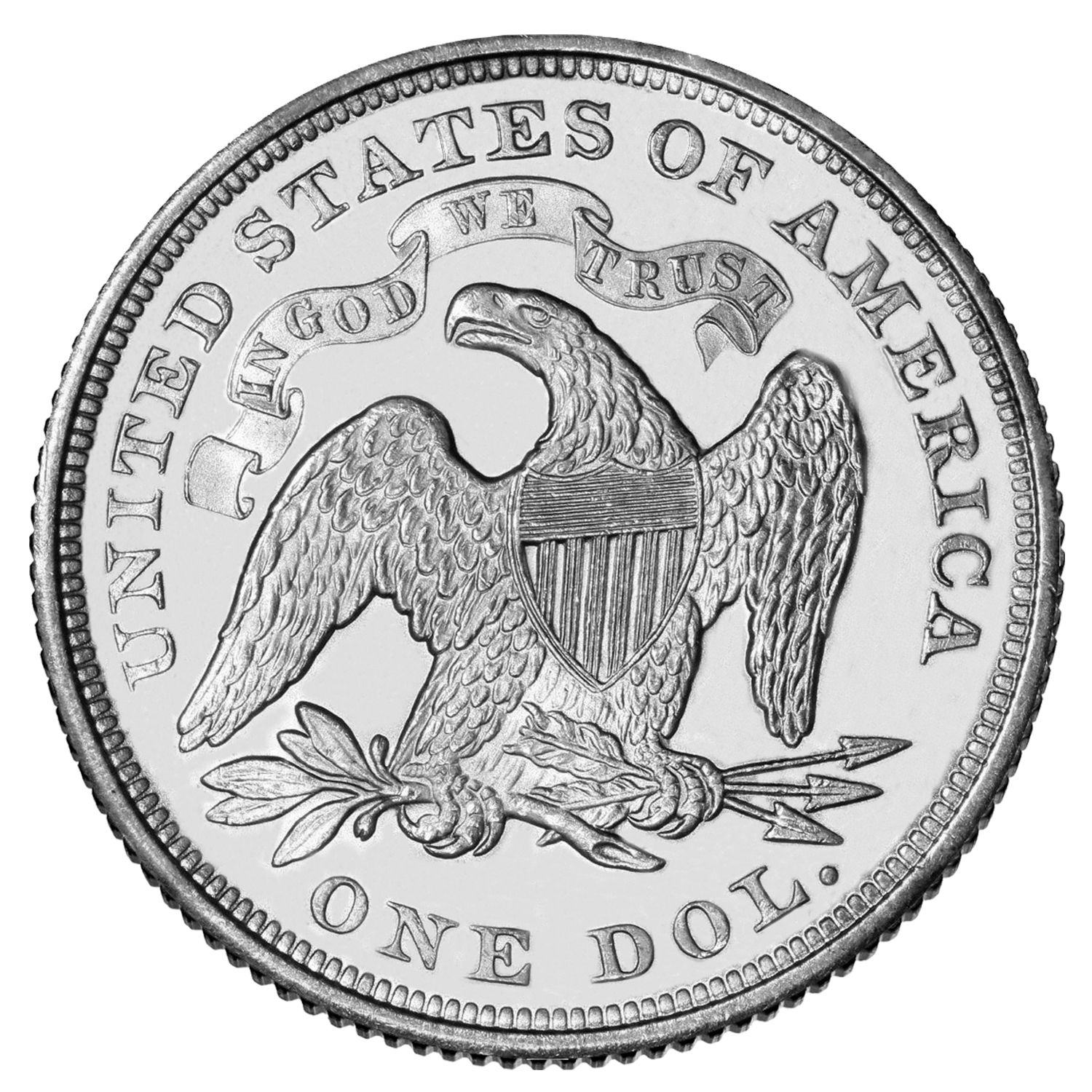
Although not widely circulated, the "Gobrecht Dollar" variations in the 1830s showed a soaring eagle on the reverse in either a starry or plain sky. This was replaced in 1840, when the coin went into widespread circulation, with a depiction of an eagle in front of a union shield.

In 1866, the motto "IN GOD WE TRUST" was added to the reverse on a banner above the eagle's head, paying tribute to the desire for unity felt after the close of the Civil War.

Gold Dollar (1849-1889)

Inspired by the California Gold Rush in 1849, the Mint introduced a gold dollar, the smallest gold denomination the U.S. government ever minted. In the early years, the coin's obverse featured the same Liberty portrait as the $20 Double Eagle Gold Coin.

This would change in 1854, when the Mint introduced Type II gold dollars, with the "Small Head Indian Princess" obverse. In 1856, the Type III "Large Head Indian Princess" Gold Dollar was issued, and this desigin would last until the coin ceased production in 1889.

The fourth Mint Engraver, James Barton Longacre, designed the obverses and reverses for all three variants. Longacre also designed well-known coins such as the "Indian Head" cent.

Small but Mighty!

Gold Coins Collage Graphic

Did you know? The Type I Liberty Head Gold Dollar is the smallest circulating coin the Mint has ever produced. Coming in at only 13 mm in diameter, it is smaller than today's penny, which has a diameter of 19 mm. Even the modern dime is larger with a diameter of 17.9 mm. By comparison, the modern $1 coin is a giant, having a diameter of 26.5 mm.


Type II and III Gold Dollars are only slightly larger at 15 mm in diameter. 

Gold Coins Collage Graphic

Morgan Silver Dollar (1878-1904, 1921)

The United States Mint first struck the Morgan Silver Dollar from 1878 to 1904 and again in 1921. This coin circulated through American hands during the Nation’s westward expansion, industrial revolution, and ultimate rise to prominence on the world stage. Morgan Silver Dollars are a favorite among numismatists and are some of the most collected American coins in the world.

The Morgan Dollar was designed by Mint Engraver George T. Morgan (1845-1925). This iconic silver dollar represented the country’s westward expansion and industrial development in the late 19th century.

The obverse features Liberty in profile. A cap, flora, and crown incused with the word “LIBERTY” adorn her head, while 13 stars, “E PLURIBUS UNUM,” and the year of issuance encircle her. The reverse (tail) depicts an eagle with outstretched wings clasping arrows and an olive branch and accompanied by a wreath. Reverse inscriptions are “UNITED STATES OF AMERICA,” “IN GOD WE TRUST,” and “ONE DOLLAR.”

1921 Morgan and Peace Dollars

Peace Silver Dollar (1921-1928, 1935)

The Peace Silver Dollar, first struck from 1921 to 1928 and again from 1934 to 1935, marked the end of World War I and the era of peace and prosperity that followed. True to its name, the Peace Silver Dollar features an eagle clutching an olive branch on its reverse side, symbolizing the United States’ return to peacetime.

In December 1921, Treasury Secretary Andrew Mellon approved a dollar coin design to mark peace between the United States and Germany. Designed by renowned Italian American Sculptor Anthony de Francisci (1887-1964), the Peace Dollar replaced the Morgan Dollar and symbolized the country’s coming of age as an international power, recognized the sacrifices made by its citizens in World War I, and celebrated victory and peace. The Mint reintroduced the Peace Dollar in 2021 as a collectible coin to celebrate its 100th anniversary.

The obverse (heads) features Liberty in profile with a radiant crown. Obverse inscriptions are “LIBERTY,” “IN GOD WE TRUST,” and the year of issuance. The reverse (tail) depicts an eagle at rest holding an olive branch above the inscription “PEACE.” Additional inscriptions are “UNITED STATES OF AMERICA,” “E PLURIBUS UNUM,” and “ONE DOLLAR.”

First Clad Dollar Coins (1971-1981, 1999)

The Eisenhower Dollar (1971-78) was the first dollar coin issued by the Mint since the Peace dollar series ended in 1935. Mint Chief Engraver Frank Gasparro designed both obverse and reverse.

The obverse depicts President Dwight D. Eisenhower facing left, while the reverse honors the 1969 Apollo 11 Moon landing, based on the mission patch designed by astronaut Michael Collins. This was the first circulating dollar coin produced by the Mint which did not contain silver or gold.

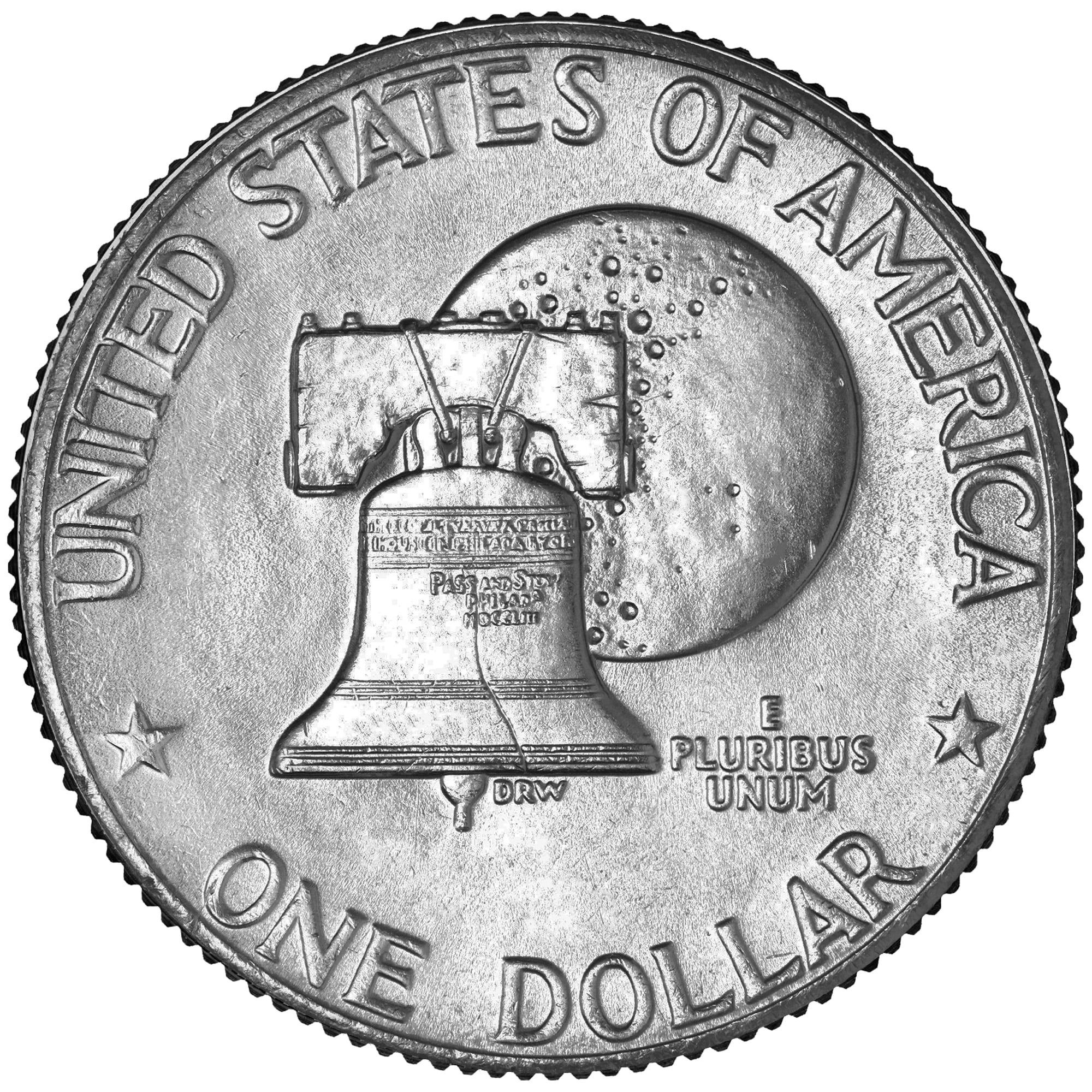
From 1975-76, the Mint issued a modified dollar coin as part of the Bicentennial Coin Program, with a reverse depicting the moon and the Liberty Bell.

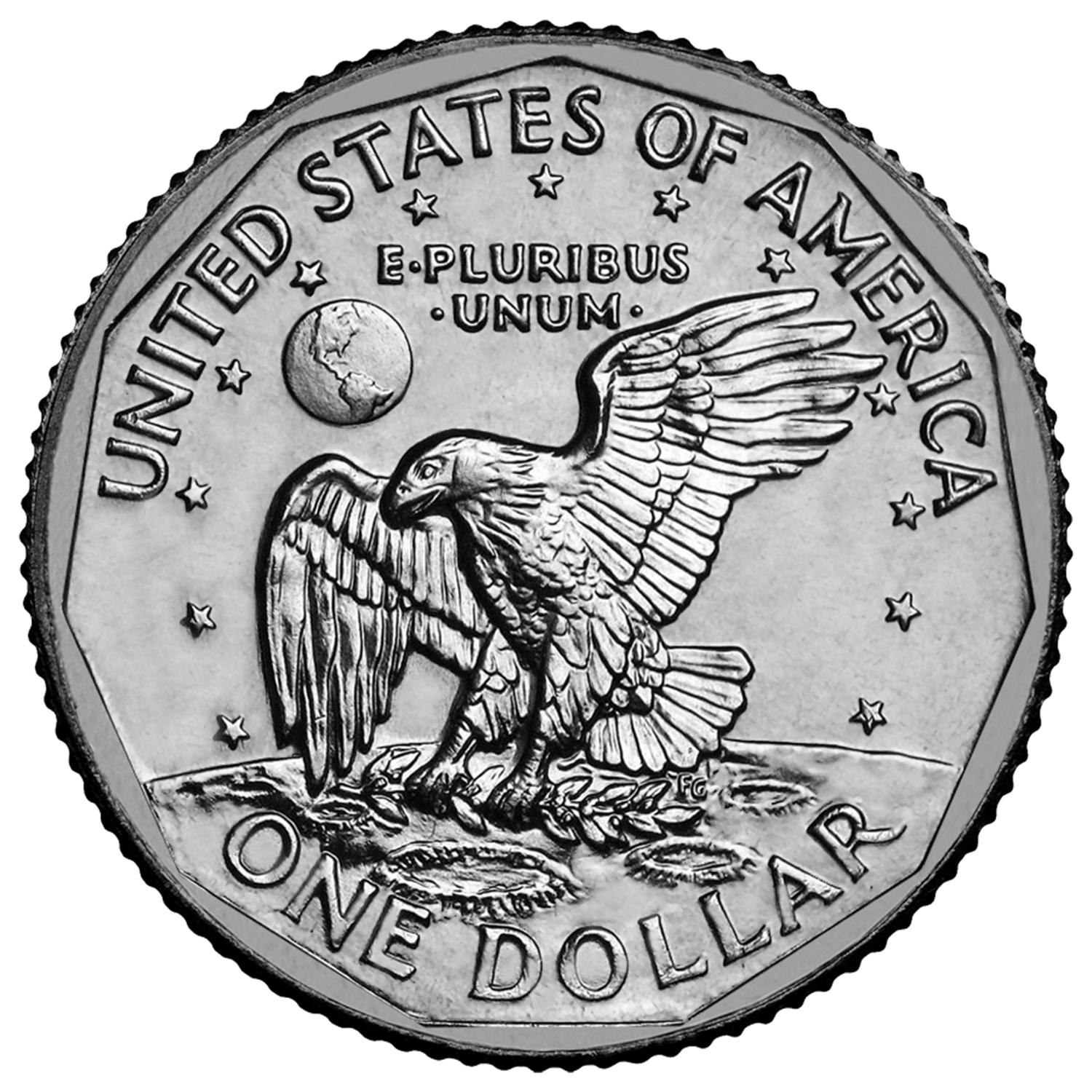
The Susan B. Anthony Dollar (1979-81, 1999) marked the first time that a non-mythical woman appeared on a U.S. circulating coin. The coin replaced the Eisenhower Dollar and honored women’s suffrage leader Susan B. Anthony, whose portrait is on the obverse. The reverse shows the Apollo 11 mission patch design, first used for the Eisenhower Dollar reverse.

Modern Dollar Coins (2000-Present)

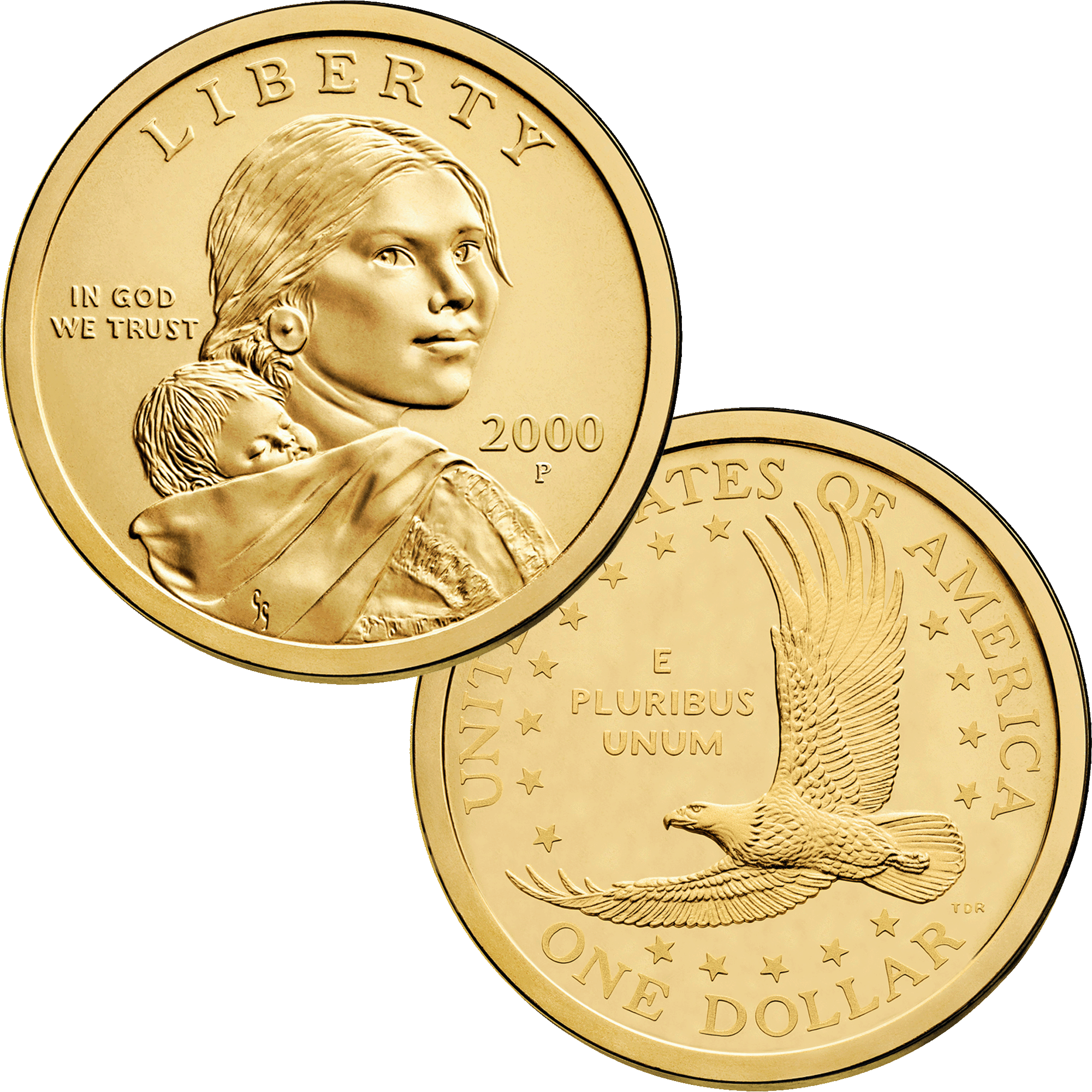
The U.S. Mint issued the Sacagawea Golden Dollar from 2000 to 2008. It was the first dollar made with an outer layer of manganese brass, giving it a golden color. In 2009, the Sacagawea Golden Dollar transitioned to the Native American $1 Coin Program using the Sacagawea obverse paired with different reverse designs each year.

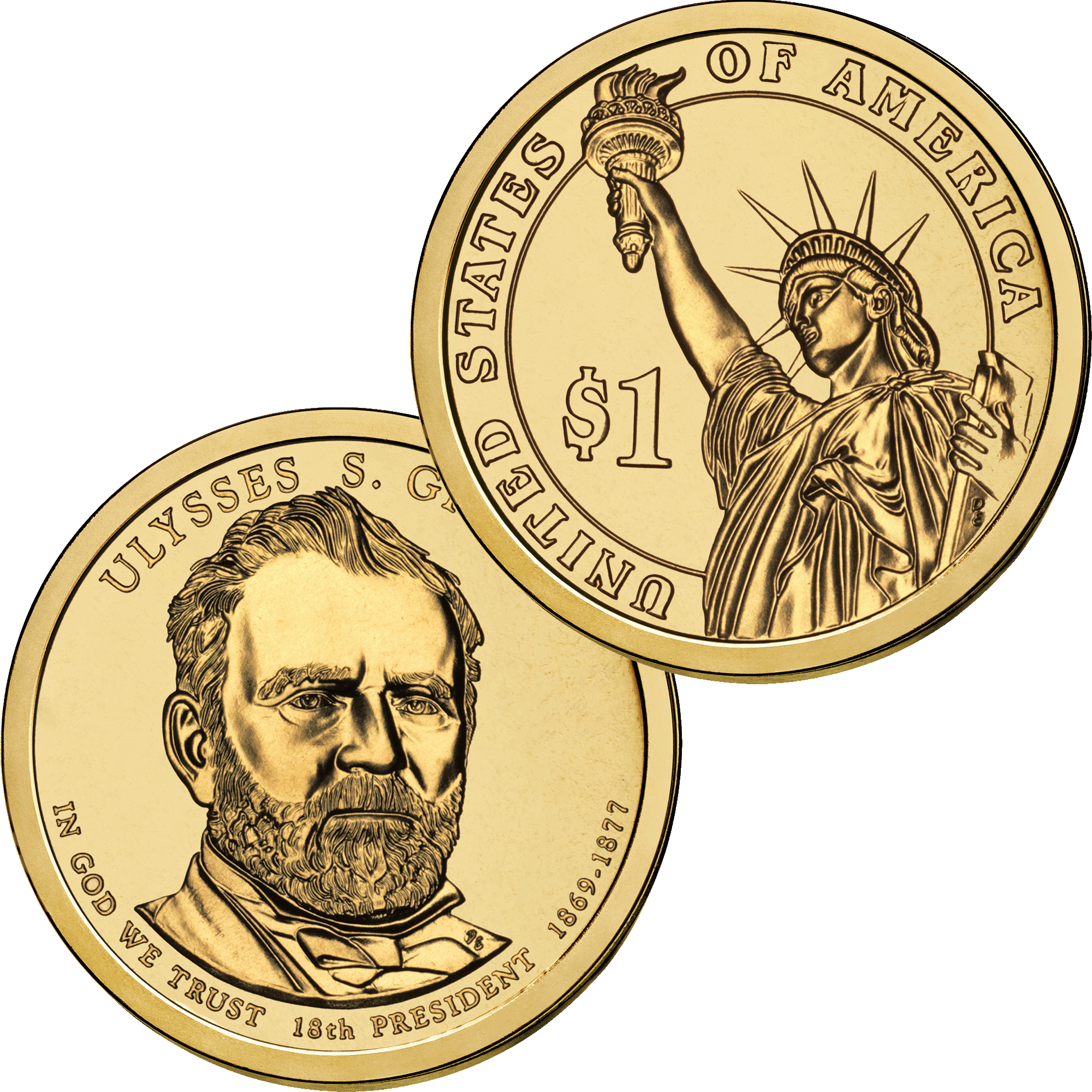
Beginning in 2007, the United States Mint honored our Nation’s presidents by issuing $1 coins featuring their images in the order that they served. The Presidential $1 Coin Program sought to revitalize the design of United States coins and return circulating coinage to its position as an object of aesthetic beauty.

From 2007 to 2016, the Mint issued four Presidential $1 Coins per year. However, in December 2011, the Secretary of the Treasury directed the United States Mint to suspend circulating Presidential $1 Coins, so the coins were continued as collectible items from that point on.

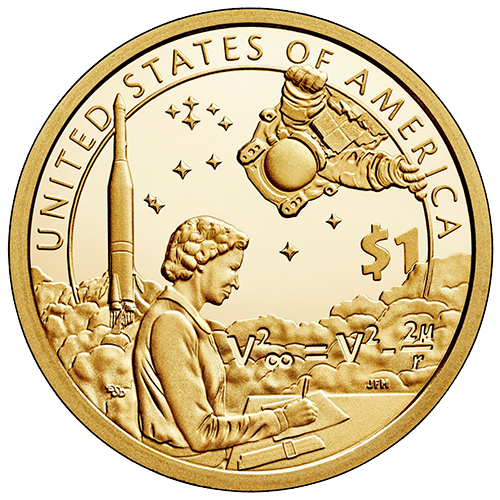
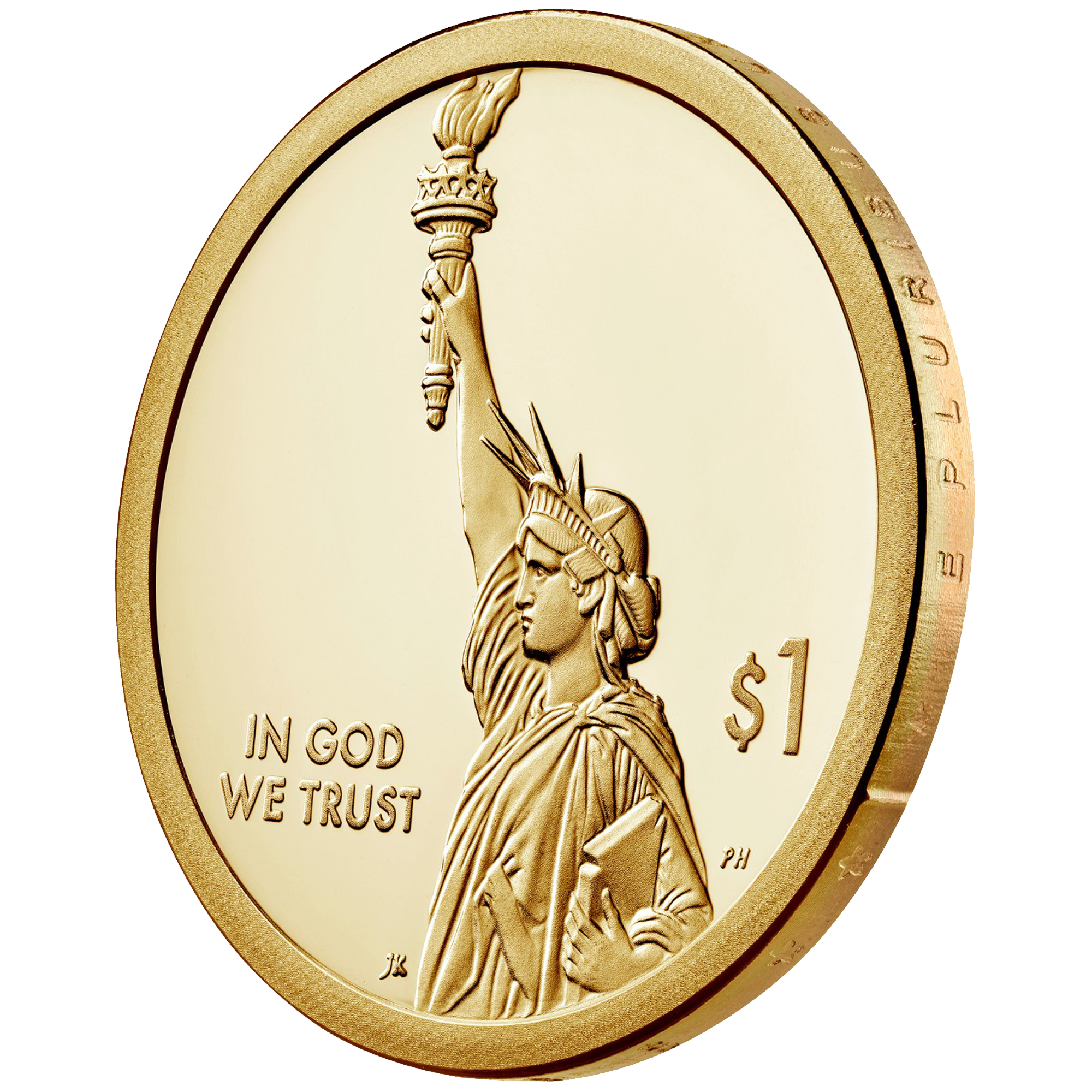
The current American Innovation $1 Coin Program honors innovation by issuing dollar coins for each state, district, and territory in the Union. Four new coins with distinctive reverse designs will be released each year from 2019 through 2032. Like other modern dollar coins, American Innovation dollars are legal tender but not produced for general circulation.