

Isaac S. Hathaway
Obverse & Reverse
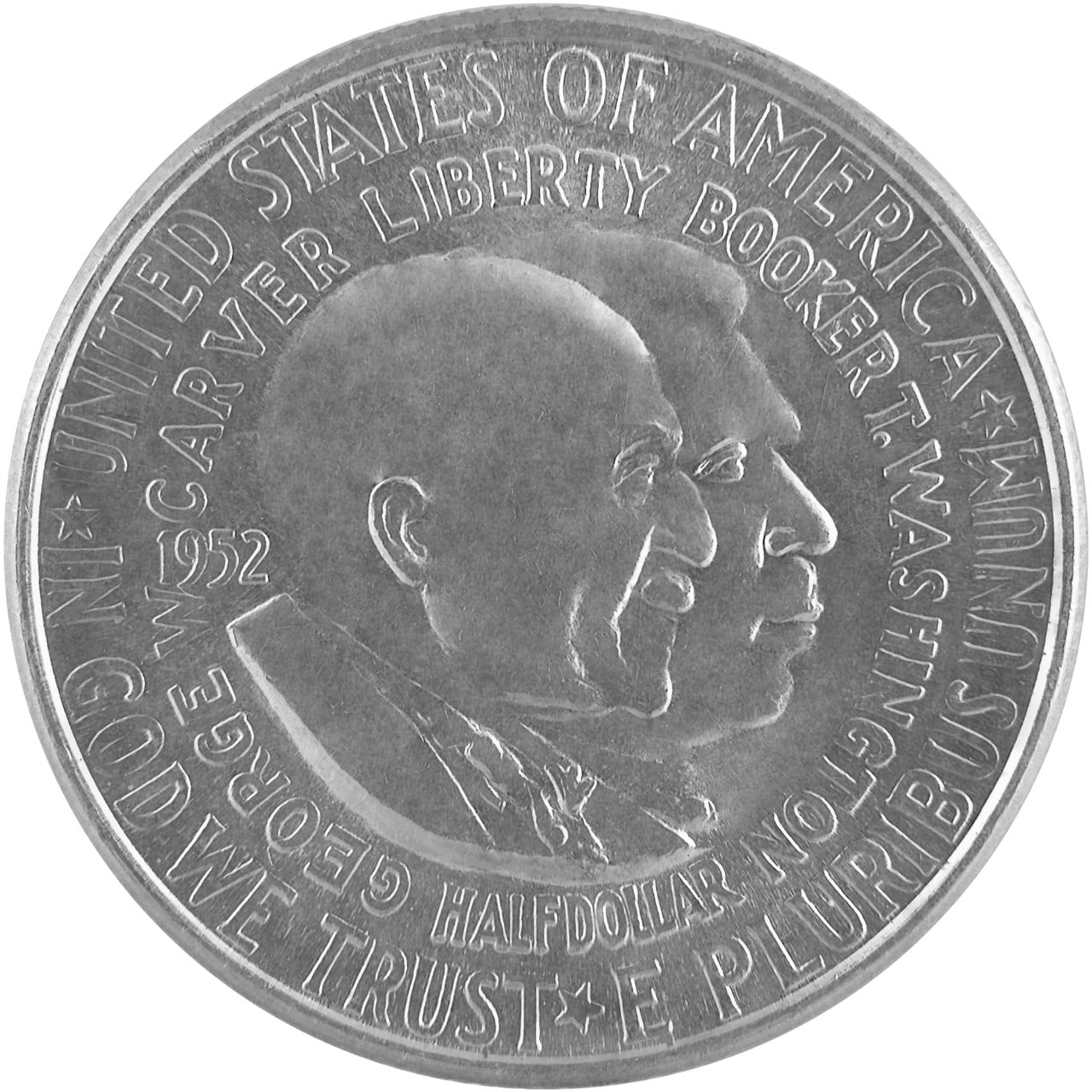 1952 George W. Carver Booker T. Washington Commemorative Silver Half Dollar Coin Obverse
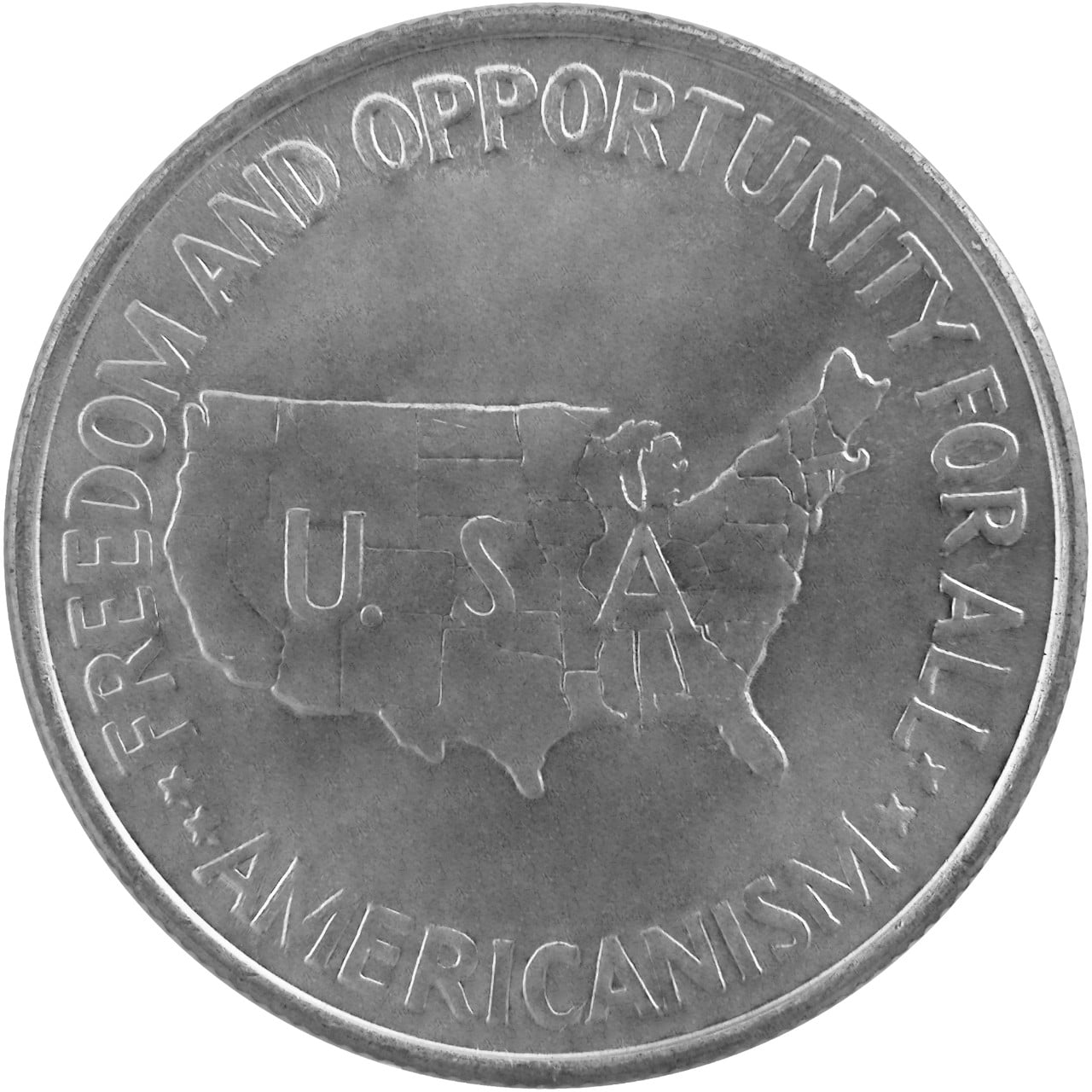 1952 George W. Carver Booker T. Washington Commemorative Silver Half Dollar Coin Reverse
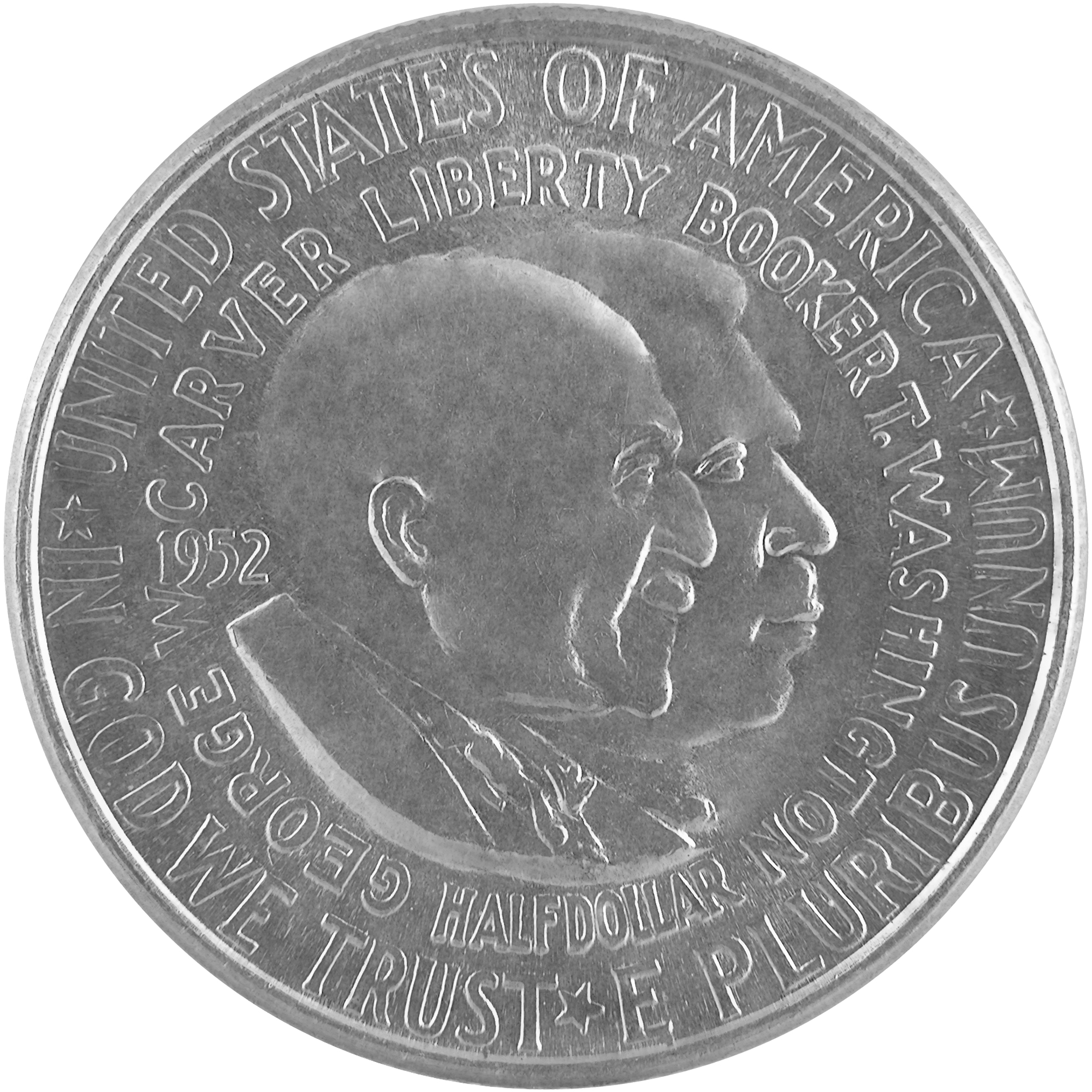
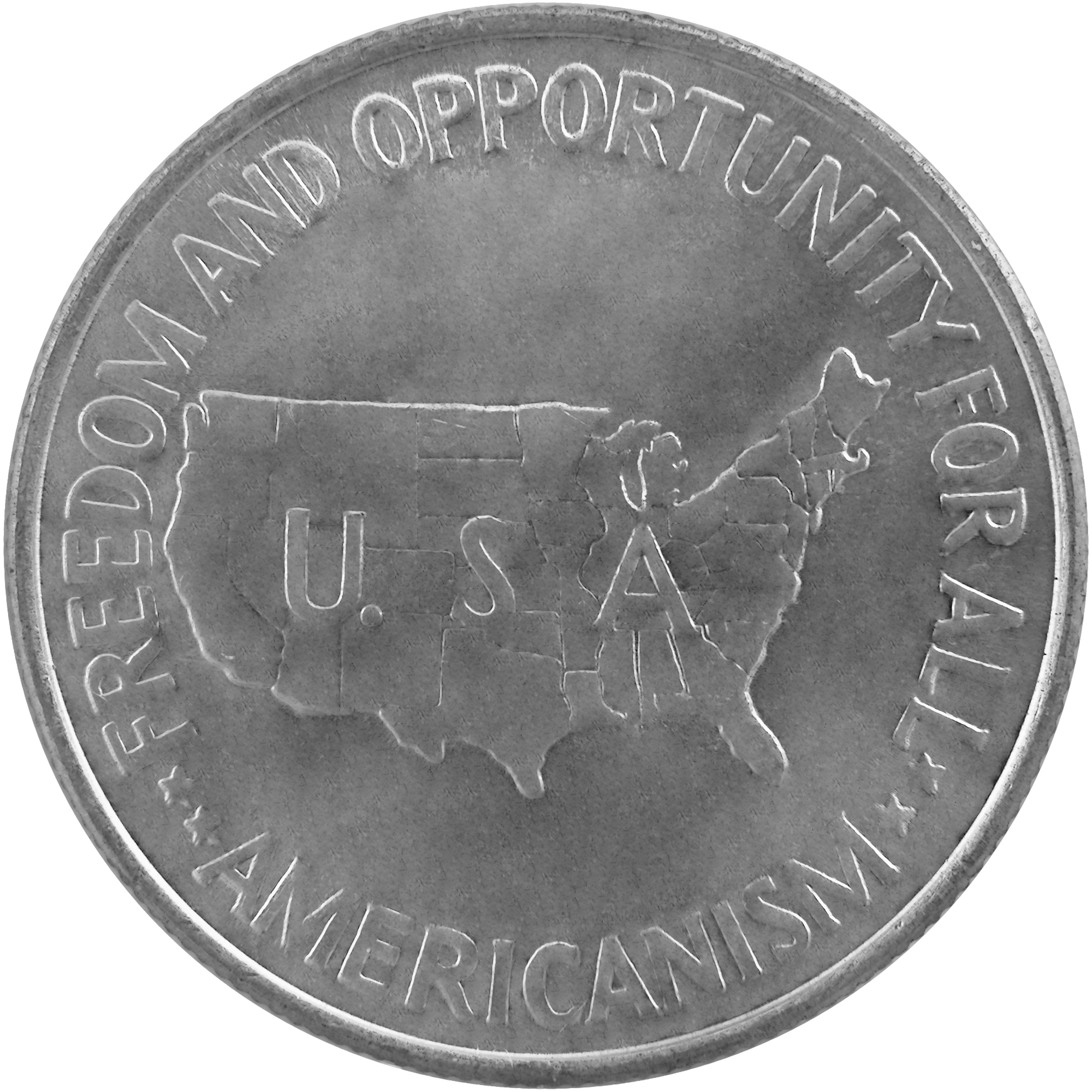
From 1951 to 1954, the U.S. Mint produced the George Washington Carver-Booker T. Washington Half Dollar. It commemorated the lives of George Washington Carver (1864-1943), an agricultural scientist and educator, and Booker T. Washington (1856-1915), founder of the Tuskegee Institute. The coin was the last commemorative coin made by the Mint until the modern Commemorative Coin Program began in 1982.
The Public Law stated that the coins were to be "issued at par, and only upon the request of the Booker T. Washington Birthplace Memorial (established at the birthplace of Booker T. Washington in Franklin County, Virginia) and the George Washington Carver National Monument Foundation (established at the birthplace of George Washington Carver in Diamond, Missouri)."
The coins were to be "issued in such numbers, and at such times, as shall be requested by the Booker T. Washington Birthplace Memorial and the George Washington Carver National Monument Foundation, and upon payment to the United States of the face value of such coins, except that none of such coins shall be issued after August 7, 1954."
The coins "may be disposed of at par or at a premium by banks or trust companies selected by the Booker T. Washington Birthplace Memorial and the George Washingon Carver National Monument Foundation, and all proceeds therefrom shall be used, in the manner decided upon by the Booker T. Washington Birthplace Memorial and the George Washington Carver National Monument Foundation to oppose the spread of communism among Negroes in the interest of the national defense."
The obverse features the profiles of George Washington Carver and Booker T. Washington.
The reverse depicts a simple outline map of the United States.