icon-dot-gov icon-https Locked padlock icon
USA Flag
An official website of the United States government. Close/span>

Coin Term Glossary

What are the words on a coin called? What's the difference between a blank and a planchet? What's a proof coin? Find answers to these questions and more below.

Whether you're new to coin collecting or a seasoned numismatist, our glossary page is a great resource for everything coins (and medals).


A | B | C | D | E | F | G | H | I | K | LM | N | OP | R | S | T | U | V | Y


An alloy is a mixture of two or more metals.

The American Numismatic Association (ANA) is a nonprofit educational organization that encourages the study of money throughout the world.

Annealing is the heating of blanks in a furnace to soften the metal for striking.

Annealing is the second step in the coin production process, after blanking. Annealing changes the physical properties of the metal to allow it to be shaped without breaking. Annealed blanks will hold the design better during striking.

To assay is to analyze metal to determine its purity. Watch this historical video on our YouTube channel to learn more about assay procedures and chemistry at the West Point Mint.

A bag mark (or "bag damage") on a coin is an abrasion or scuff caused by contact with other coins in a mint bag. Noticeable bag marks can affect a coin's grading, when its collectible value is assessed by a professional.

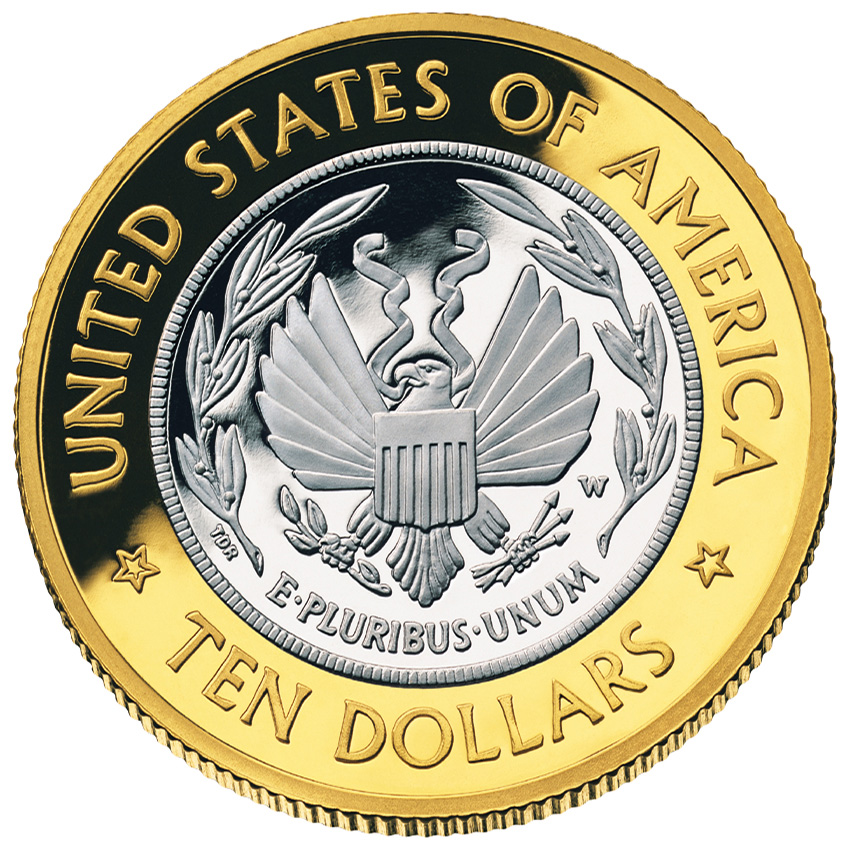
A bi-metallic coin is comprised of two different metals, bonded together. A good example from Mint history is the 2000 Library of Congress Commemorative Bi-Metallic $10 Coin.

A blank is a flat metal disc that will eventually become a coin.

Blanking is usually the first step in coin production. The U.S. Mint makes blanks for nickels, dimes, quarters, half dollars, and dollar coins. Blanks are made by feeding 1,500-foot metal coils through machines to cut out the circles, much like a cookie cutter.

What Is Bullion?

Bullion is precious metal such as gold, silver, platinum, or palladium shaped into a particular form for storage after testing for purity and weight. Examples of bullion include bars, ingots, and coins.

Bullion coins from the U.S. Mint are investment-grade coins that are valued by weight and fineness. Unlike commemorative or numismatic coins valued by limited mintage, rarity, condition, and age, bullion coins are purchased by investors seeking a simple and tangible means to own and invest in the gold, silver, platinum, and palladium markets.

Business strike refers to the type of strike used for coins in general circulation (as opposed to proof or uncirculated coins specially made for collectors).

The bust is a portrait on a coin, usually including the head, neck and upper shoulders.

Clad coins are coins that have a core and outer layer made of different metals.

Did you know? Since 1965, all circulating U.S. dimes, quarters, half dollars, and dollars have been clad. Despite the penny having a zinc core since 1982, it is not technically a clad coin. This is because it only has a thin outer coating of copper, as opposed to a true outer layer like other clad coins. The nickel is also not clad as it is an alloy of 25 percent nickel and 75 percent copper.

A coin is flat piece of metal issued by the government as money.

Did you know? People have been collecting coins for thousands of years, since at least Caesar Augustus. Although the U.S. Mint hasn't been around that long, we have been Connecting America through Coins since 1792.

A metal piece that restrains the expanding metal of a planchet during striking. Special collars can be used to create edge lettering and other designs on coins.

Congress authorizes commemorative coins that celebrate and honor American people, places, events, and institutions.

Although these coins are legal tender, they are not minted for general circulation. Each commemorative coin is produced by the United States Mint in limited quantity and is only available for a limited time.

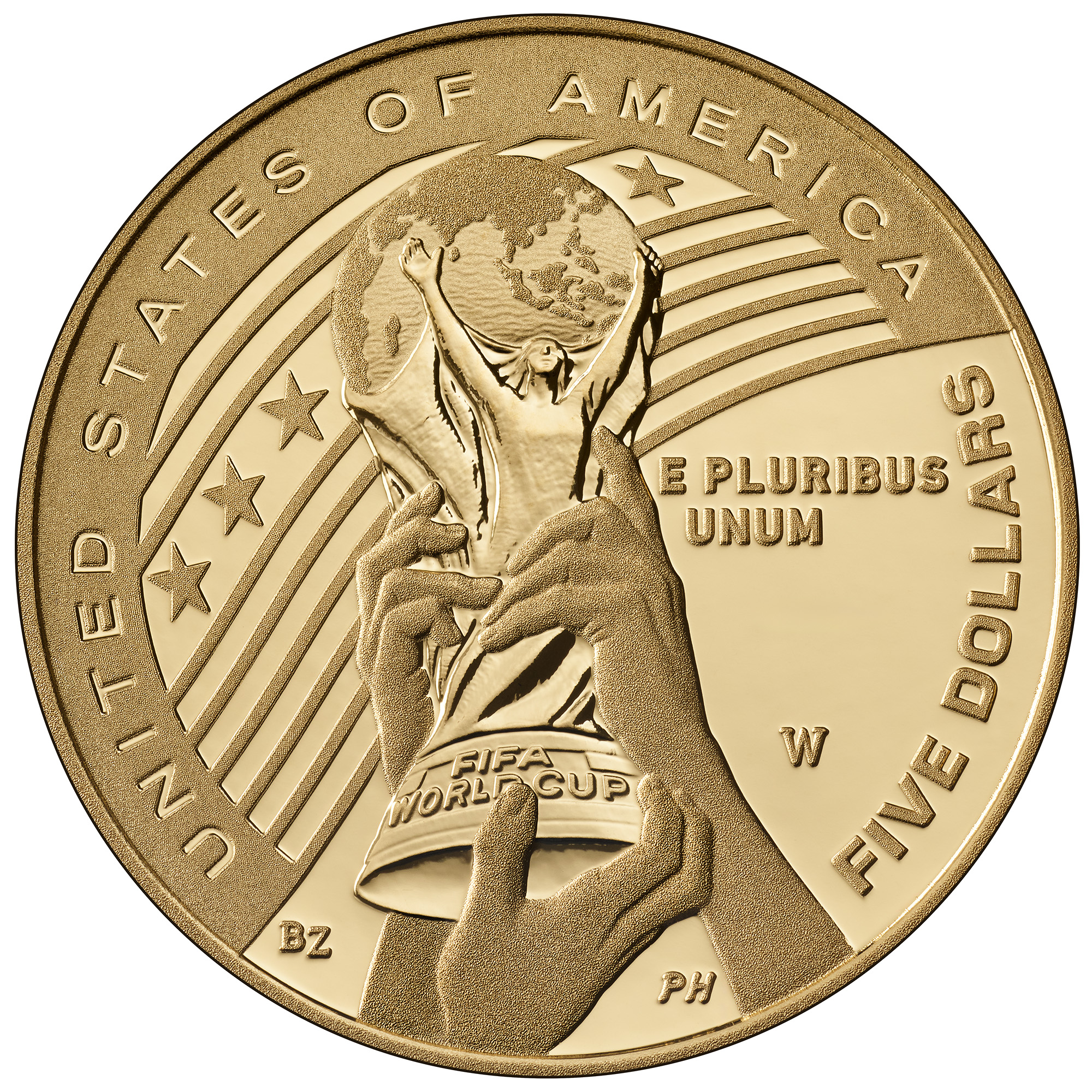
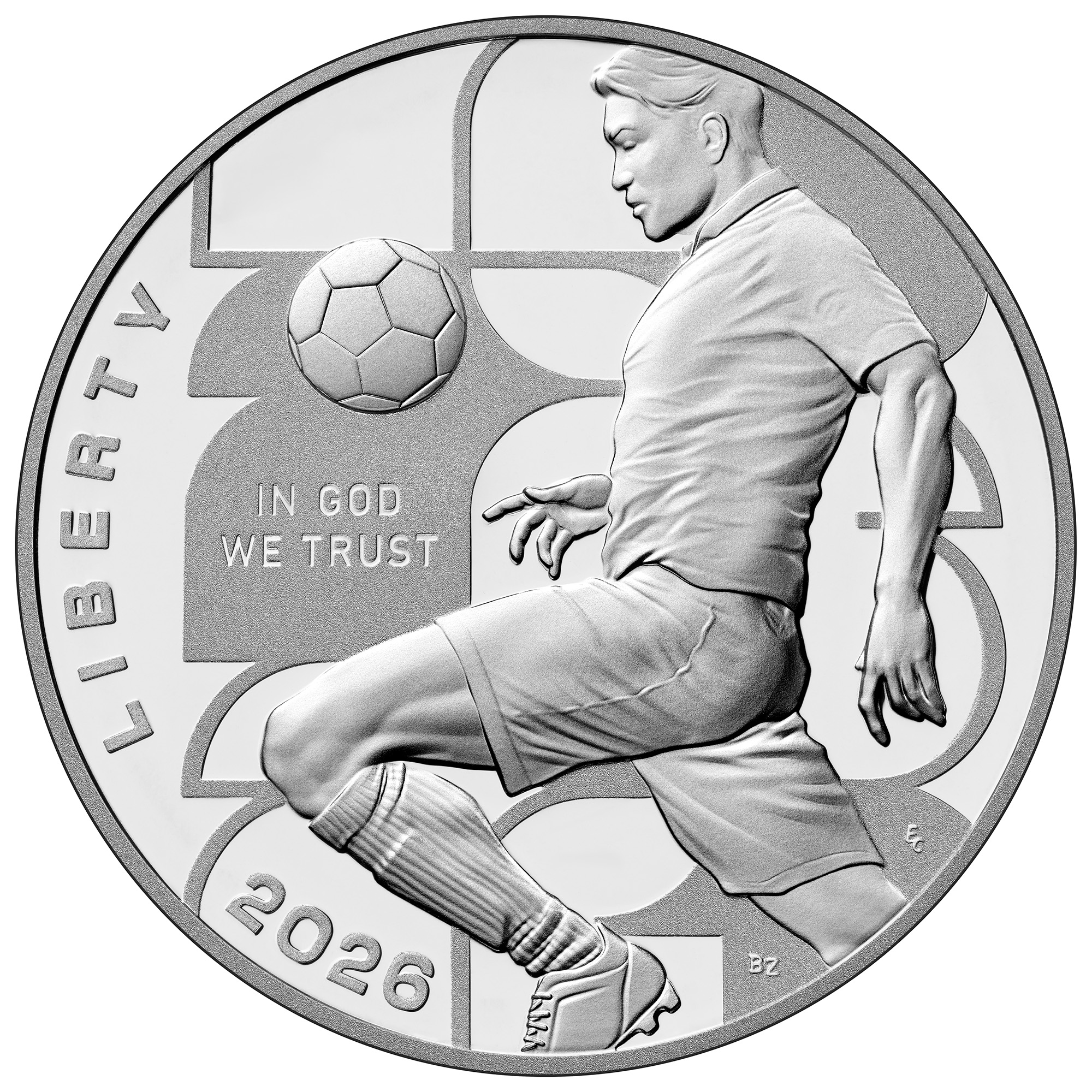
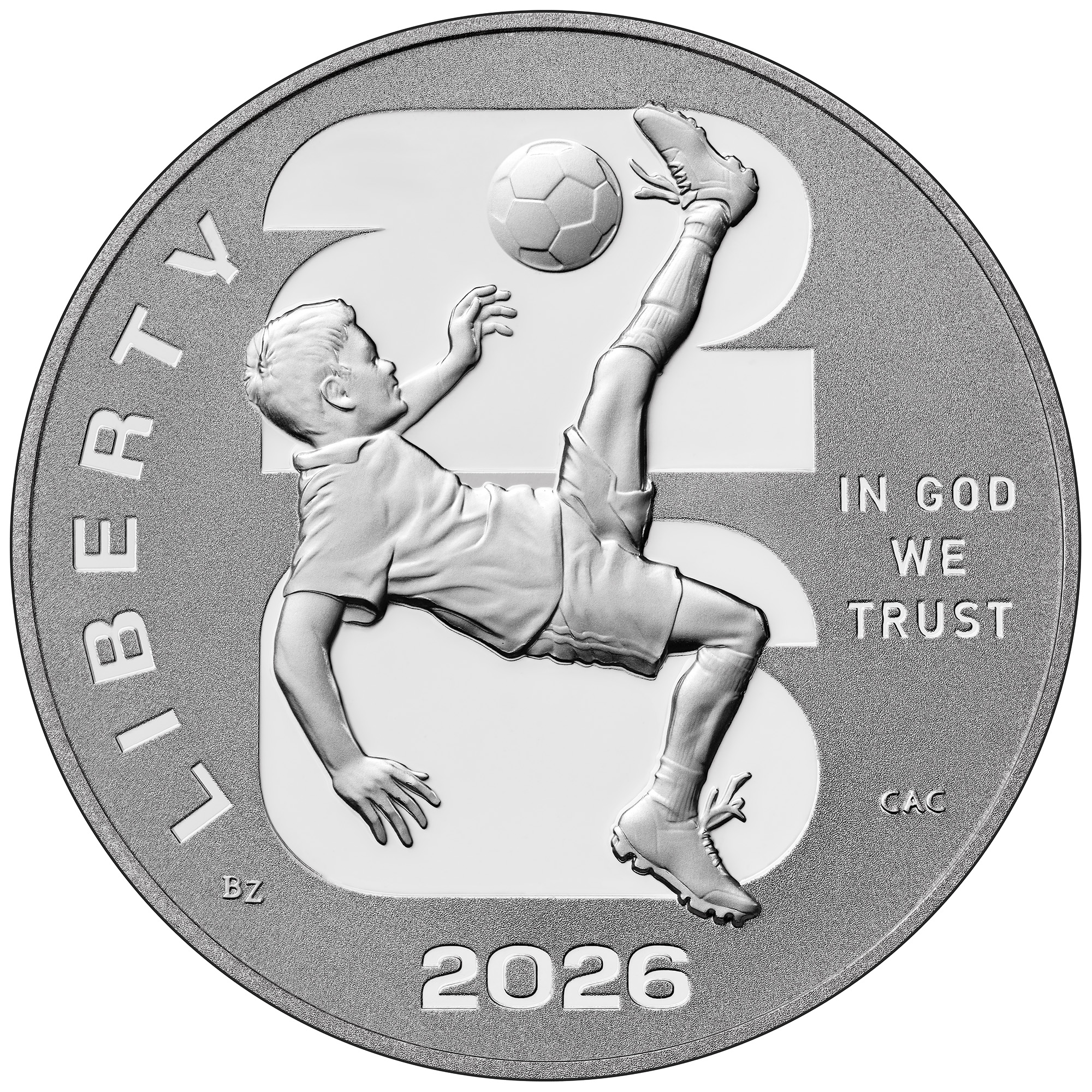
Pictured below are coins from the 2026 FIFA World Cup™ Commemorative Coin Program.

A coin's condition, or grade, refers to its physical state, as determined by a numismatic professional, using a coin grading scale. 

A fake coin or other piece of currency made in imitation of real currency without legal authority. Counterfeiting is a crime.

Did you know? The United States Secret Service was originally founded to combat counterfeiting. They still investigate counterfeiting crimes today together with the Department of the Treasury and Federal Reserve.

Currency refers to any kind of money -- coins, paper, crypto, etc. -- that is used as a medium of exchange.

A denomination is the specific value of money. Circulating coin denominations in America as of 2025 are 5 cents, 10 cents, and 25 cents. Pennies, half dollars, and dollar coins can also be used as legal tender, although they are no longer minted for circulation.

Did you know? The Mint has made many denominations over the years. Examples include 2-cent coins, 3-cent coins, 20-cent coins, $2.50 quarter eagles, $5 half eagle, $10 eagles, $20 double eagles.

What Are Dies?

A die is a metal tool used to press a design onto a coin.

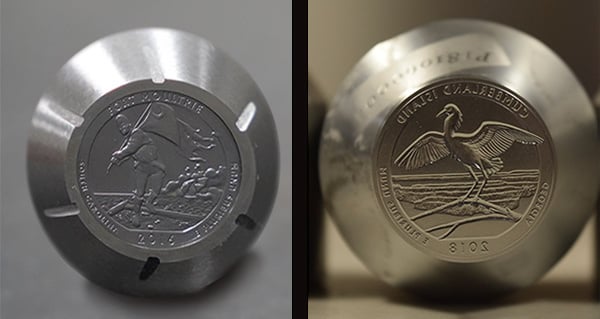
Dies are created from another type of metal stamp, the steel master hub. Dies are like a photo negative, displaying the design in reverse. When the dies stamp the coins or medals, the positive image transfers onto the blank.

Pictured: A positive-image hub (left) and negative-image die (right).

The designer is the artist who created a coin’s design. Sometimes the designer is the same as the sculptor, but not always.

The edge is the outer border of a coin. Edges can be plain, reeded, lettered, or decorated.

Examples of plain, reeded, lettered, and decorated edges on coins

The engraver is the medallic artist who sculpts the coin design. Although the engraver is not always the artist who created the design, it is sometimes the same person.

Today, artists can use either digital tools or clay models to refine their work.

An enhanced uncirculated coin is one in which some elements are frosted and others are left with an uncirculated finish.

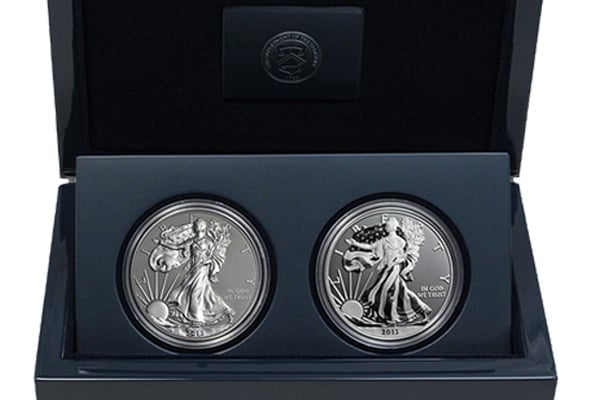
Did you know? In 2013, the Mint released a special two-coin American Eagle Silver West Point set with a reverse proof coin and an enhanced uncirculated coin (below).

2013 West Point American Eagle Two-Coin Set

An enhanced reverse proof coin has the same frosted background as a reverse proof coin, but what sets it apart are the multiple polished and frosted finishes applied to different isolated design elements. The selective polishing and frosting dramatically enhances the visual impact of the design.

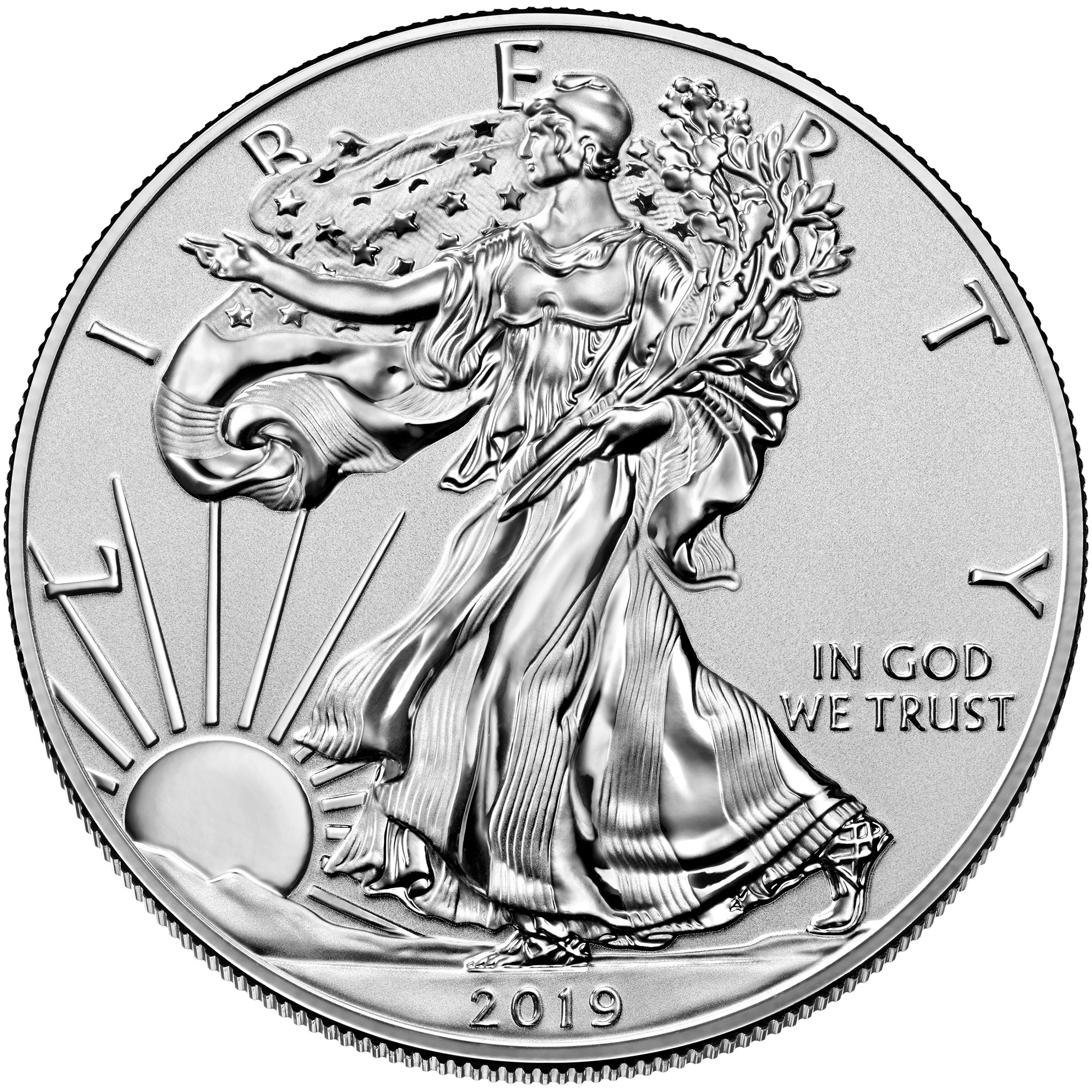
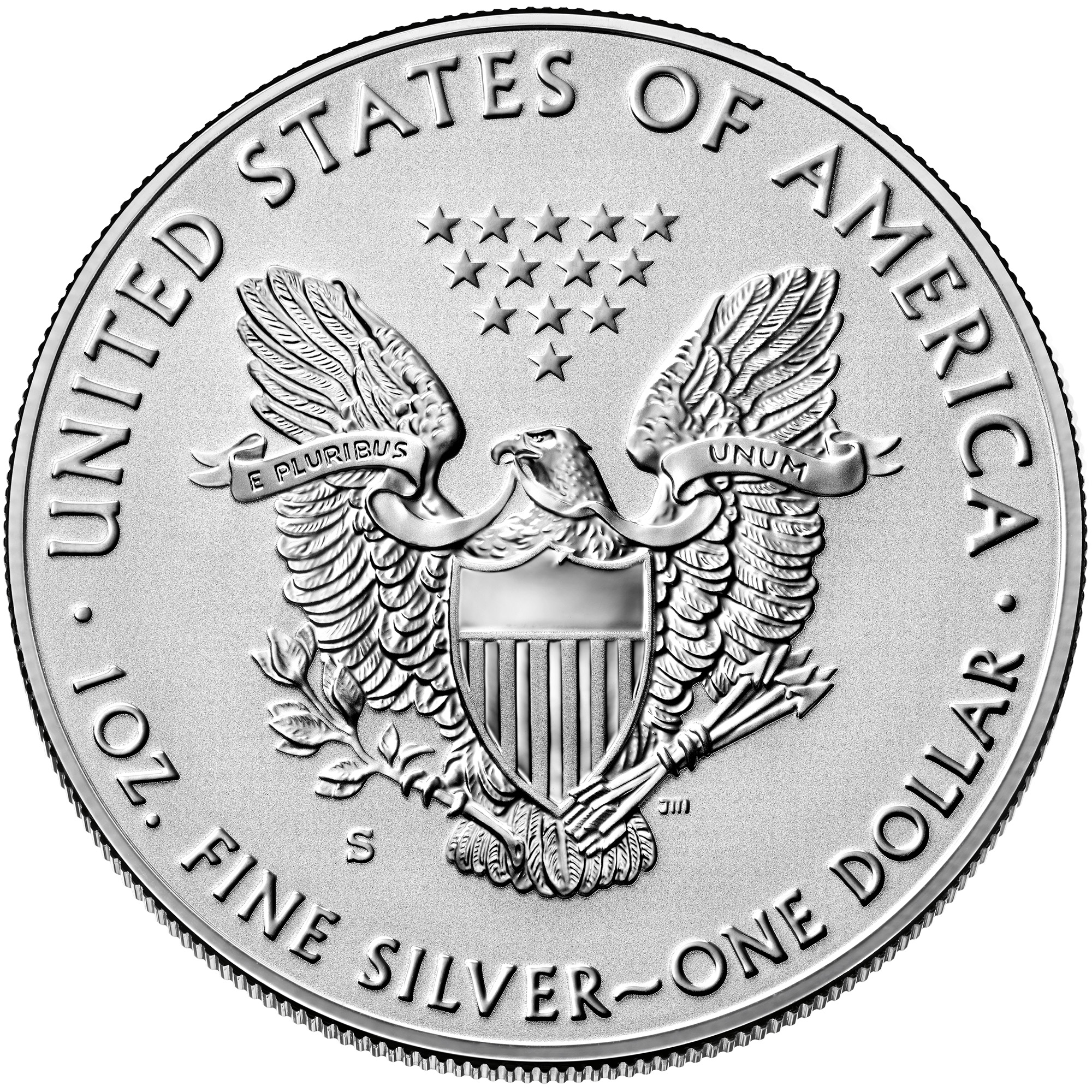
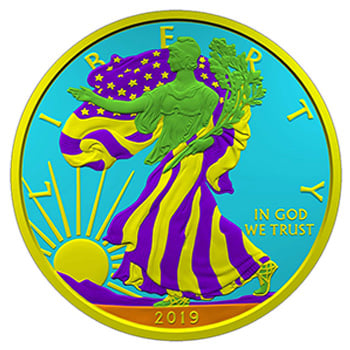
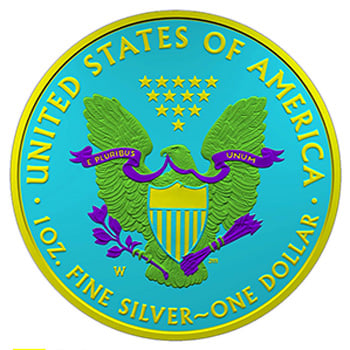
Did you know? The Mint released the American Eagle Silver Enhanced Reverse Proof Coin in 2019. Browse the images below to explore the coin's obverse and reverse as well as see a color-coded guide to how the polishing and frosting was applied.

On the obverse, the inscriptions, sun, sandals, stars, white stripes, and border have a polished finish (indicated in yellow). Liberty's skin, blouse, and laurel have a light finish (green). The mountains, red stripes, and field on the flag have a light+ finish (purple). The ground has a standard level frost (orange). The background has a heavy frost (blue).

On the reverse of the coin, the text, stars, field and outer stripes of the shield, and the border are polished (yellow). The eagle has a light finish (green). The arrows, laurel, and banner have a light+ finish (purple). The shield border, inner stripes on the shield, and background have a heavy frosting (blue).

All these enhancements add sharp definition to the designs.

An error is an improperly produced coin, overlooked in production, and later released into circulation. Error coins often have high collectible value because of their scarcity.

The face value is the sum for which a coin can be spent or exchanged. For example, the face value of a 1943 penny is one cent. However, it may be worth thousands or even millions of dollars to collectors, depending on its rareness and other factors.

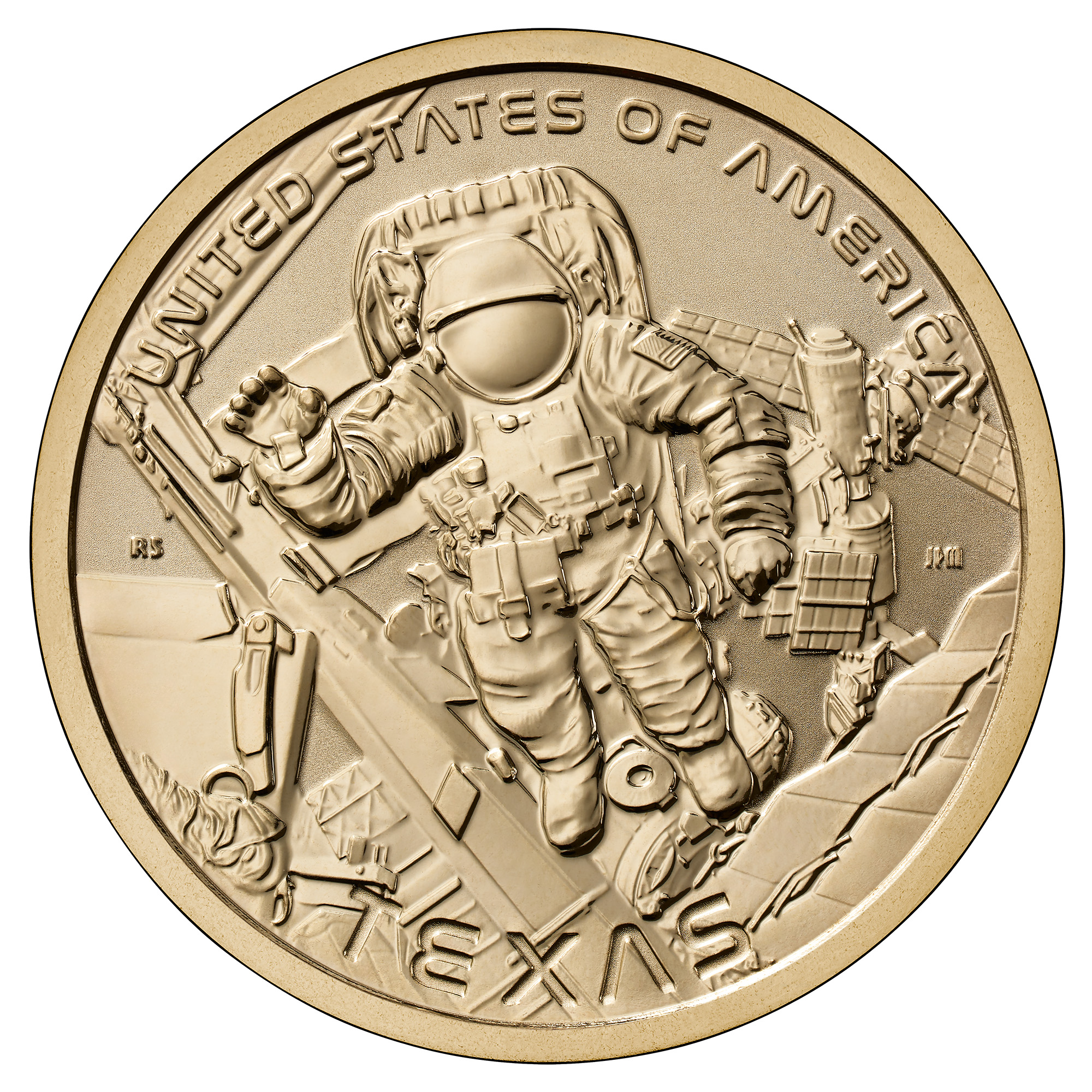
Did you know? In September 2025, the U.S. Mint auctioned off space-flown Sacagawea dollar coins to the public. Winning bids averaged $420,000 per coin.

The field is the flat portion of a coin’s surface not used for design or inscription.

A coin's condition, or grade, refers to its physical state, as determined by a numismatic professional, using a coin grading scale.

Did you know? The basis for modern coin grading is the Sheldon Coin Grading Scale, developed by Dr. William Sheldon in 1949. Although the scale has been modified some over the years, the basic principles remain the same, where 70 total points are possible and Mint State grades range from 60-70. 

Hairlines are tiny lines or scratches on coins, usually caused by cleaning or polishing.

A hub is a tool cut from a steel rod that is used to create a master die for striking designs onto coins.

Did you know? The Philadelphia Mint makes the master hubs and dies for all coins and medals the U.S. Mint produces. The exception to this is three-inch medals, which don’t have master hubs. Instead, the Philadelphia Mint uses computer-controlled milling machine to cut the design directly into the die.
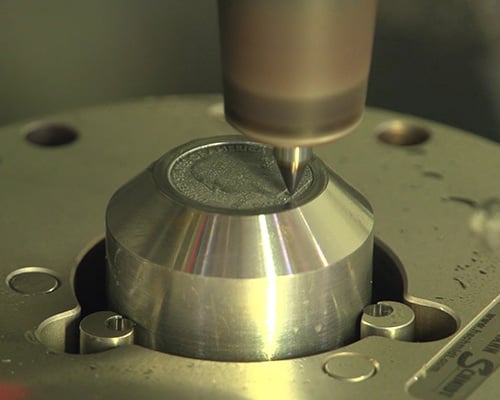
Pictured below is a milling machine engraving a design onto a master hub.

machine engraving the design onto the master hub

The incuse is the part of a coin’s design that is pressed into the surface. The opposite of this would be the relief, which is raised above the surface.

An ingot is metal cast into a particular shape, which can be used in the coin-making process. The term is generally synonymous with "bar" but is more antiquated.

The inscription is the principal words or lettering on a coin. It can also be called legend. Famous inscriptions on Mint coins include "E PLURIBUS UNUM," "IN GOD WE TRUST," and "LIBERTY."

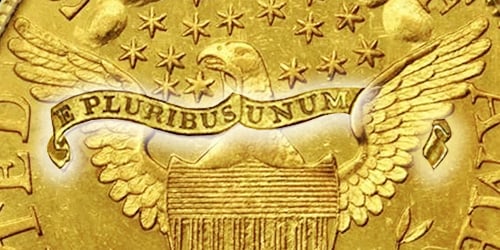
Did you know? The motto "E PLURIBUS UNUM" was first inscribed on a U.S. Mint coin in 1797 on the reverse of the Capped Bust Right Half Eagle (below).

1795 Capped Bust Half Eagle Reverse

The intrinsic value of a bullion coin refers to the market value of the precious metal.

A key date is a scarce date required to complete a collection, usually more difficult to find and afford.

The legend is the principal lettering on a coin. This term is synonymous with inscription.

A medal is a metal object resembling a coin but usually larger. Medals are issued to recognize an event, place, person or group and have no stated value. They are not intended to circulate as money.

Did you know? The U.S. Mint produces a variety of medals to commemorate historical events or honor those whose achievements have enriched U.S. history or the world. Some Mint medals are bronze duplicates of Congressional Gold Medals. Other medals are called “list medals,” produced under the Secretary of the Treasury’s authority to strike national medals.

A mint is a place where coins of a country are manufactured under government authority.

Did you know? The U.S. Mint has four production facilities and also operates the Fort Knox Bullion Depository and a Headquarters in Washington, DC.

 Mint luster refers to the dull, frosty, or satiny shine found on uncirculated coins.

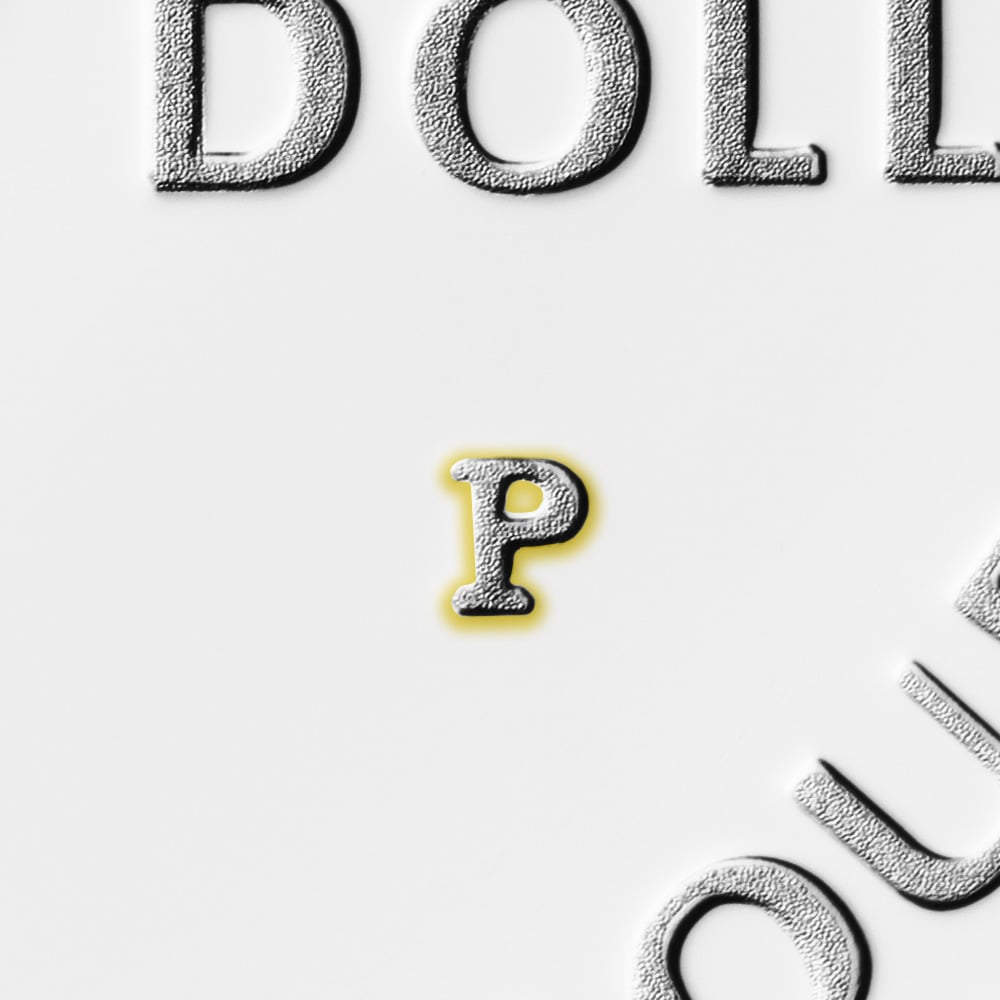
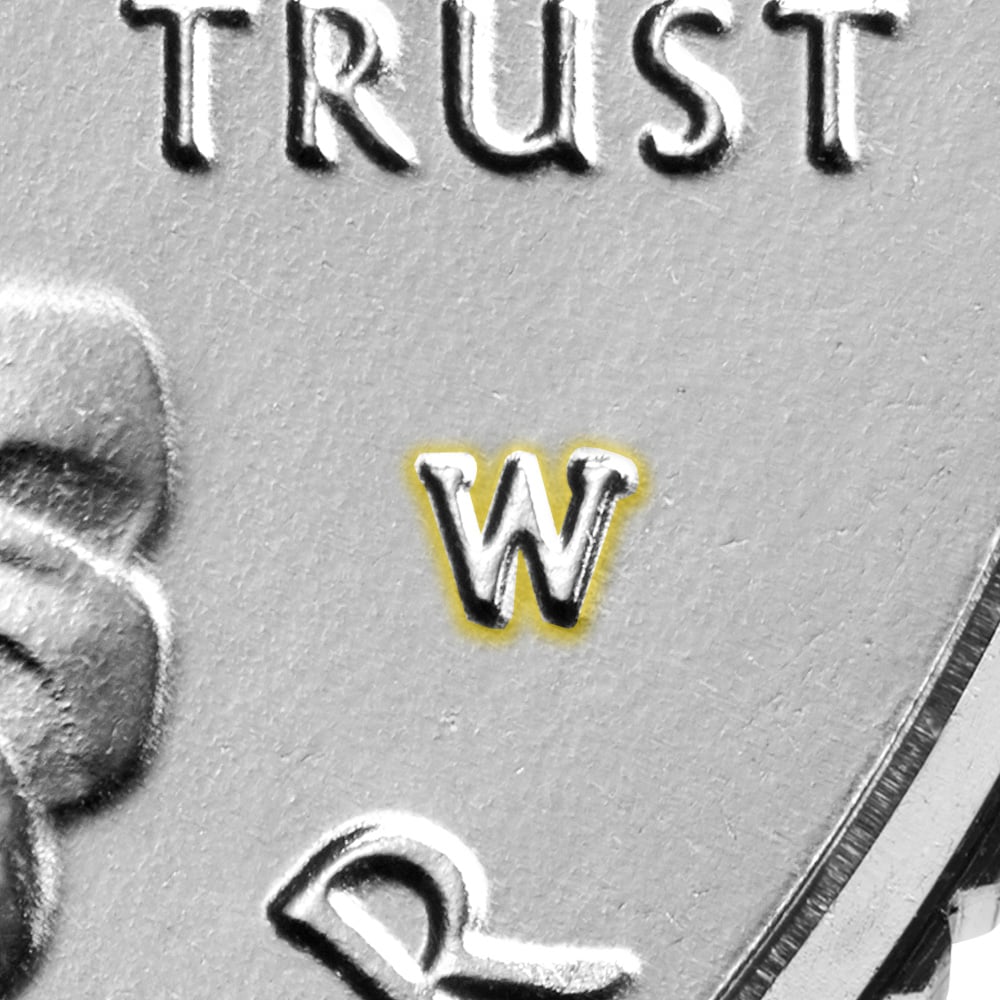
A mint mark is a letter that identifies where a coin was made. In the past, mint marks held the maker responsible for the quality of a coin. You can learn all about Mint Marks on our website.

Pictured below are the four most commonly used mint marks on U.S. coinage today.

A mint set is a complete set of coins of each denomination produced by a particular mint.

Mint state refers to a coin's grade in terms of preservation and quality of strike. For example, MS-70 (Mint State 70) is a perfect coin on the coin grading scale.

MS-70 stands for Mint State 70, which is the highest grade on for an uncirculated coin.

Mintage is the total quantity of coins produced. Some laws state specific mintage limits on coins. For example, public law set the mintage limit for U.S. Marine Corps 250th Anniversary Commemorative Coins at 750,000 units.

A motto is a word, sentence, or phrase in the inscription on a coin to express a guiding national principle, such as, “E PLURIBUS UNUM,” which is Latin for “out of many, one.”

Mylar® is a trademark for a polyester film used to store coins.

Numismatics is the study and collecting of things that are used as money, including coins, tokens, paper bills, and medals.

Did you know? The Smithsonian has the largest collection of money and transactional objects in the world. The National Numismatic Collection contains approximately 1.6 million items. 

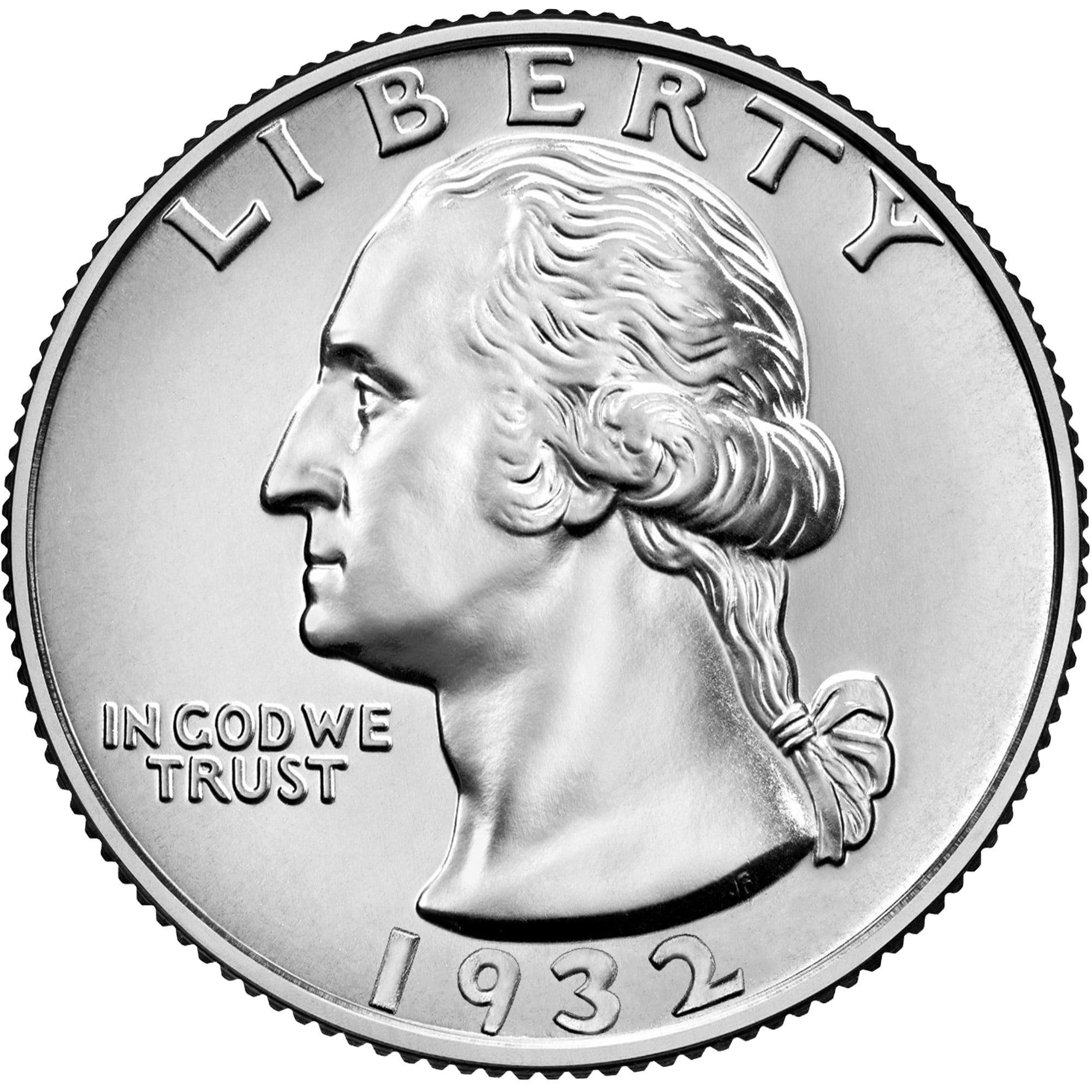
The obverse is the front or heads side of a coin. The back (tails) is called the reverse.

Pictured below are various quarter obverses over the last century.

Off-center describes a coin that has received a misaligned strike from the coin press and is therefore missing portions of its design.

An overstrike is when a coin is pressed with a new design over top of a previously-struck design, either intentionally or by accident. Although this is an obsolete technique today, overstriking was used historically to recycle material and reduce costs. 

A pattern is an experimental or trial piece, generally of a new design or metal.

What's the Difference Between a Blank and a Planchet?

A blank is the flat metal disc that is destined to become a coin. During step four of the coin making process, blanks go to the upsetting mill. The mill forms a rim around the edge of the blank to protect the final coin from wear and make it stackable.

This blank with a rim is now called a planchet. Some people continue to use blank as a general term for a coin before it’s struck.

A proof coin is a special type of coin made from highly-polished planchets and dies. It is often struck more than once to accent the design. Proof coins receive the highest quality strike possible and can be distinguished by their mirror-like background and frosted foreground.

Pictured below is an uncirculated coin with a proof and reverse proof version for comparison.

A proof set is a complete set of proof coins of each denomination made in a year.

The relief is the part of a coin’s design that is raised above the surface, opposite to incuse.

A restrike is a coin that is minted using the original dies but at a later date. A famous example is the 1804 Silver Dollar. First struck in 1803, these silver dollars were later struck again in limited quantities in the 1830s and 1850s, still with the 1804 date.

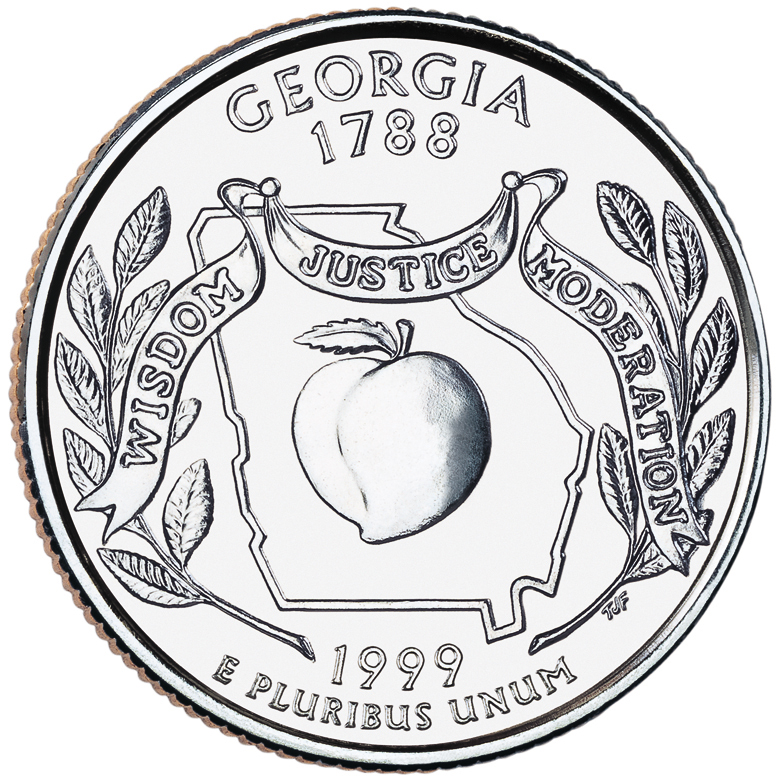
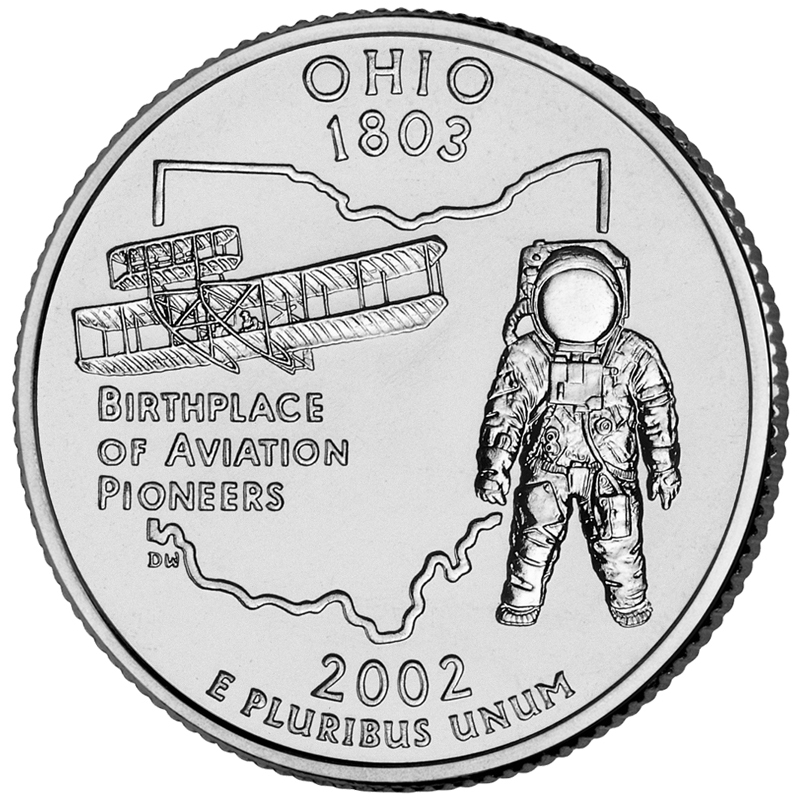
The reverse is the back or tails side of a coin. The front (heads) is called the obverse.

Pictured are quarter reverses from the 50 State Quarters Program.

A reverse proof coin is one featuring an “inverted” proof finish. The background is frosted, while the design elements are polished to a mirror-like finish, creating a magnificent contrast. Each coin is struck at least twice to bring out the details in the design. The Mint also uses an enhanced reverse proof finish for select products.

Pictured below is an uncirculated coin with a proof and reverse proof version for comparison.

The riddler is a machine that screens out blanks that are the wrong size or shape.

The rim is the raised edge on both sides of a coin created by the upsetting mill. It helps protect the coin's design from wear and makes it stackable.

Coins are often packaged in rolls by banks and dealers. Customers can buy bags and rolls of coins from the U.S. Mint.

A series is a collection of coins that contains all dates and mint marks of a specific design and denomination.

A slab is a nickname for some protective coin encapsulation methods, especially those that are permanently sealed and rectangular.

Strike is the process of stamping a coin planchet with a design. The strength of the imprint (full, average, or weak) affects the value of rare coins.

A type set is a collection of coins based on denomination.

The term uncirculated generally means a coin that has not circulated in the general public. It can also refer to a coin's grade, implying it has a high degree of preservation and lack of wear.

Did you know? The Mint produces uncirculated coins differently than coins meant for circulation, which gives them a more brilliant finish. Uncirculated coins are hand-loaded into the coin press and struck on specially burnished blanks to give them a soft, matte-like appearance. Customers also receive a certificate of authenticity when purchasing uncirculated coins from the Mint.

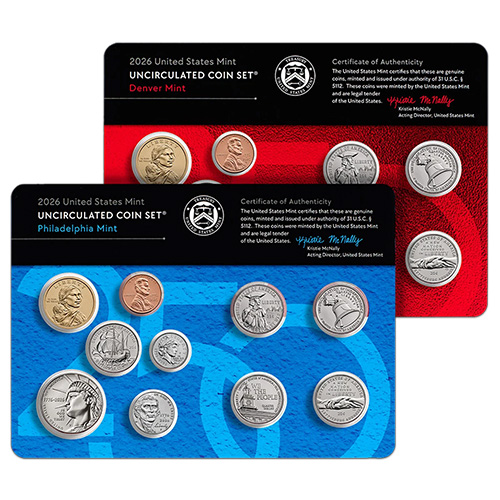
Pictured below are Denver and Philadelphia Uncirculated Coin Sets from 2026.

2026 Uncirculated Set

The upsetting mill is the machine that raises the rim on both sides of a blank, turning it into a planchet.

A variety is a minor change from the basic design type of a coin, usually as a result of the change in dies used during the striking process.

A year set is a collection of all coins issued by a country for any one year. This does not necessarily include every mint mark.