
 Countdown to America's 250th Anniversary
 Under 31 U.S.C. § 5111(a) and § 5112, the Secretary of the Treasury has the authority to mint and issue one-cent coins in amounts deemed necessary to meet the needs of the United States. The Secretary may therefore suspend production upon determining that new coins are no longer needed.
Penny FAQs
Yes. The penny remains legal tender and may still be used for transactions.
Until now, no Secretary of the Treasury had determined that the production of one-cent coins was no longer necessary to meet the needs of the United States.
As of the most recent estimate, the cost of producing each penny increased from 1.42 cents to 3.69 cents per penny over the last decade.
Based on the most recent estimates, the Mint expects to save approximately $56 million per year in production savings.
In fiscal year 2024, the penny accounted for 57% of the Mint’s total circulating coin production of 5.61 billion coins.
The Mint produced and shipped approximately 3.2 billion pennies in Fiscal Year 2024.
Yes. The Mint will continue to produce numismatic (collector) versions of the penny in limited quantities.
A coin’s typical lifespan is 30 years. See https://www.gao.gov/assets/gao-19-300.pdf, page 6.
No. Melting, treating, or exporting pennies and nickels remains prohibited under 31 C.F.R. § 82.2(f), with limited exceptions. All requests for melting licenses must be submitted to: Director, United States Mint, 801 9th Street, NW; Washington, DC 20220-0012. See 31 C.F.R. § 82.2(f).
| Composition | 2.5% Copper, 97.5% Zinc | |
|---|---|---|
| Weight | 0.088 oz | 2.50 g |
| Diameter | 0.750 in | 19.05 mm |
| Thickness | 0.06 in | 1.52 mm |
| Edge | Plain | |
- Obverse (Heads): Features President Abraham Lincoln, a design first introduced in 1909.
- Obverse Inscriptions: LIBERTY, IN GOD WE TRUST, 2025
- Reverse (Tails): The Union Shield design, introduced in 2010, symbolizes Lincoln’s role in preserving the United States as a single, united country.
- Reverse Inscriptions: UNITED STATES OF AMERICA, E PLURIBUS UNUM, ONE CENT

The penny was one of the first coins produced by the U.S. Mint, authorized under the Coinage Act of 1792.
- Original design: A large copper coin featuring a woman with flowing hair symbolizing Liberty.
- Today’s version: Featuring Abraham Lincoln on the obverse, is a smaller coin composed of copper and zinc.

- 1793–1857: Various Liberty designs
- 1857–1858: Flying Eagle obverse with wreath reverse (first “small cents”)
- 1859–1909: Indian Head obverse
In 1909, Lincoln became the first U.S. president to appear on a coin, commemorating his 100th birthday. The reverse has changed several times since.
-
 Wheat Penny ReverseFrom 1909-1958, the reverse featured the "Wheat Penny" design.
 -
 Lincoln Memorial ReverseThe Lincoln Memorial was featured on the reverse from 1959-2008. Chief Engraver Frank Gasparro created this design for Lincoln's 150th birthday.
 -
 Lincoln Bicentennial ReverseThe Lincoln Bicentennial One-Cent Program featured four unique reverses in 2009.
 -
 Union ShieldSince 2010, the reverse has featured the "Union Shield" design by artist Lyndall Bass. Mint Chief Engraver Joseph Menna sculpted the coin.
- Philadelphia and Denver Mints: Circulating and uncirculated coins
- San Francisco Mint: Proof coins
- West Point Mint (2019): Special collectible pennies with a “W” mint mark
- Circulating: Produced for everyday use, no special finishes
- Uncirculated: Higher-quality coins made for collectors; enhanced finish
- Proof:
- Highly detailed with mirror-like backgrounds and frosted designs
- Made using burnished blanks and polished dies
- Struck at least twice for extra detail
- Reverse Proof: Frosted background with mirror-like design elements

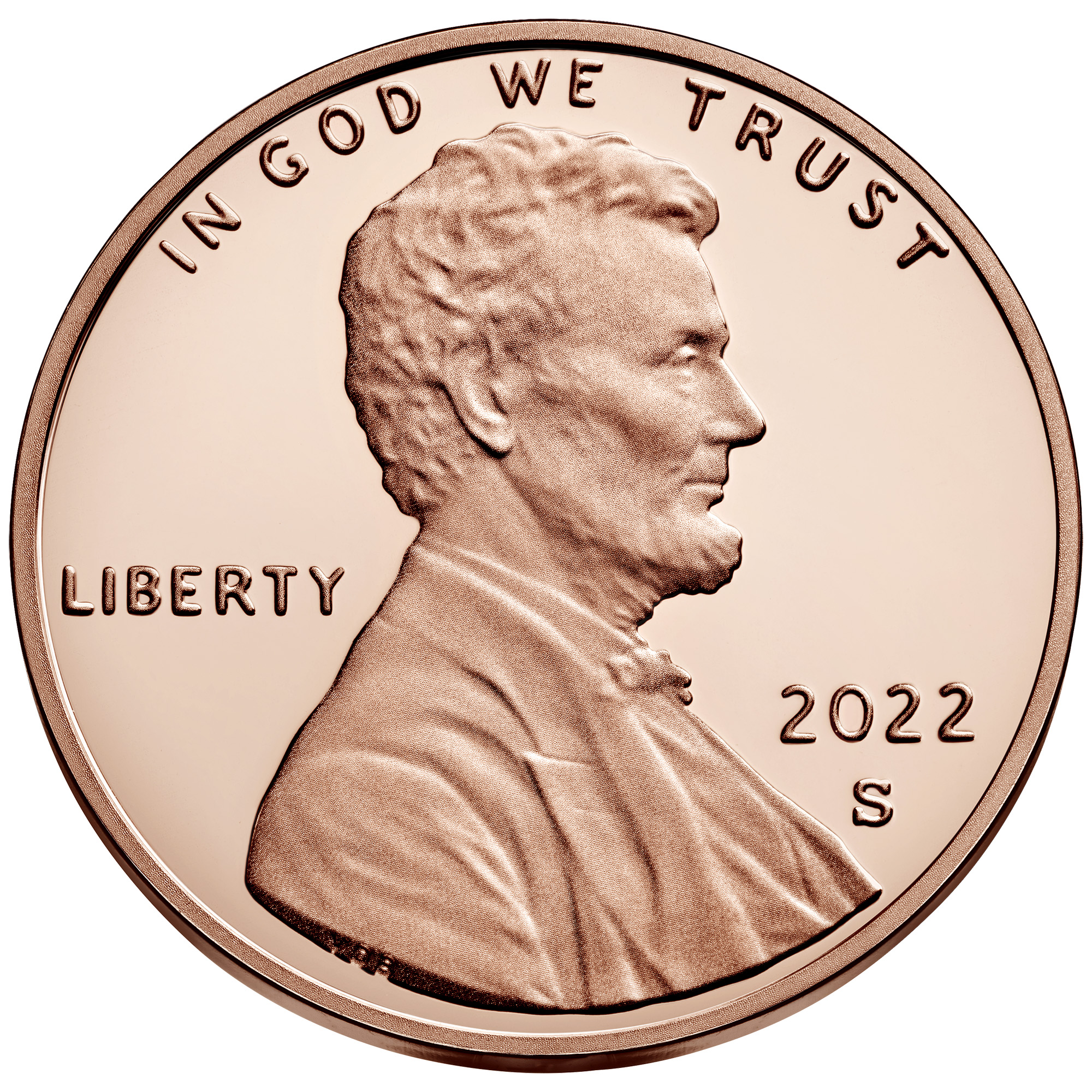
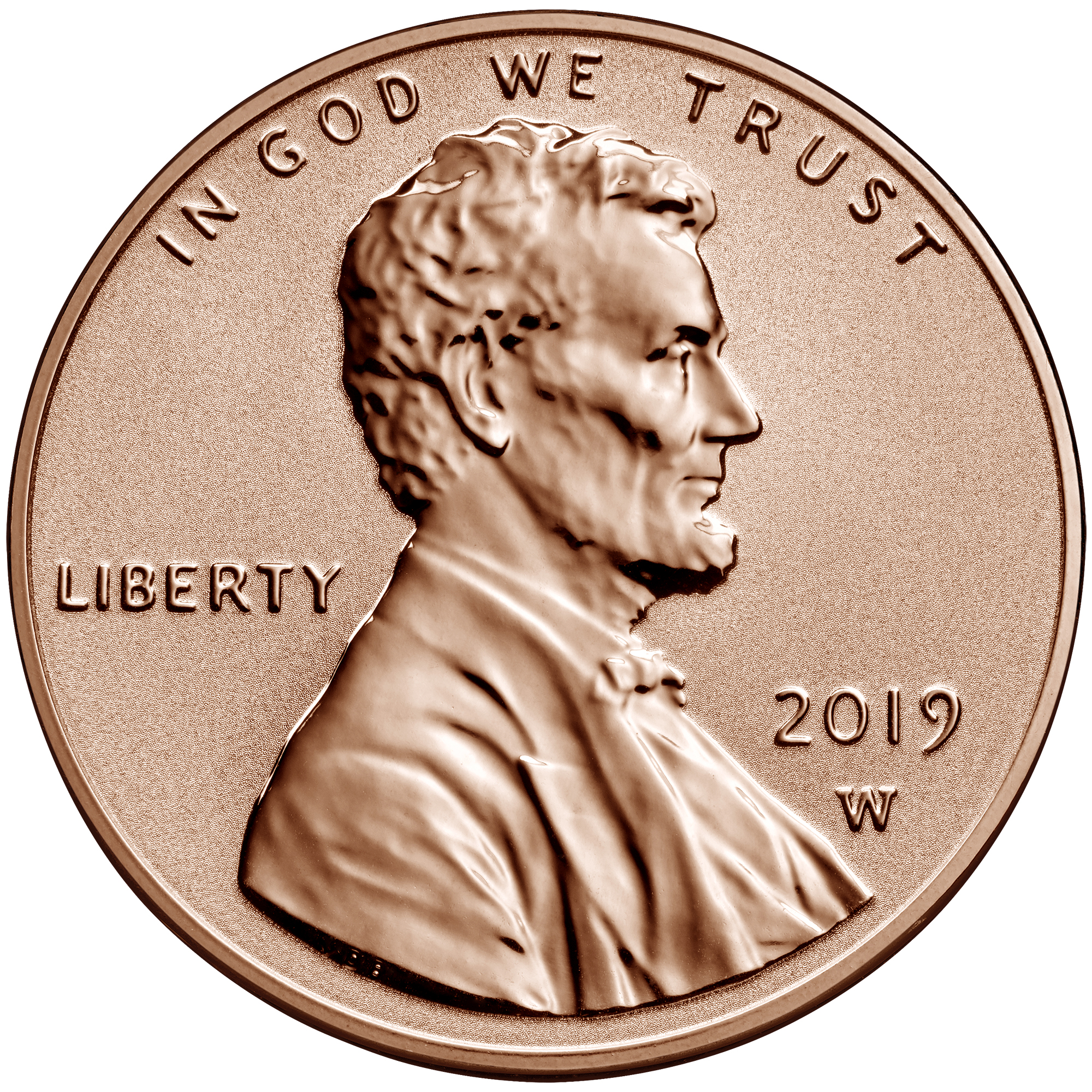
Yes. Notable examples include:
-
 1943 Steel PennyZinc-coated steel pennies were minted in 1943, since copper was diverted for WWII.
 -
 1943 Copper PennyBefore production switched to steel pennies, the Mint accidentally produced some 1943-dated copper pennies. These rare coins are highly valuable today.
 -
 2017 "P" PennyPhiladelphia minted pennies in 2017 with a "P" mint mark to celebrate the Mint's 225th anniversary.
 -
 2019 "W" PennyWest Point minted collectible pennies in 2019 with proof and reverse proof finishes.
- Obverse: The front side (“heads”).
- Reverse: The back side (“tails”).
- Edge: Outer border of the coin (can be plain, reeded, lettered, or decorated)
- Rim: Raised edge that protects the coin’s design
- Inscription (Legend): Words or lettering on the coin
- Mint Mark: Letter identifying the mint facility such as "P" (Philadelphia), "D" (Denver), "S" (San Francisco), "W" (West Point)
- Relief: Raised parts of the coin’s design
- Field: Flat background area around the design or inscriptions
Visit our Collecting Basics section for a full dicussion on the Anatomy of a Coin.
Content last updated on January 07, 2026