
 Celebrating America's 250th Anniversary
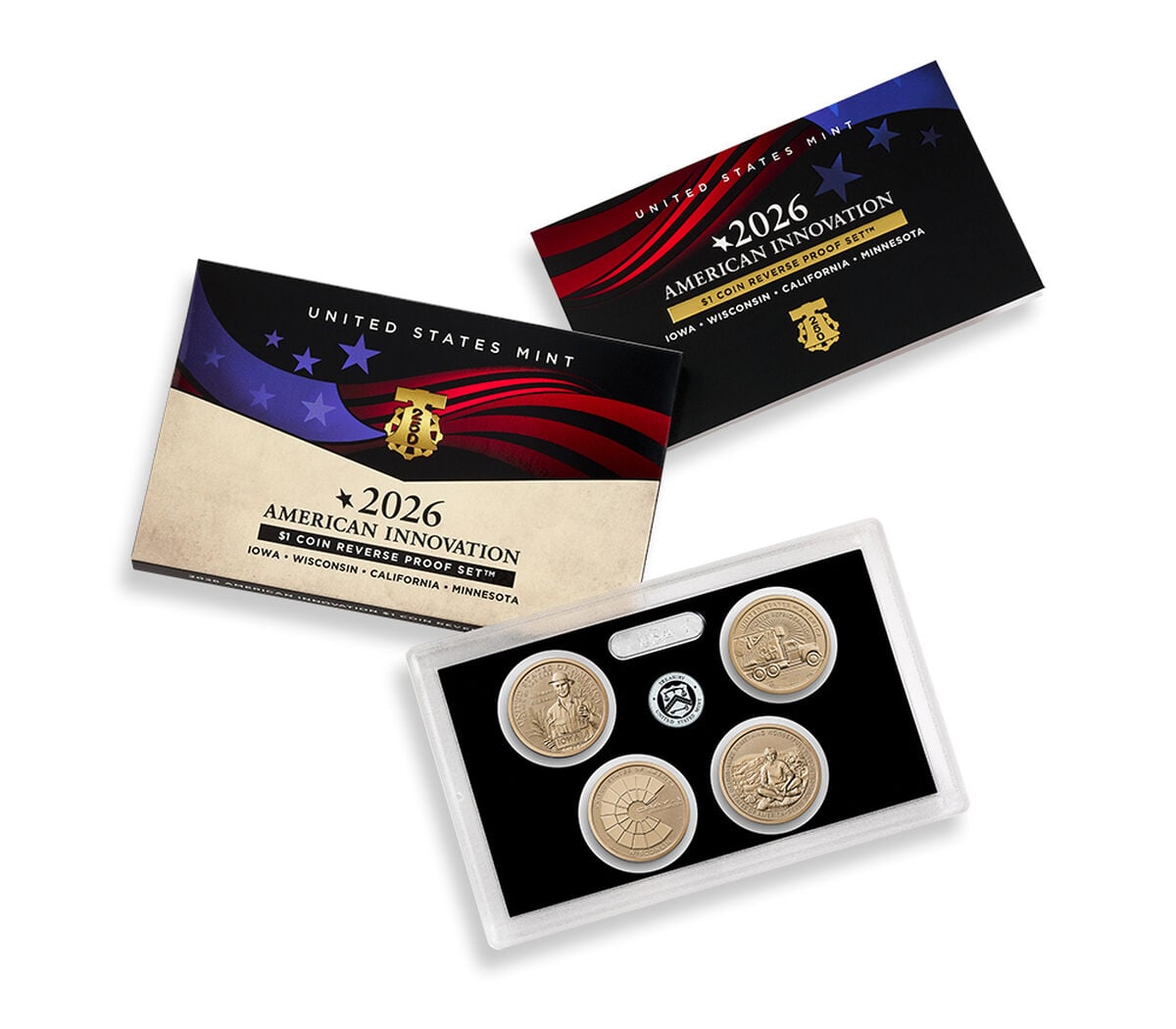
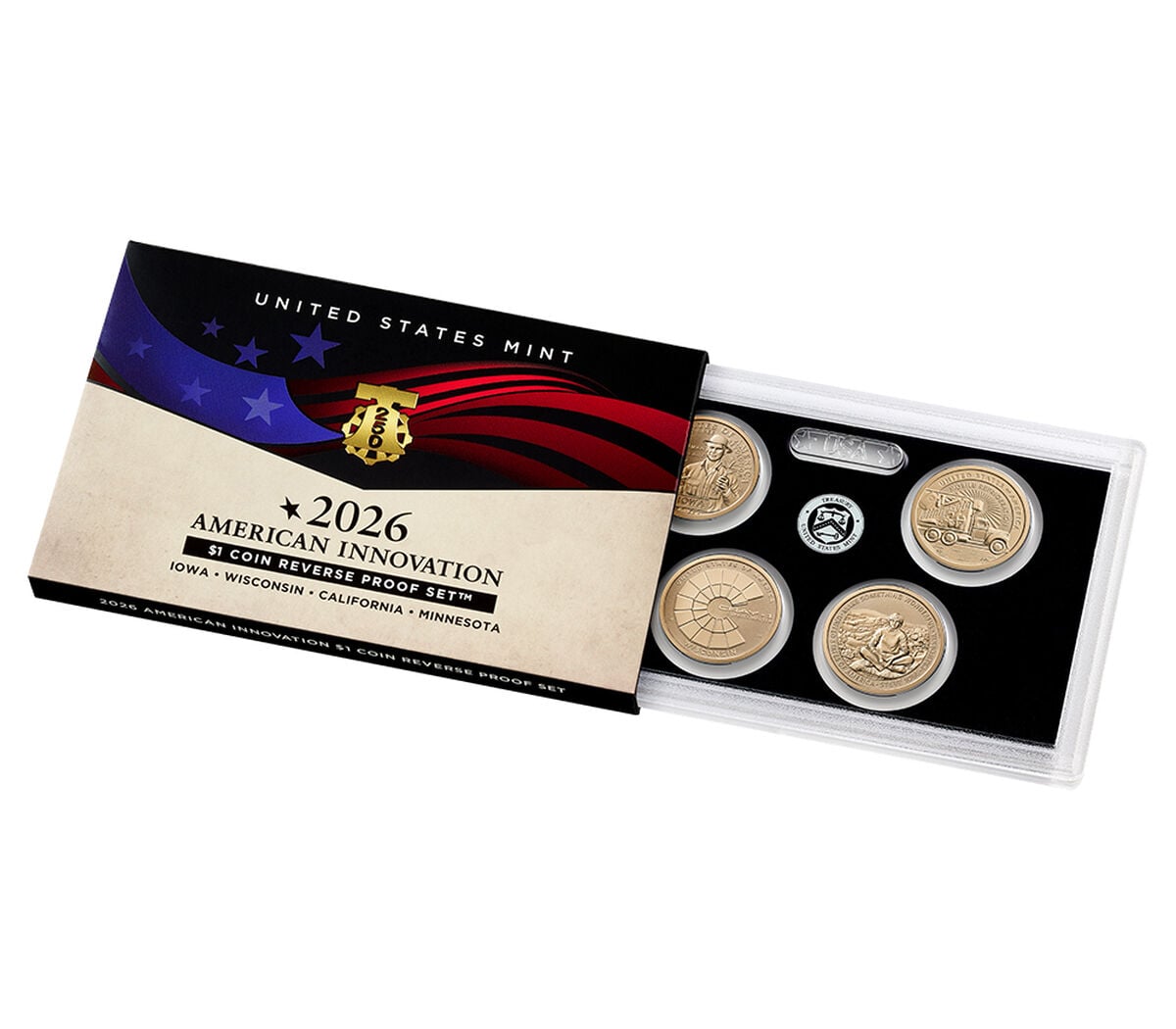
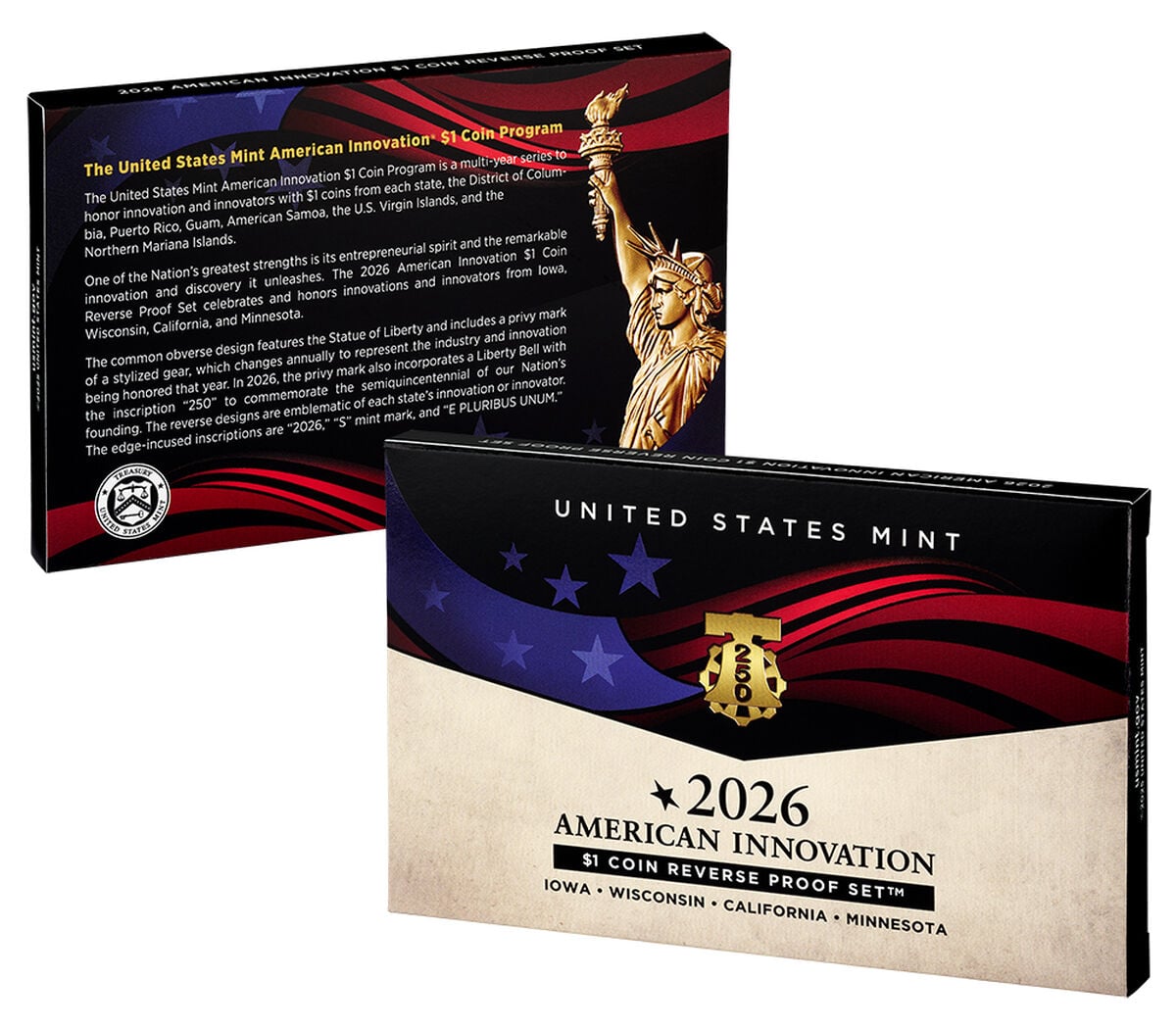
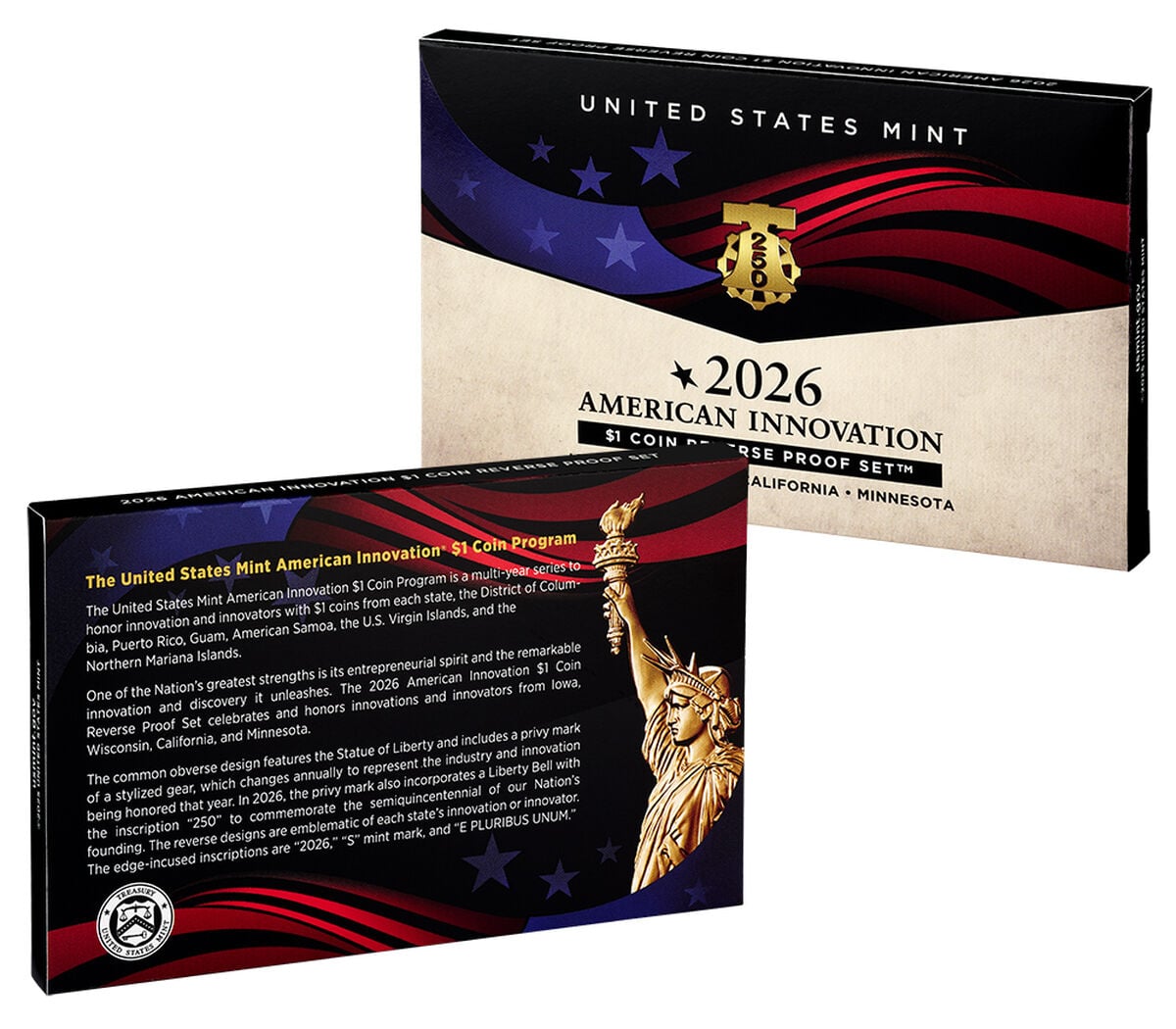
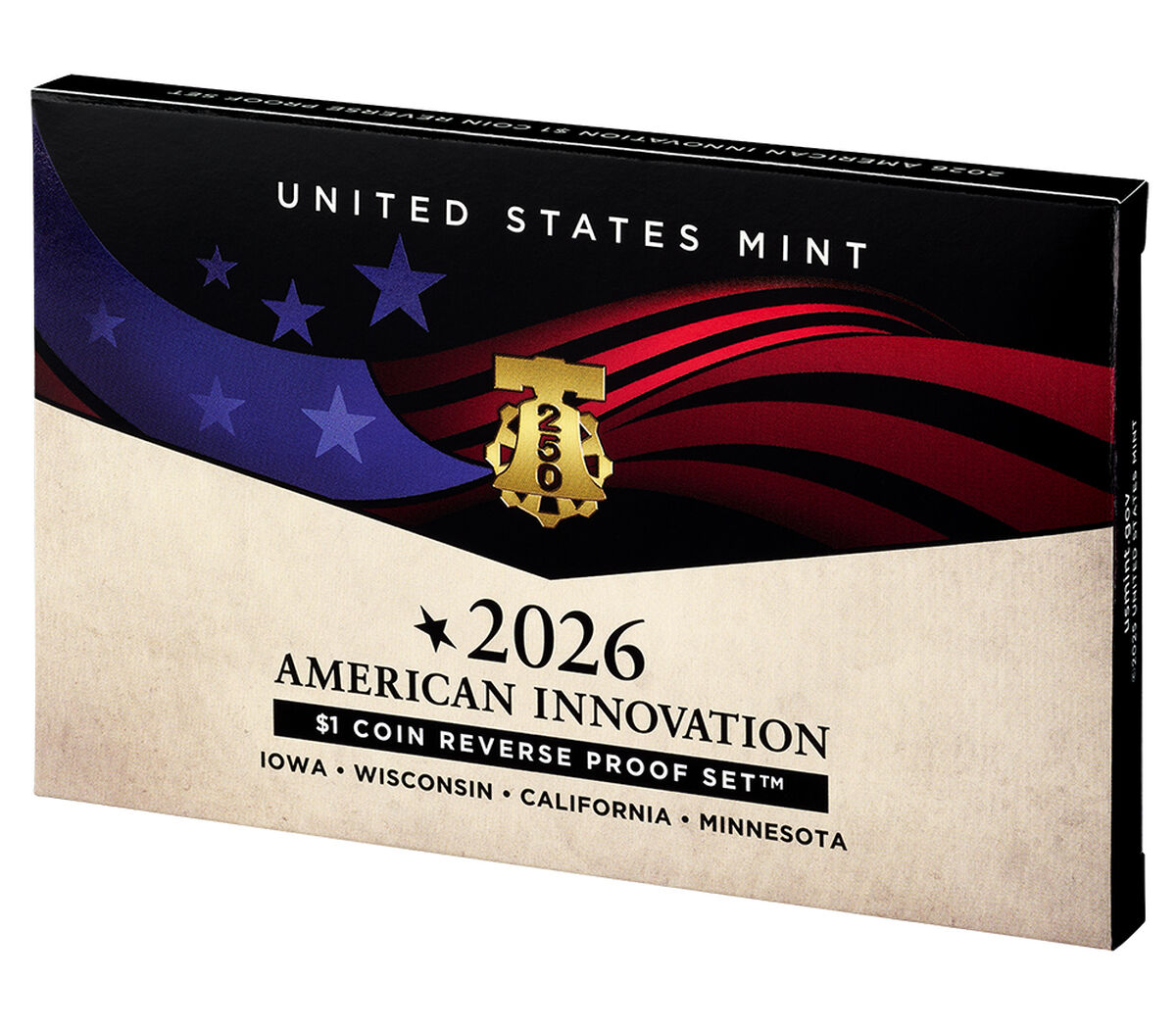
 American Innovation 2026 $1 Coin Reverse Proof Set
American Innovation® $1 Coin Program
San Francisco (S)
$60.00
Click and drag image to move
Click and drag image to move
Click and drag image to move
Click and drag image to move
Click and drag image to move
Click and drag image to move
Click and drag image to move
Click and drag image to move
Item Number:
26GC
Item Limits
Mintage Limit is the total number of a coin or medal manufactured across all products. (For example, a coin may be available in rolls and in our annual sets).
Product Limit is the number of a coin or medal made available in the individual product.
Household Order Limit The United States Mint imposes household order limits on our products to ensure that we provide fair purchase opportunities to the broadest audience possible. Household order limits for our products are typically lifted at 2 pm ET the business day after they go on sale. As we monitor our products, limits may be implemented, adjusted, or removed at our discretion.
Mintage Limit:
99,792
Product Limit:
None
Household Order Limit:
None
Celebrate the spirit of American innovation with these unique reverse proof coins. From the Nation’s founding to the technological marvels of today, Americans have always pushed the boundaries of what’s possible. The American Innovation Coin Program celebrates innovations and innovators from all 50 states, U.S. territories, and the District of Columbia, showcasing the pioneering American spirit in timeless coin designs.
This set is the only way to get American Innovation $1 Coins in a stunning reverse proof finish. These coins emphasize their designs with a reflective foreground and frosted background. This year’s set features innovation from:
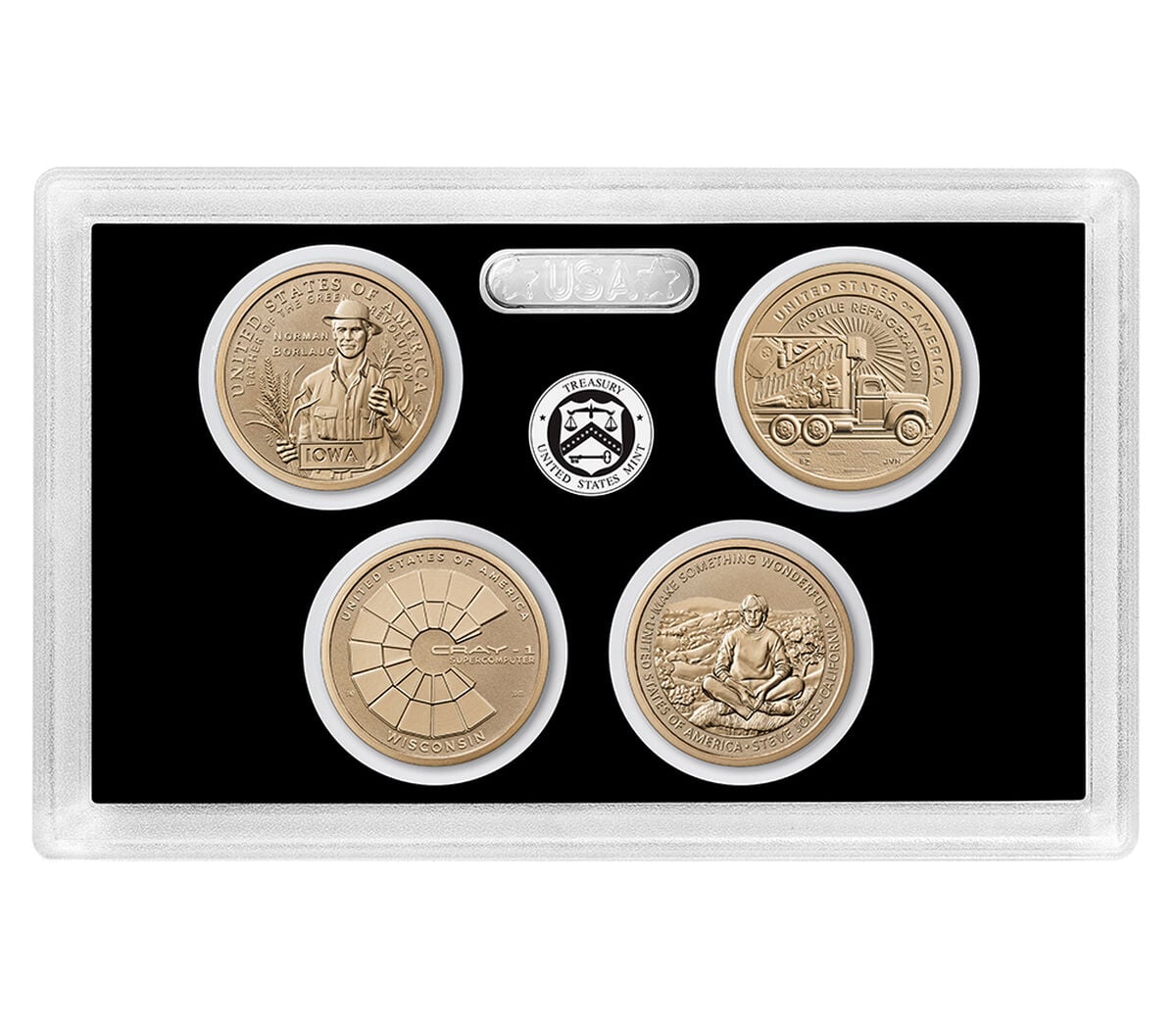
- Iowa – Honoring Dr. Norman Borlaug, the ‘Father of the Green Revolution’
- Wisconsin – Home to the Cray-1 supercomputer
- California – Celebrating innovator Steve Jobs
- Minnesota – Celebrating the invention of Mobile Refrigeration
The American Innovation $1 Coin Program is a multi-year series featuring distinctive reverse (tails) designs that pay homage to America’s ingenuity and celebrate the pioneering efforts of individuals or groups from each of the 50 states, District of Columbia, and U.S. territories.
One of the Nation’s greatest strengths is its entrepreneurial spirit, which unleashes remarkable innovation and discovery. The United States Mint is proud to celebrate innovation and honor the American spirit with the 2026 American Innovation $1 Coin Reverse Proof Set™.
This 2026 set features a clear plastic lens encasing four stunning coins in a beautifully designed package. This set celebrates significant American pioneering innovations and innovators from Iowa, Wisconsin, California, and Minnesota, and is sure to make a great addition to any collection or the perfect gift for a special occasion.
These reverse proof coins feature frosted backgrounds and brilliant, mirror-like finishes, creating a magnificent contrast.
The 2026 American Innovation $1 Coin Reverse Proof Set features coins with the following designs:
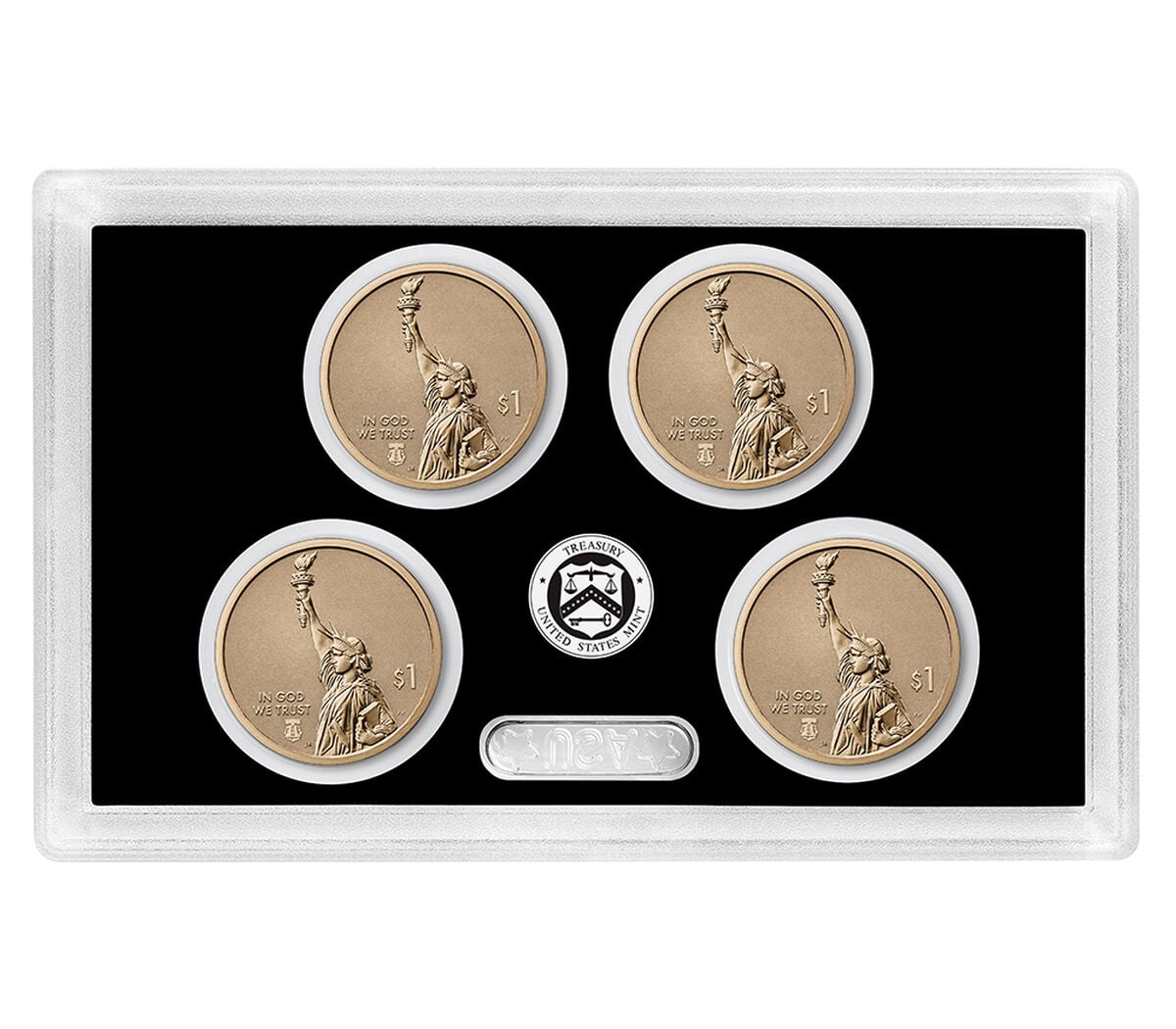
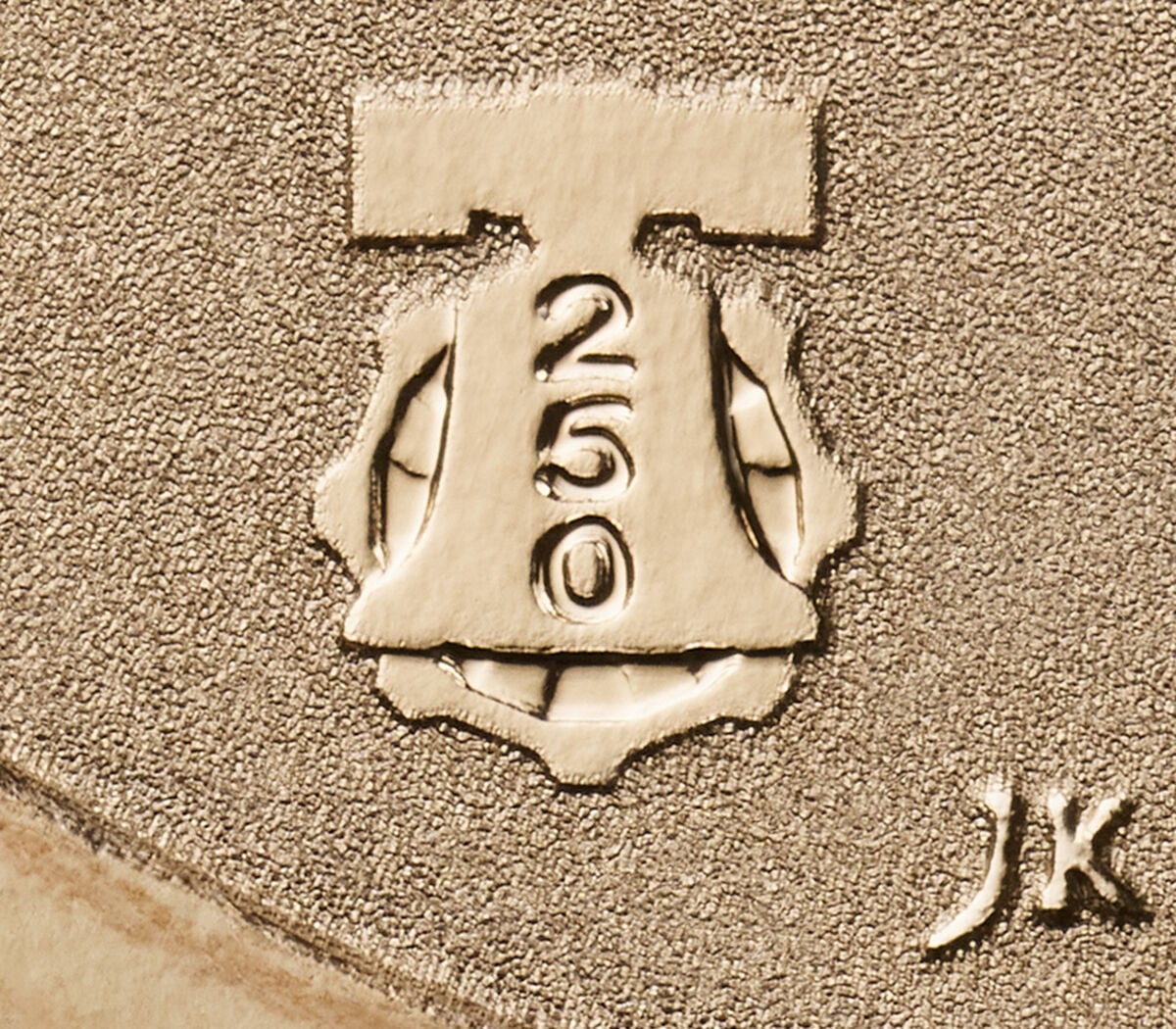
The common obverse (heads) features a dramatic representation of the Statue of Liberty in profile with the inscriptions “IN GOD WE TRUST” and “$1.” The design also includes a privy mark of a stylized gear, representing industry and innovation. In 2026, the privy mark will also incorporate a Liberty Bell with the inscription “250” to commemorate the semiquincentennial of our Nation’s founding.
The edge-incused inscriptions are “2026,” “S” mint mark, and “E PLURIBUS UNUM.”
Iowa – This design depicts Dr. Norman Borlaug holding a sheaf of wheat and wheat stalks, highlighting his pioneering work developing resilient crops capable of feeding a growing global population. Inscriptions are “UNITED STATES OF AMERICA” and “IOWA.” Additional inscriptions are “NORMAN BORLAUG” and “FATHER OF THE GREEN REVOLUTION.”
Nobel Laureate, Dr. Norman Borlaug, is considered one of the founders of the “Green Revolution” for his work on developing varieties of wheat, rice, and maize with broad and stable disease resistance that could yield plentiful harvests. The results of this work throughout a multi-decade scientific career around the world are estimated to have saved at least a billion lives from starvation
Wisconsin – The Wisconsin American Innovation $1 Coin reverse (tails) design features the Cray-1, the first commercially successful supercomputer. Built from 1976 to 1982, it was known as the world’s fastest computer. Cray-1’s unique circular design helped increase the speeds at which signals traveled from one part of the computer to the other. The reverse design exhibits a stylized aerial view of the Cray-1 supercomputer. The image emphasizes the Cray-1 not only through its shape, but by also suggesting the shape of a “C” for Cray-1 and “computer.” Inscriptions are “UNITED STATES OF AMERICA” and “WISCONSIN.” The additional inscription is “CRAY-1 SUPERCOMPUTER.”
CRAY-1 is an early example of a supercomputer that was built by Cray Research, Inc. of Chippewa Falls, Wisconsin and was heralded as the world’s fastest supercomputer from 1976 to 1982. The round tower was a functional design choice because it minimized wire lengths which reduced signal delays. Uses for the computer included testing mathematical models, climate and weather prediction, cryptology, nuclear reactors and weaponry, and pharmacology.
California – This design presents a young Steve Jobs sitting in front of a quintessentially northern California landscape of oak-covered rolling hills. Captured in a moment of reflection, his posture and expression reflect how this environment inspired his vision to transform complex technology into something as intuitive and organic as nature itself. Inscriptions are “UNITED STATES OF AMERICA” and “CALIFORNIA.” Additional inscriptions are “STEVE JOBS” and “MAKE SOMETHING WONDERFUL.”
Steve Jobs
Steve Jobs transformed society’s relationship with technology by integrating it into our daily lives through user-friendly, accessible, and aesthetically pleasing design. By designing attractive machines paired with intuitive operating systems, he prioritized the mainstream user. While not solely responsible for inventing the personal computer, he envisioned products and technology that the everyday consumer could buy and use for daily tasks, changing how the world relates to and relies on technology. From Apple to Pixar, Macintosh to iPhone, his work provided all of us with new ways to create and connect.
Minnesota – The Minnesota American Innovation $1 Coin reverse (tails) design features a 1940s-era truck with an early front-mounted refrigeration unit. The icons adorning the side of the truck identify the diverse temperature-sensitive goods whose widespread transportation was made possible by this innovation. Inscriptions are “UNITED STATES OF AMERICA” and “MINNESOTA.” The additional inscription is “MOBILE REFRIGERATION.”
Until the late 1930s, perishable foods and items were transported using salt and ice. The process was labor-intensive, and maintaining temperatures cold enough to keep perishable cargo from spoiling and safe for consumption was very challenging.
In 1938, the first mobile refrigeration unit was developed and patented by Frederick McKinley Jones. The first iteration, “Model A,” was a bulky refrigerator unit mounted under truck trailers. The “Model C,” depicted on the coin, was an improvement on the initial design that was smaller and placed high on the front of the truck cargo area to reduce road grime and increase durability. It was developed just before WWII, and the patent for the “Model C” was approved in December 1943.
| State: | Iowa | Wisconsin | California | Minnesota |
|---|---|---|---|---|
| Denomination: | $1 | $1 | $1 | $1 |
| Obverse: | Statue of Liberty | Statue of Liberty | Statue of Liberty | Statue of Liberty |
| Designer: | Justin Kunz | Justin Kunz | Justin Kunz | Justin Kunz |
| Sculptor: | Phebe Hemphill | Phebe Hemphill | Phebe Hemphill | Phebe Hemphill |
| Reverse: | Norman Borlaug | Cray-1 Supercomputer | Steve Jobs | Mobile Refrigeration |
| Designer: | Don Everhart | Paul Romano | Elana Hagler | Beth Zaiken |
| Sculptor: | Eric David Custer | John P. McGraw | Phebe Hemphill | Joseph V. Noorigian |
| Finish: | Reverse Proof | Reverse Proof | Reverse Proof | Reverse Proof |
| Composition: | 6% zinc, 3.5% manganese, 2% nickel, balance copper | 6% zinc, 3.5% manganese, 2% nickel, balance copper | 6% zinc, 3.5% manganese, 2% nickel, balance copper | 6% zinc, 3.5% manganese, 2% nickel, balance copper |
| Weight: | 8.100 grams | 8.100 grams | 8.100 grams | 8.100 grams |
| Diameter: | 1.043 inches (26.49 mm) | 1.043 inches (26.49 mm) | 1.043 inches (26.49 mm) | 1.043 inches (26.49 mm) |
| Edge: | Lettered | Lettered | Lettered | Lettered |
| Mint: | San Francisco | San Francisco | San Francisco | San Francisco |
| Mint Mark: | S | S | S | S |
American Innovation 2026 $1 Coin Reverse Proof Set
American Innovation® $1 Coin Program
San Francisco (S)
Item Number:
26GC
Item Limits
Mintage Limit is the total number of a coin or medal manufactured across all products. (For example, a coin may be available in rolls and in our annual sets).
Product Limit is the number of a coin or medal made available in the individual product.
Household Order Limit The United States Mint imposes household order limits on our products to ensure that we provide fair purchase opportunities to the broadest audience possible. Household order limits for our products are typically lifted at 2 pm ET the business day after they go on sale. As we monitor our products, limits may be implemented, adjusted, or removed at our discretion.
Mintage Limit:
99,792
Product Limit:
None
Household Order Limit:
None
By subscribing to an email list, you are agreeing to our Terms of Use, you are confirming that you are at least 18 years old, and you are opting-in to certain collections and uses of your personal data. For more information, including our authority to collect your data, please see our Privacy Policy.