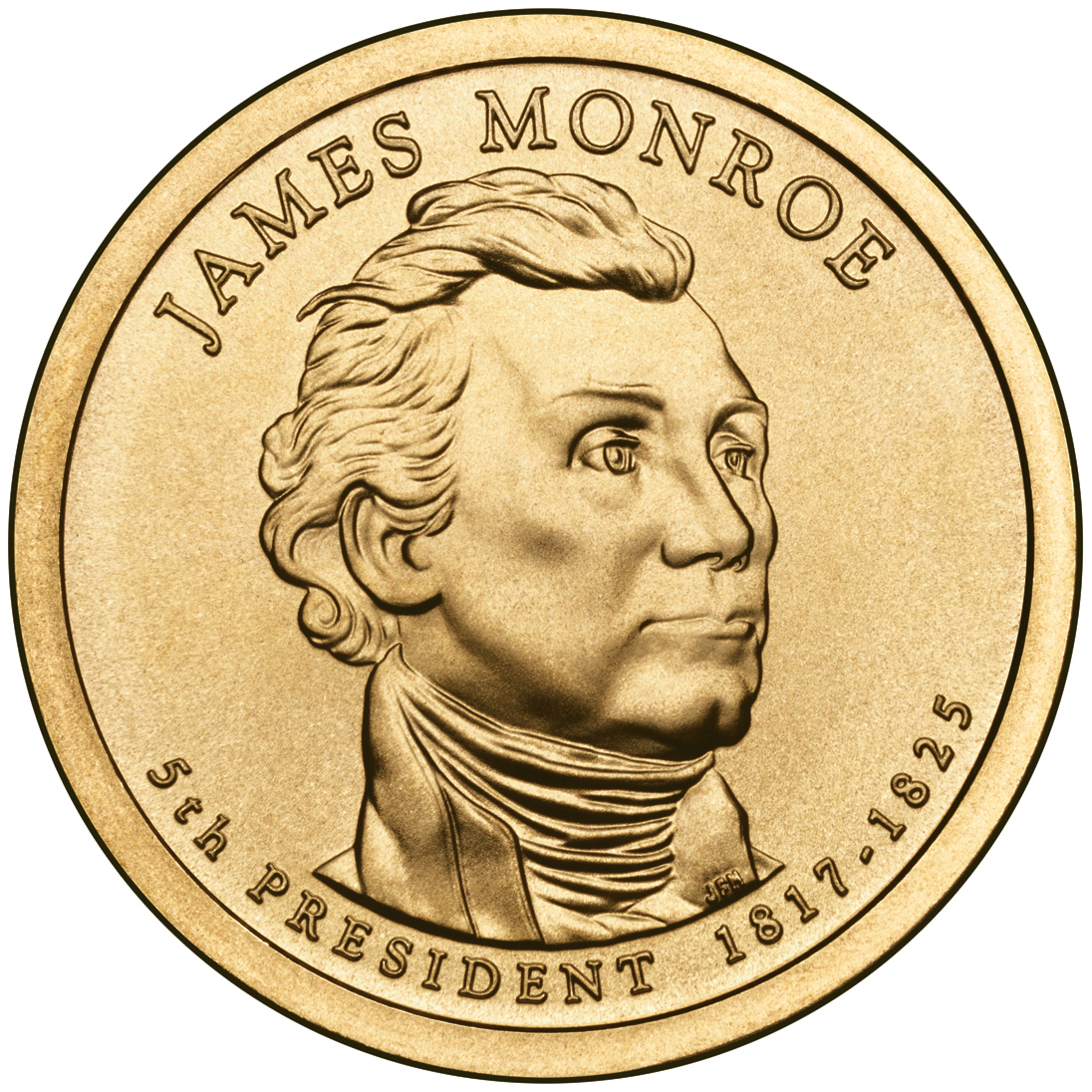
The James Monroe Presidential $1 Coin honors the 5th President of the United States.
Virginia native James Monroe was exceptionally qualified to serve as president. Not only was he a Revolutionary War soldier, he was champion of the Bill of Rights, U.S. diplomat in Europe, governor of Virginia, senator, secretary of state, secretary of war, and negotiator of the Louisiana Purchase, before being overwhelmingly elected president in 1816.
His time in office is known as the “Era of Good Feelings” for the peace and booming economy the country enjoyed.
The Monroe Doctrine, a foundation of American foreign policy introduced in an 1823 message to Congress, warned European powers against expansionism in the Western Hemisphere.
Monroe’s presidency was also marked by the Missouri Compromise, which preserved a balance of free states and slave states in the United States and prohibited slavery in western territories above the 36/30′ north latitude line.
Coinage Legislation Under President James Monroe
Act of January 14, 1818 — This Act directs the location of the United States Mint to remain in Philadelphia for another term of five years, beginning March 4, 1818.
Act of March 3, 1819 — This Act continues the authorization of certain gold and silver coinage from foreign countries as current and legal tender for the payment of debts within the United States. Specific rates of exchange are enumerated for the coins of Great Britain, Portugal, France, and Spain.
Act of March 3, 1821 — This Act continues the provisions of the Act of April 29, 1816, relating to the legal-tender value of French coins.
Act of March 3, 1823 — This Act authorizes certain gold coinage from foreign countries as current and legal tender in all payments on account of public lands within the United States. Specific rates of exchange are enumerated for the coins of Great Britain, Portugal, France, and Spain. The Act also calls for an annual assay of such coins, and for a report to the Congress detailing the results.
Act of March 3, 1823 — This Act directs the location of the United States Mint to remain in Philadelphia for another term of five years, beginning March 4, 1823.
United States Mint Directors Appointed by President Monroe
1824 Samuel Moore — Fifth Director of the United States Mint.
Characteristics
The obverse (heads) shows a portrait of James Monroe.
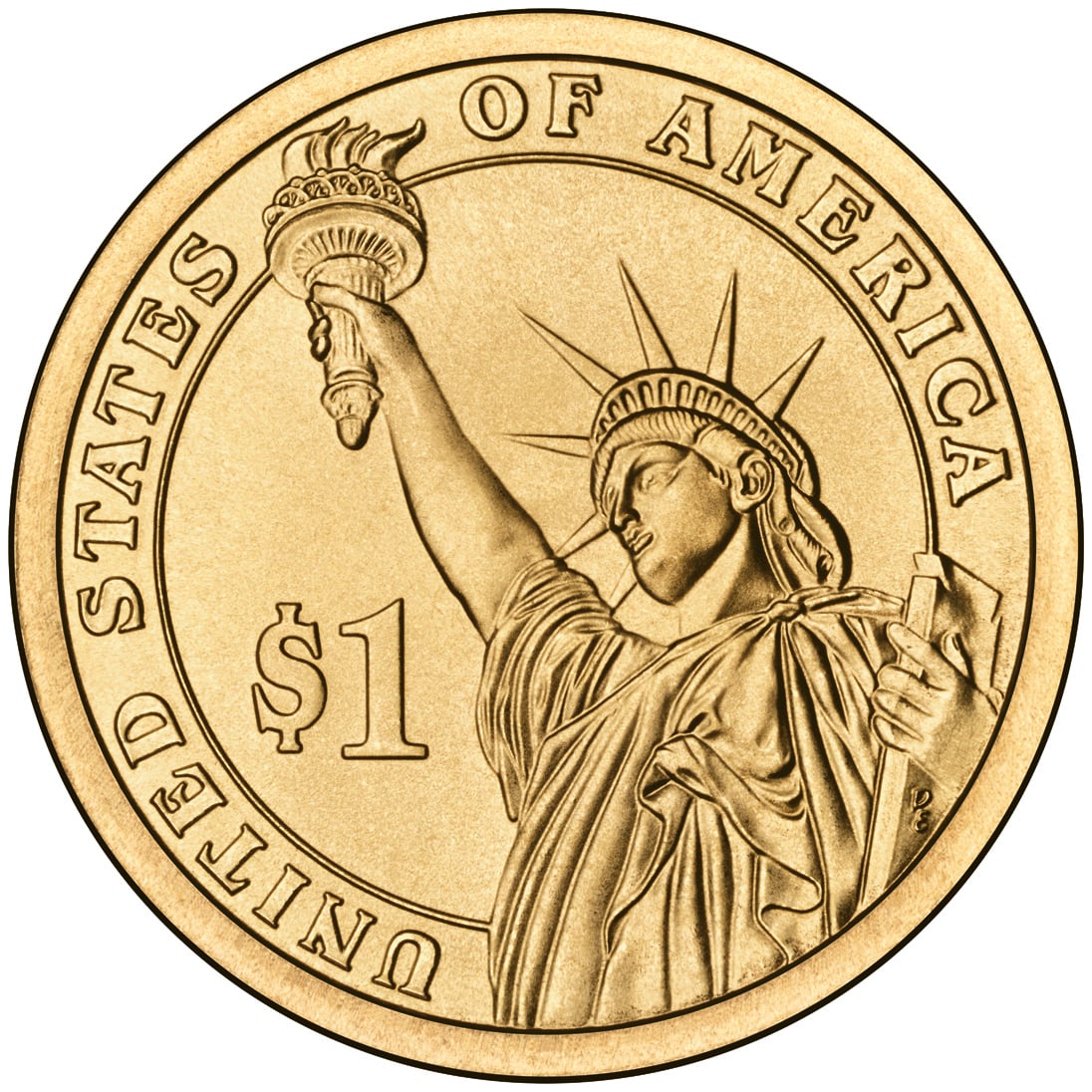
The reverse (tails) features a striking rendition of the Statue of Liberty.