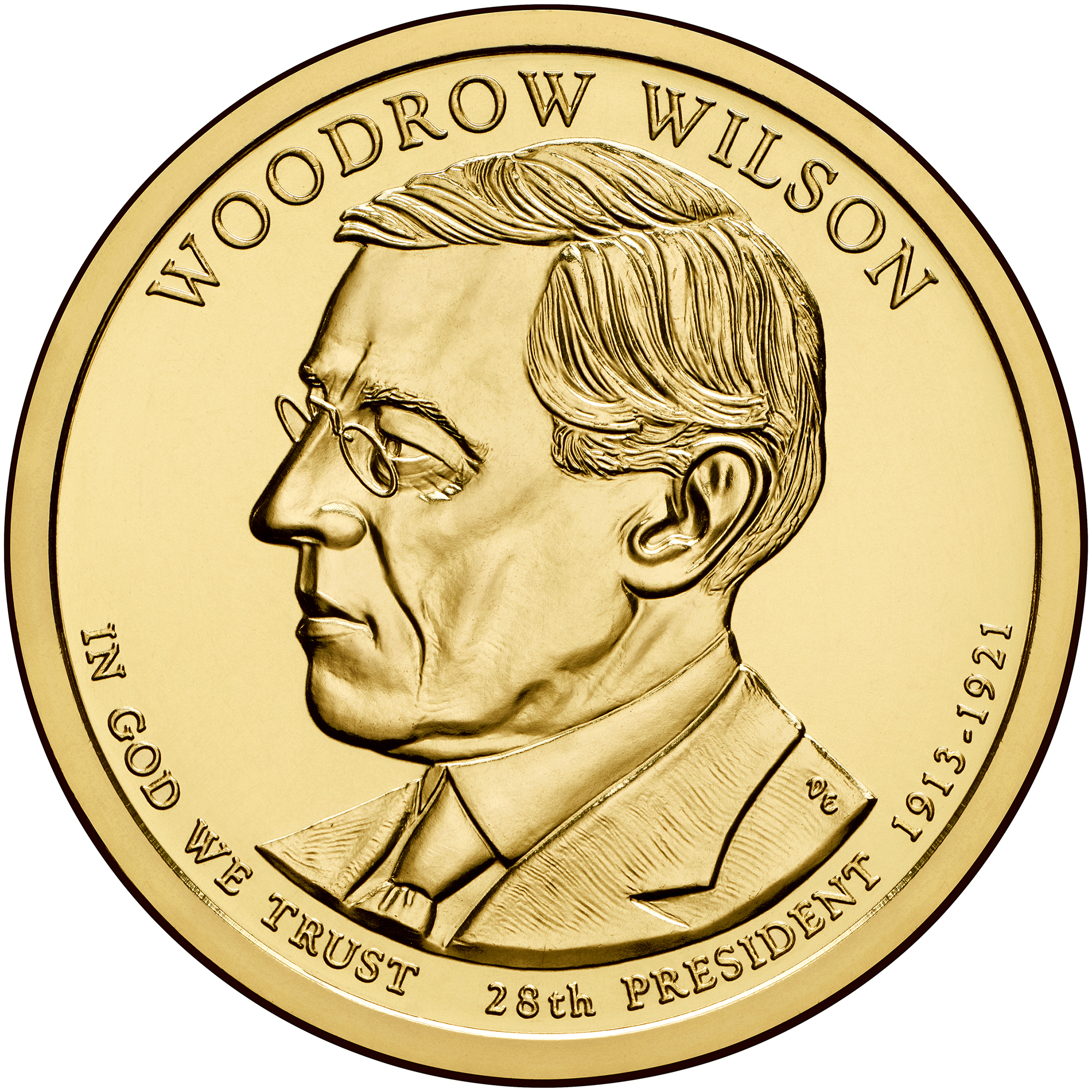
The Woodrow Wilson Presidential $1 Coin honors the 28th President of the United States.
Woodrow Wilson was born in Staunton, Virginia, in 1856. He became a professor of political science and was appointed president of Princeton University in 1902. He was elected governor of New Jersey in 1910 and President of the U.S. just two years later. While he was President, the Federal Reserve Act was passed, which provided the country with a more elastic money supply. He suffered a stroke while trying to rally support for the Versailles Treaty, which was defeated by the Senate.
Coinage Legislation Under President Wilson
Act of January 16, 1915: For the coinage of certain gold and silver coins in commemoration of the Panama-Pacific International Exposition
Act of February 23, 1916: For the coinage of a McKinley souvenir gold dollar in commemoration of the erection of a memorial to William McKinley, late President of the United States
Act of April 23, 1918: For the purpose of stabilizing the price of silver and encouraging its production (Pittman Act)
Act of June 1, 1918: Authorized the coinage of 50-cent pieces in commemoration of the 100th anniversary of the admission of the State of Illinois into the Union
Act of May 10, 1920: Authorized the coinage of 50-cent pieces in commemoration of the 100th anniversary of the admission of the states of Maine and Alabama into the Union
Act of May 12, 1920: Authorized the coinage of 50-cent pieces in commemoration of the 300th anniversary of the landing of the Pilgrims
United States Mint Directors Appointed by President Wilson
Robert Wickliffe Woolley of Virginia — 1915 – 1916
Friedrich Johannes Hugo von Engelken of Florida — 1916 – 1917
Raymond Thomas Baker of Nevada — 1917 – 1922
Characteristics
The obverse (heads) shows a portrait of Woodrow Wilson.
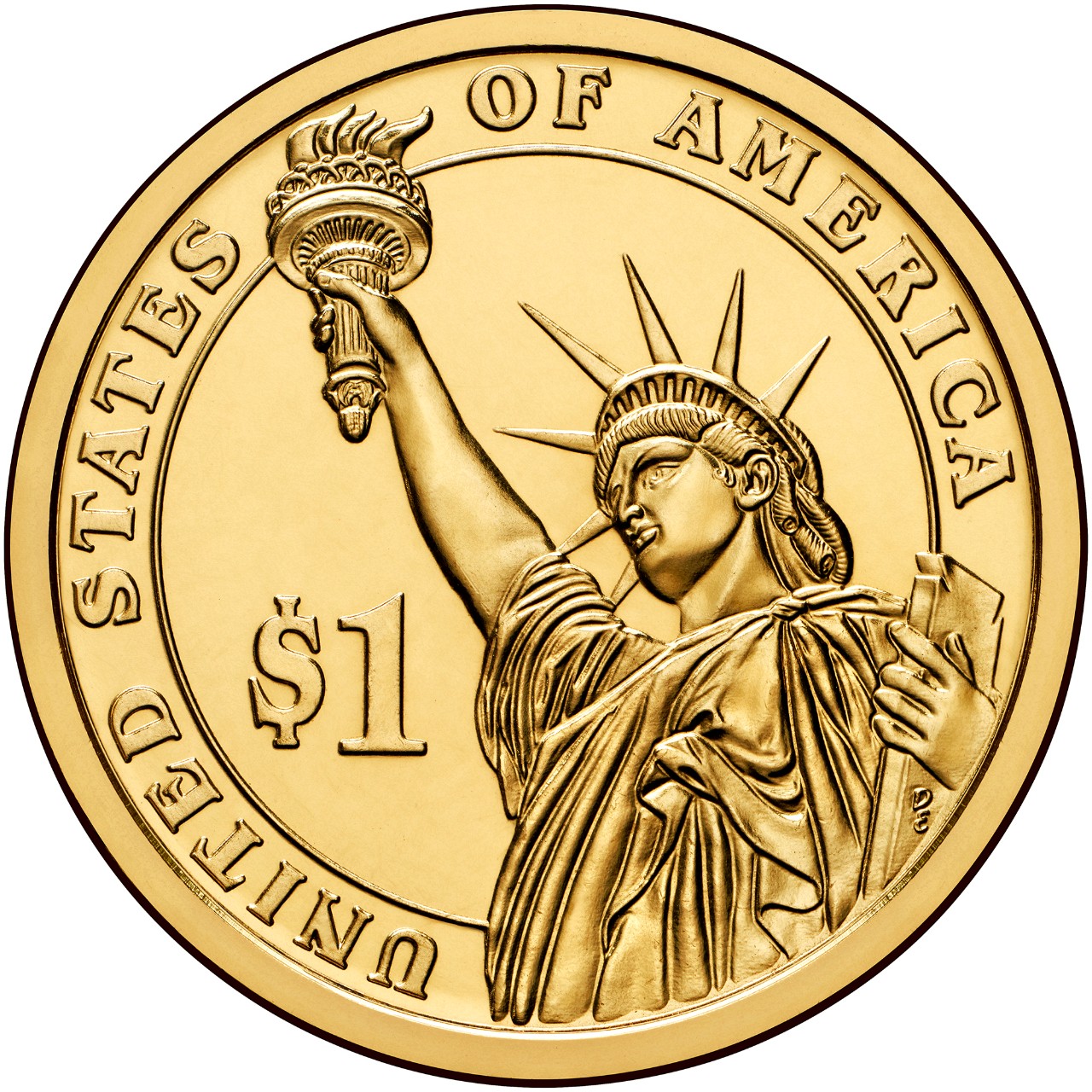
The reverse (tails) features a striking rendition of the Statue of Liberty.

 Celebrating America's 250th Anniversary