
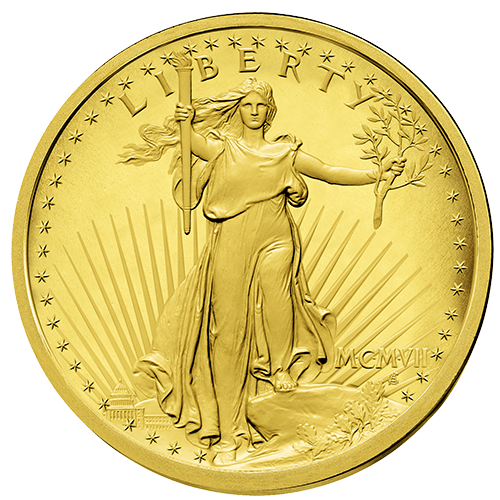
As part of the Semiquincentennial celebration in 2026, the Mint will also issue a special Best of the Mint Gold Coin & Silver Medal Set using the Saint-Gaudens design.
Gold Eagle Coins
1795-1834
Early Gold Eagles
The Mint released the first half eagle and eagle coins in 1795, followed by the quarter eagle in 1796. The original coin designs were created by Mint Engraver Robert Scot and are known today as Capped Bust Right Eagles, referring to the depiction of Liberty on the coin's obverse.
All three denominations used the Capped Bust Right design at first, although modifications were made over time, including replacing the small eagle on the reverse with a heraldic eagle. Scot's designs were phased out entirely by 1807.
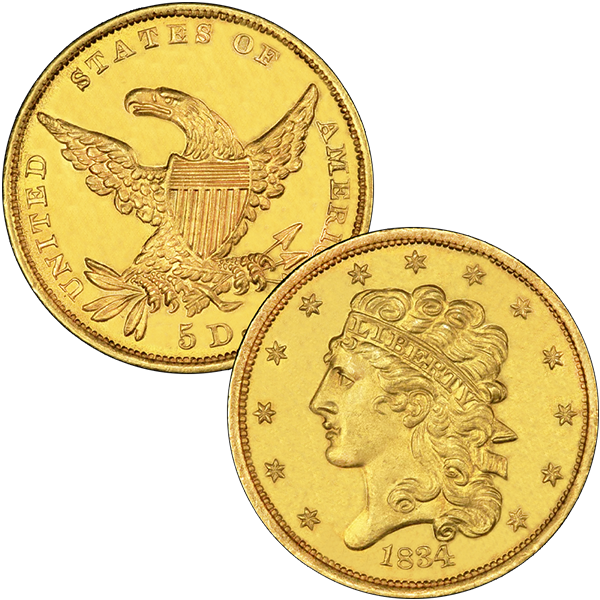
Over the next few decades, Liberty's head, direction, and cap would change several times. Mint Assistant Engraver John Reich designed the Capped Bust Left Eagle (1807-1812) and Capped Head Left Eagles (1813-1834) before resigning from the Mint in 1817.
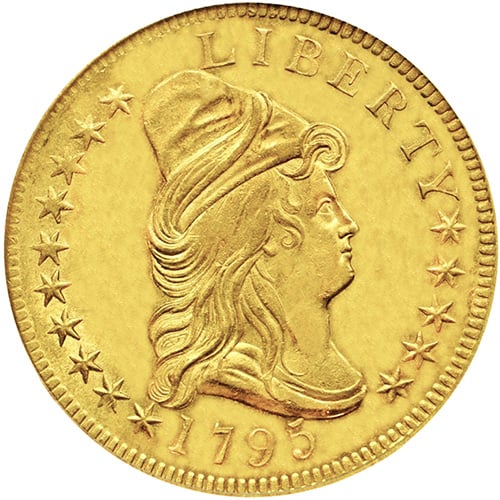
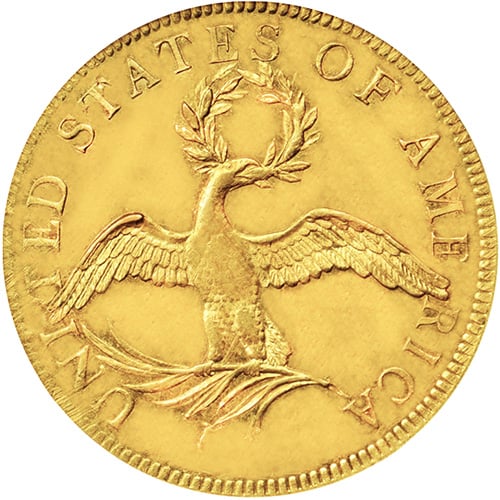
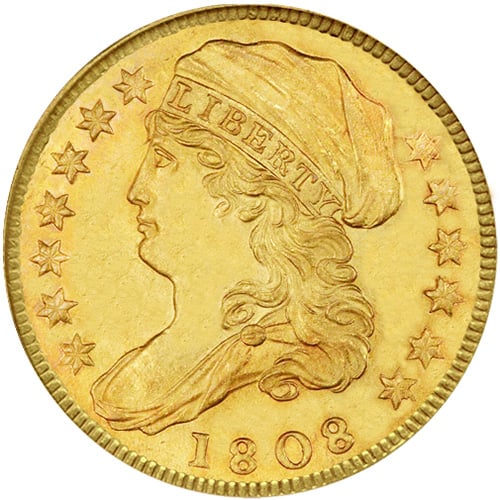
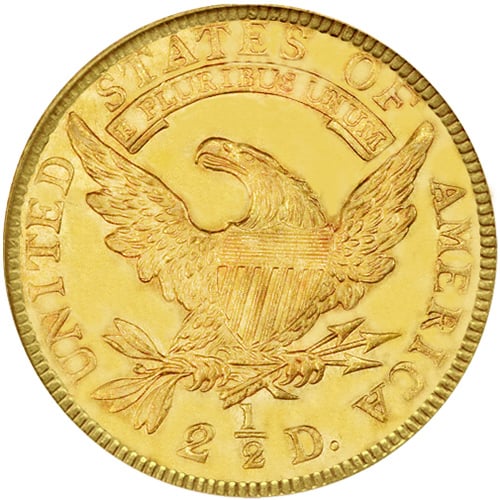
Did you know? The motto "E PLURIBUS UNUM" was first inscribed on a U.S. Mint coin in 1797 on the Capped Bust Right Half Eagle. This occurred when the original reverse design of a small eagle was replaced with a heraldic eagle, resembling the Great Seal of the United States.

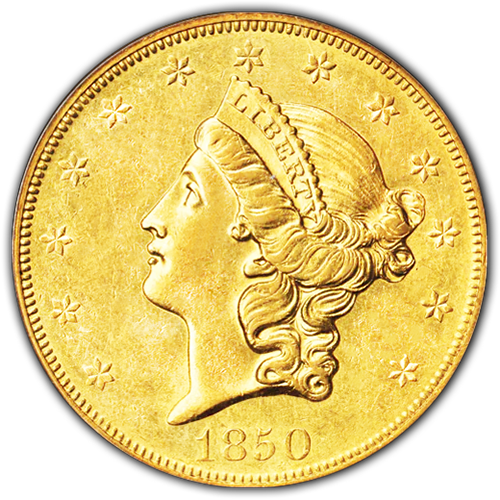
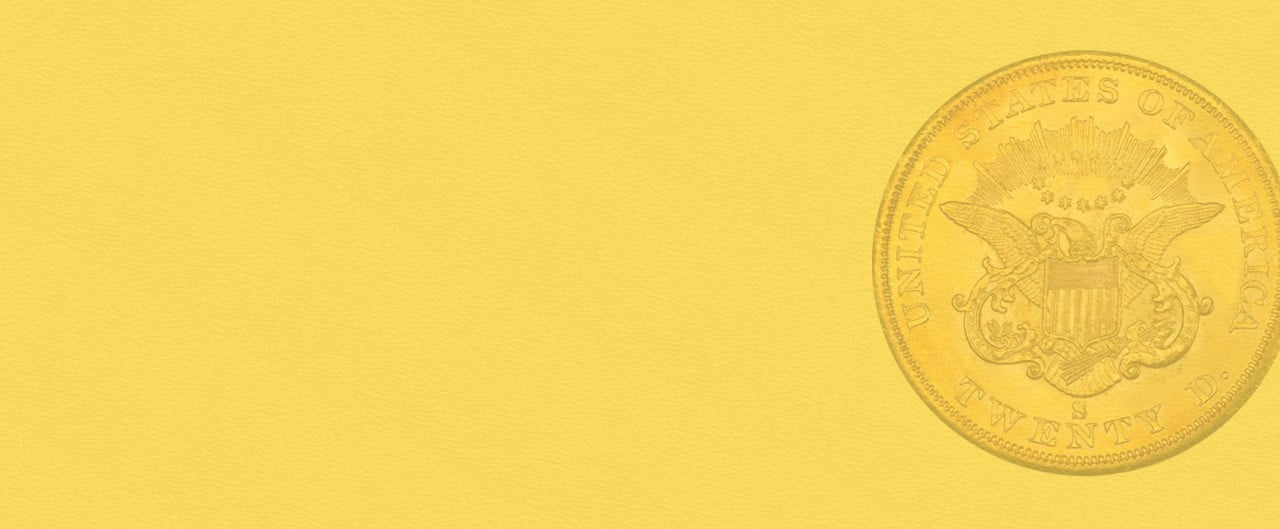
In 1849, James Longacre (who succeeded Gobrecht as Mint Engraver five years earlier) modified the Liberty Head obverse for the very first Double Eagle $20 Gold Coin. The reverse departed from the previous design by showing a heraldic eagle with rays of light above its head.
Longacre's double eagle reverse design saw two minor updates during its production run. The Mint added the motto "IN GOD WE TRUST" in 1866 and changed "TWENTY D." to "TWENTY DOLLARS" in 1877.
1907-1933
Indian Head Eagles
During the early 1900s, President Theodore Roosevelt launched a new intiative to overhaul the artistic quality of American coinage. Roosevelt worked with artist Victor Brenner to create a new one-cent piece (the 1909 Lincoln Penny) and artists Bela Lyon Pratt and Augustus Saint-Gaudens to redesign gold eagles. The next three American presidents would continue Roosevelt's work by approving new designs for the Buffalo Nickel (1913), Mercury Dime (1916), Standing Liberty Quater (1916), Walking Liberty Half Dollar (1916), and Peace Dollar (1921).
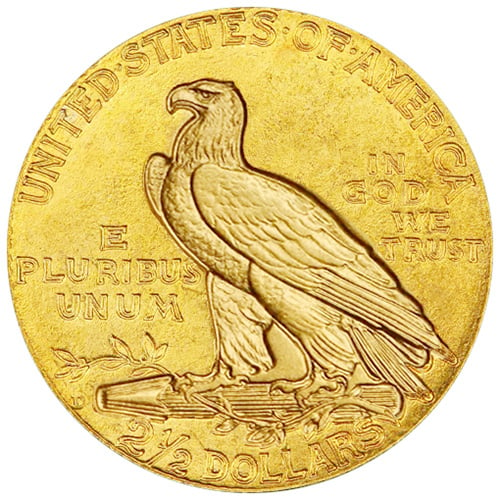
Artists Saint-Gaudens and Bela Lyon Pratt each created their own Indian Head design, the former for the eagle and the latter for the half eagle and quarter eagle. While Saint-Gaudens' obverse portrays a left-facing Lady Liberty wearing a Native American headdress, Pratt's design shows a left-facing Native American chief.
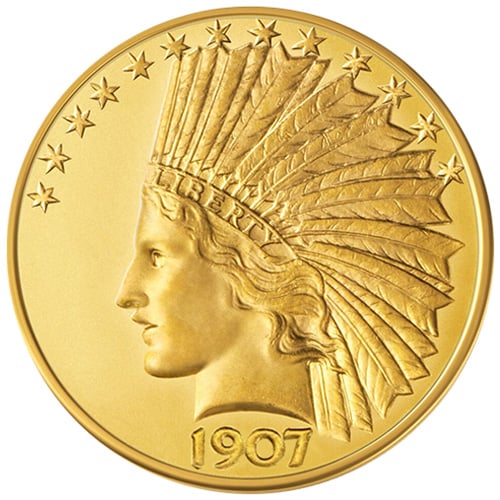
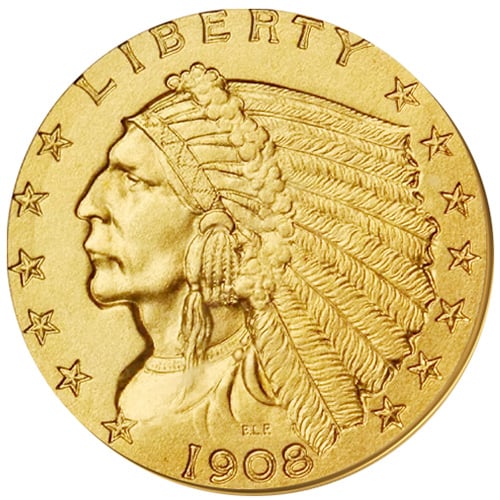
Neither coin design was without controversey. Pratt's design was incuse, meaning the relief was sunken below the fields of the coin, a bold choice that drew complaints from some numismatists of the day.
Early versions of Saint-Gaudens' high relief Indian Head and Double Eagle coins were difficult to stack, leading to complaints by bankers and revisions to the coins. Most significant, though, was what was not present on the Saint-Gaudens coin.
President Roosevelt objected to the idea of reflecting religious sentiment on coins and therefore omitted "IN GOD WE TRUST" from the 1907 eagle. The move was so controversial that a special Act of Congress (Public Law 60-120) required the Mint to restore the phrase beginning in 1909.
The reverse for all Indian Head coins was a eagle perched on a bundle of arrows with an olive branch in its talons, modeled after Saint-Gaudens' design for Roosevelt's inaugural medal.
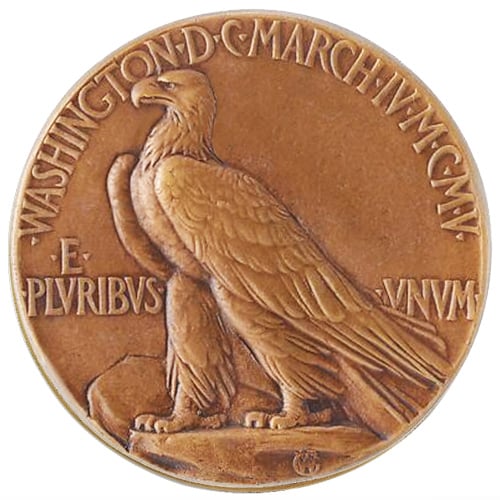
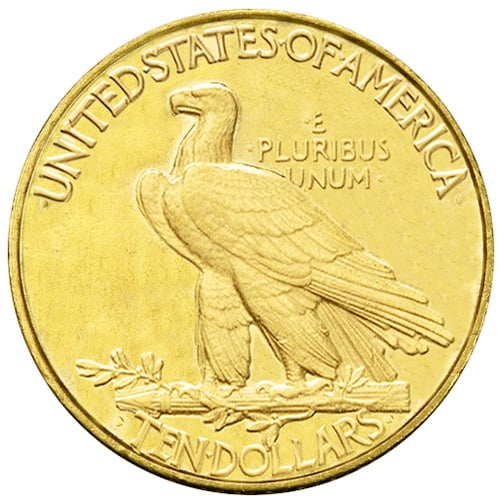
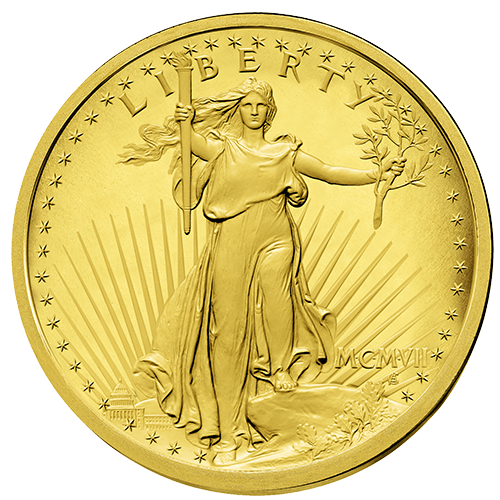
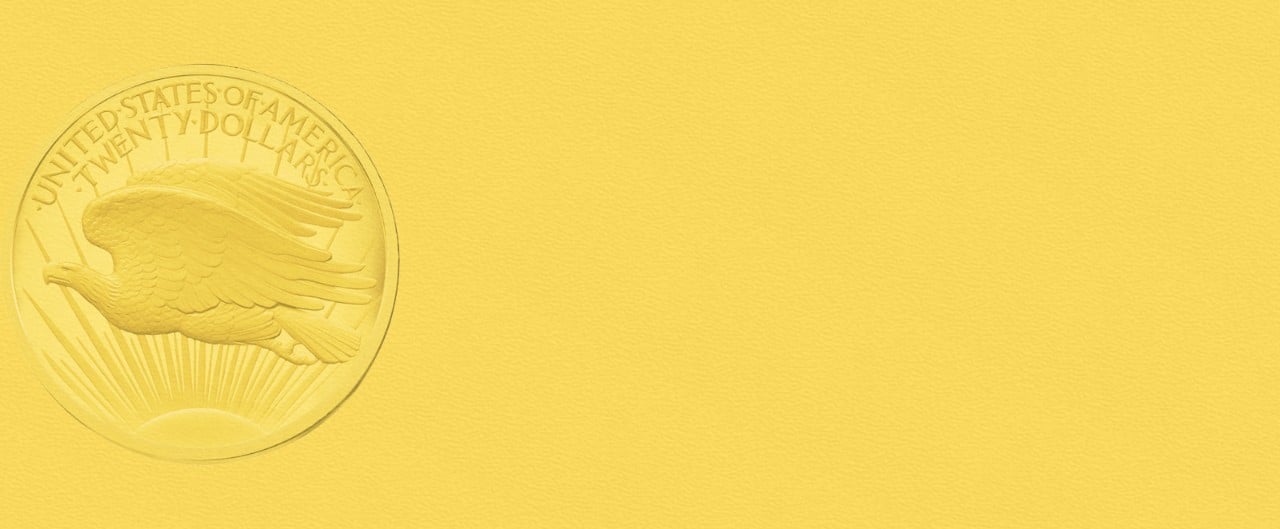
A young eagle flying during a sunrise is depicted on the reverse. This is America, young and strong, in its ascendancy with a bright future before it. The motto “E PLURIBUS UNUM” is on the edge of the coin, allowing a cleaner design on the obverse and reverse. These stylistic elements represented the visual embodiment of America and made it the definitive American coin.
There were four variations of the 1907 Double Eagle. The first two attempts were considered ultra high relief (also referred to as extremely high relief): a 34 mm version and a 27 mm version, both with Roman numerals. The coining process for the 34 mm version was too arduous, and the United States Mint would later find out it had no authority to mint the 27 mm version.
Its third attempt reduced the relief and was struck in 34 mm version with Roman numerals. Because its relief was reduced, it did not require as much metal flow to fill the design and was more suitable for mass production and approximately 12,000 were made. Finally, in December 1907, a fourth variation was produced, an even lower relief 34 mm version with Arabic numerals.
Despite Saint-Gaudens’ artistic masterpiece, the minting process of the day was not conducive to high relief coins, which he and Roosevelt specifically desired. As a result, despite being considered one of the most beautiful gold pieces ever minted, Saint-Gaudens’ full vision could not be realized in his time.
Ultra High Relief Gold Coin
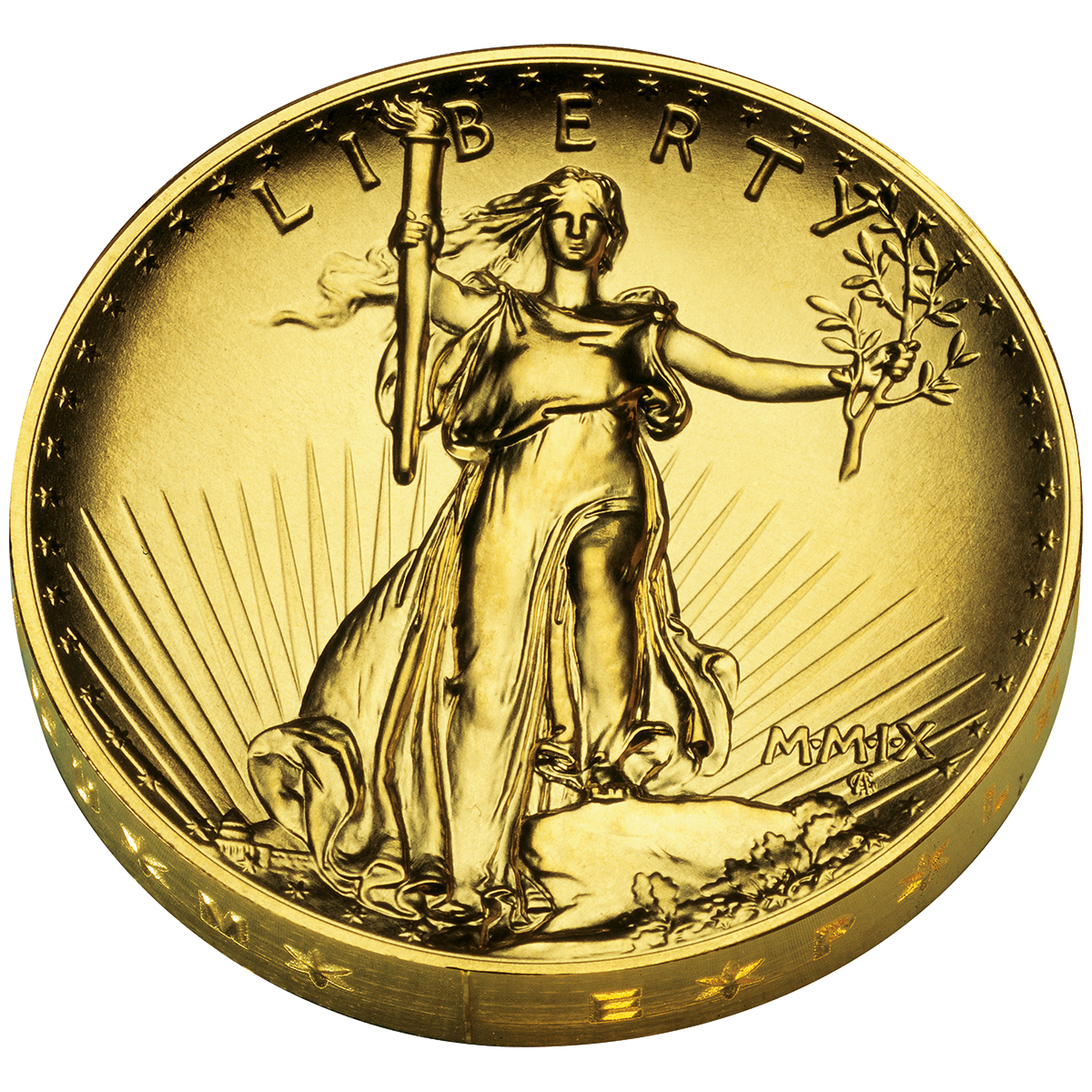
A century later, the Mint issued the Ultra High Relief Double Eagle Gold Coin in 2009. This coin fulfilled Augustus Saint-Gaudens’ vision of an ultra high relief coin that could not be produced in 1907 with the technology of the time.
Original Saint-Gaudens coin plasters were digitally mapped while the design was updated to reflect the year 2009. An additional four stars to represent the current 50 states was also added as well as the inscription "IN GOD WE TRUST," which was not on the 1907 version. Additionally, a small border was added for a more consistent edge. The 2009 coin was made of 24-karat gold as opposed to 22-karat gold.

Content last updated on March 26, 2026