For one year only, the Enduring Liberty design will be on America's 50-cent coin. The obverse for 2026 features a close-up view of the Statue of Liberty, her steadfast gaze looking outward as if toward the future. The reverse design features Liberty passing her torch, its flame trailing with the momentum of purpose, to a new generation.
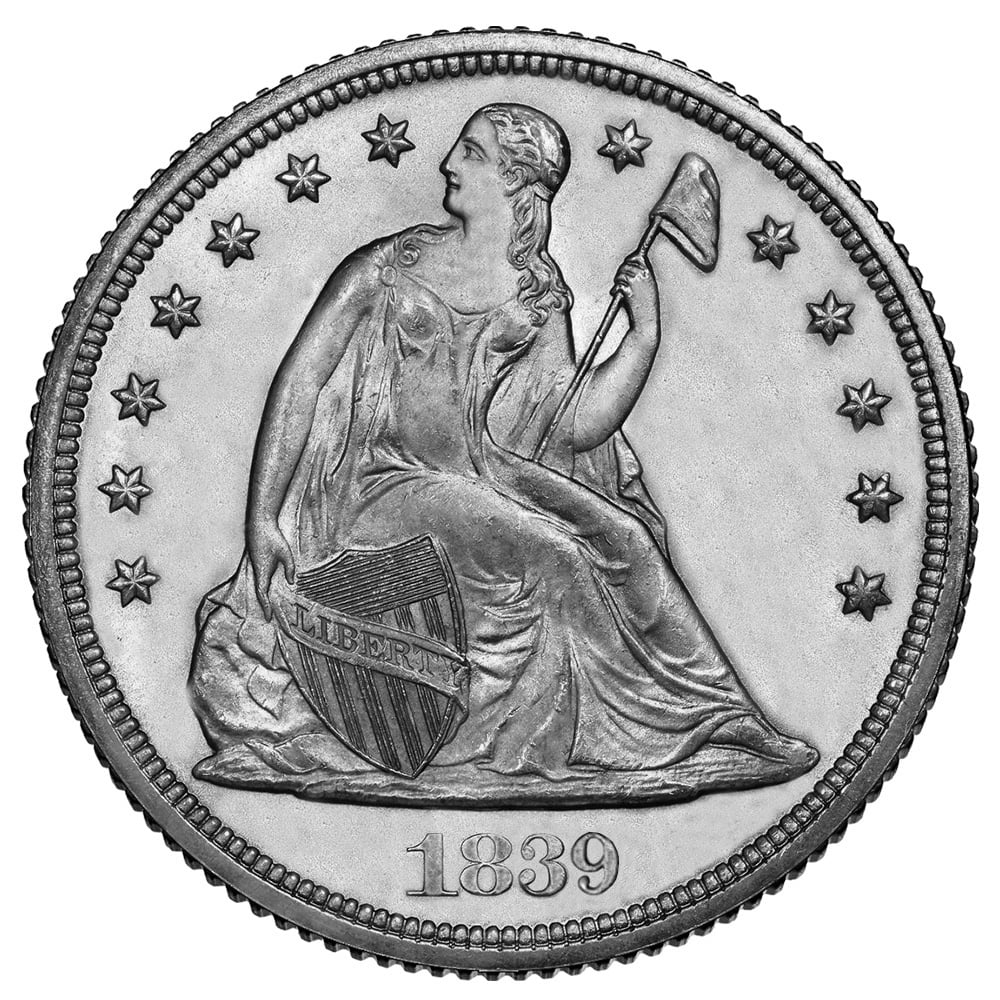
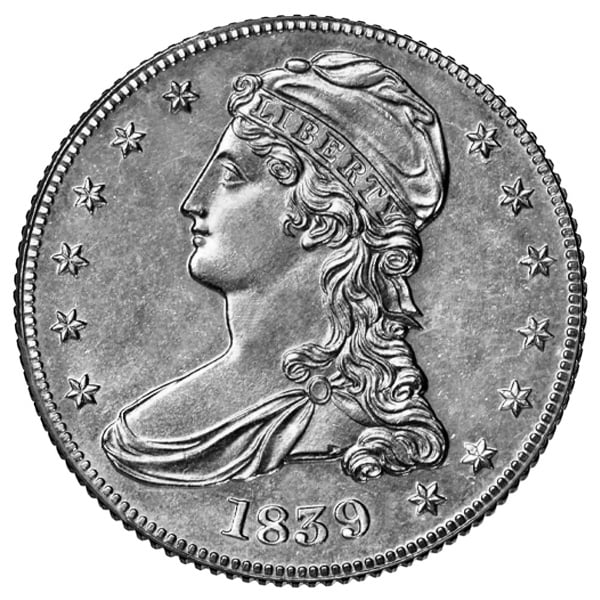
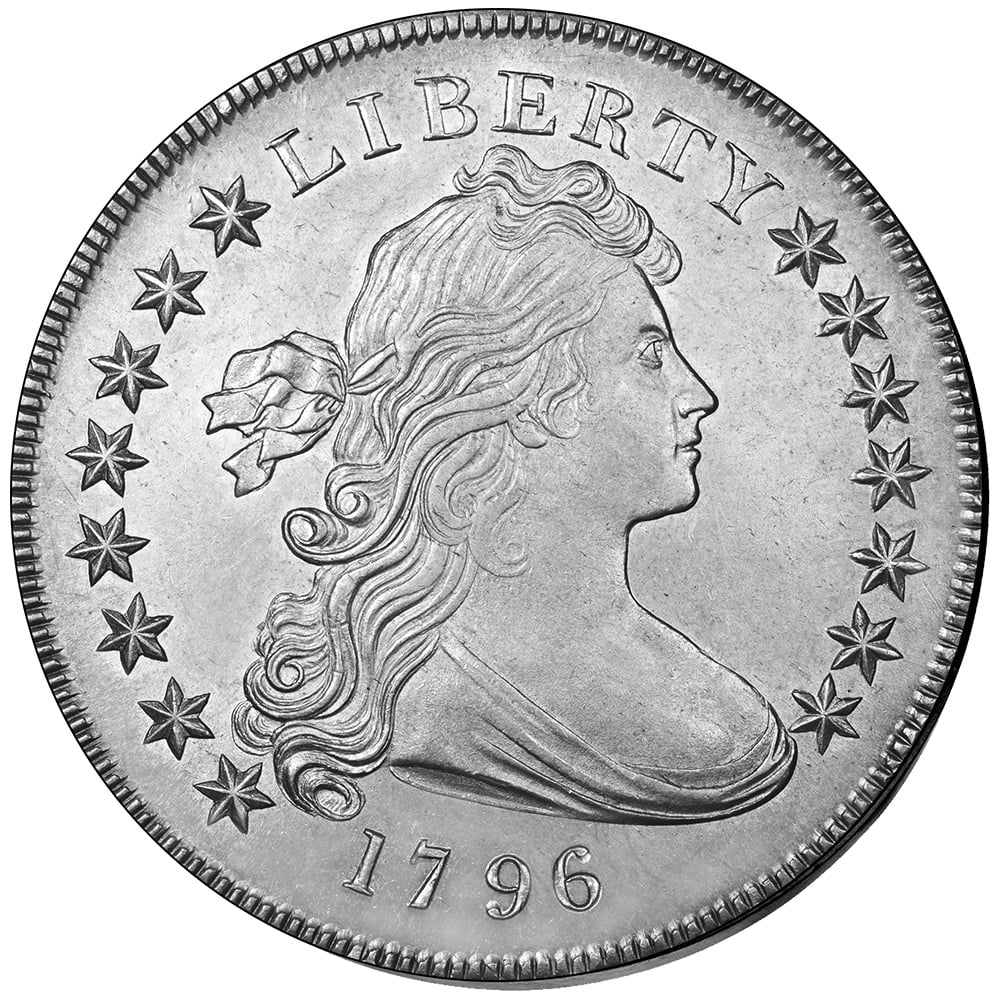
The Mint made the first half dollar in 1794 of silver. The designs from 1794 to 1947 showed a woman symbolizing liberty on the obverse and an eagle on the reverse. 1947 was the last year that Liberty appeared on a U.S. circulating coin.
From 1916 to 1947, the Mint produced the “Walking Liberty” half dollar designed by Adolph A. Weinman. Weinman also designed the iconic Mercury dime. The obverse shows the figure of Liberty walking with her right arm extended and holding laurel and oak branches in her left. She’s draped in the folds of the American flag while the sun rises in the background. The reverse features an eagle with unfolded wings perched on a rock. A pine branch grows from the rock.
In 1948, an image of Benjamin Franklin replaced Liberty on the obverse of the half dollar. The reverse depicted the Liberty Bell in Philadelphia.
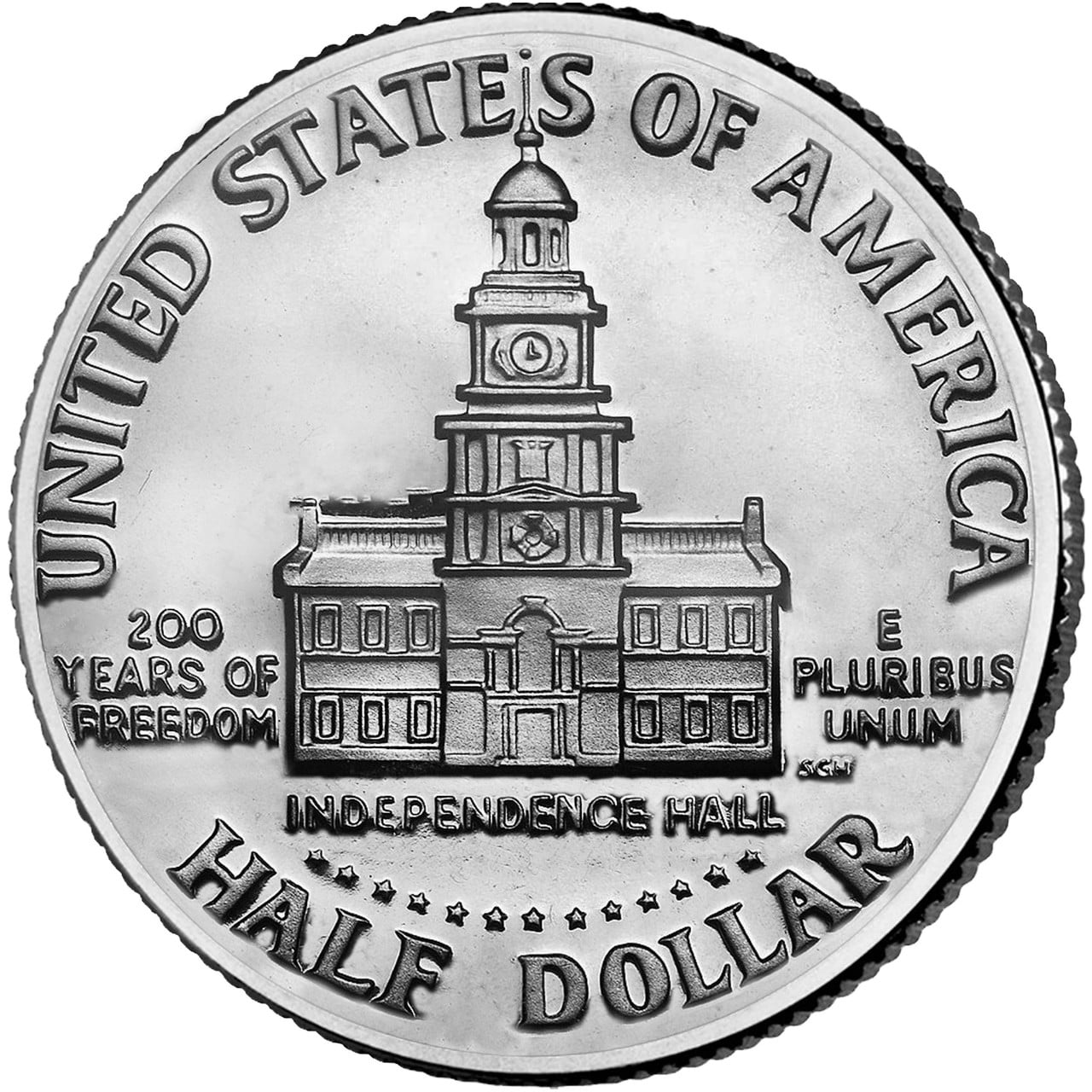
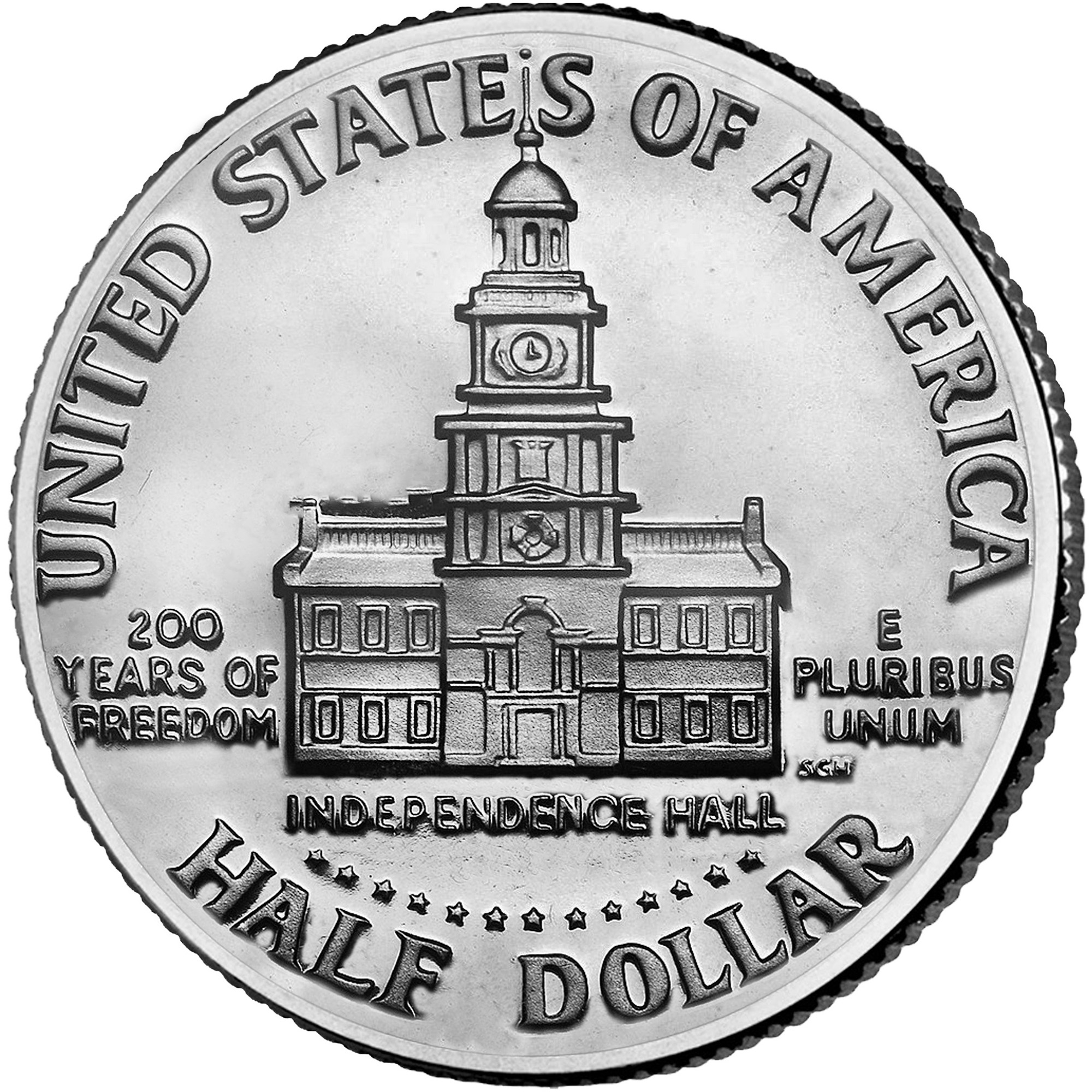
The Kennedy Half Dollar was issued in 1964 and continued to 2025, except for a brief period in the 1970s. A temporary reverse featuring Independence Hall in Philadelphia appeared in 1975 and 1976 to celebrate the bicentennial of the Declaration of Independence.
In 1971, the Mint removed silver from the half dollar and the composition became copper-nickel clad.
Since 2002, half dollars have been minted primarily for annual coin sets and other numismatic products. However, the Federal Reserve may still order them for circulation.
The Denver and Philadelphia Mint facilities make the circulating and uncirculated cupro-nickel coins, and the San Francisco Mint makes the proof coins.

 Countdown to America's 250th Anniversary