|
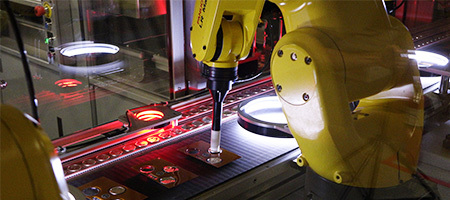
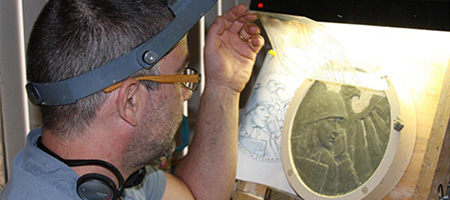
How are coins produced?
To learn all about the making of a coin, visit coins
When were the first circulating coins produced?
The Mint produced its first circulating coins -- 11,178 copper cents -- in March 1793. Soon after, the Mint began
issuing gold and silver coins as well.
How do our coins enter circulation?
The United States Mint ships the coins that it produces to the Federal Reserve Banks for distribution into the economy
through the banking system. The money produced by the Treasury Department (both coinage and currency) is placed into and
removed out of circulation through the Federal Reserve Banks and their branches. When individuals or businesses want
currency or coins to spend, they write a check, exchanging one form of money (checkbook money) for another (cash).
Banks satisfy this demand with "purchases" of cash from Federal Reserve Banks. This is done with special
checkbook money called a reserve balance. As this newly obtained cash is spent, it flows back into the banking system
as business and individual deposits. When banks accumulate more cash than they need for day-to-day transactions, they deposit
it into the bank's checking account at the local Federal Reserve Bank. Sometimes the Federal Reserve Banks need
additional money to replace currency notes that are unfit for circulation or to meet expanding demand. They then place
orders with the United States Mint and the Bureau of Engraving and Printing (BEP).
What are current circulating coins made from?
Quarters and dimes are composed of cupro-nickel clad, with a pure copper core, and an outer layer of a 75 percent copper,
25 percent nickel alloy.
Nickels are made from the same 75-25 alloy, and the cent, once a copper coin, is now composed of copper plated zinc.
These cents are less expensive for the Mint to manufacture, and at 2.5 grams each, weigh about 20% less than the cent
previously minted of 95 percent copper and 5 percent zinc, which weighed 3.11 grams.
Why is the one-cent coin (the penny) larger than the ten-cent coin (the dime)? What determines the sizes of
our coins?
The sizes of United States coins can help you to identify each one, but have nothing to do with their value. The first
U.S. five-cent coins (nickels) were made of silver, and were smaller than the ten-cent coins (dimes) in circulation today.
You may be interested to know that our coinage system, to a certain extent, has grown out of custom or, in other words,
out of daily use. When United States coins were first produced in 1793, our standard coin was the silver dollar. The
United States Mint produced the rest of our coins (except the one-cent coin) in a proportionate metallic content to the dollar,
with the sizes regulated accordingly. The half-dime (or five-cent denomination) had 1/20th the amount of silver contained in
the dollar. Our 10-cent coin contained 1/10th the amount of silver, the quarter-dollar coin (the quarter) contained 1/4th
the amount, and the half-dollar coin contained 1/2 the amount. Mint officials recognized the need for a larger five-cent
coin because the half-dime was exactly half the size of the dime. This proved to be too small for convenient handling by
the public. Adoption of the five-cent coin as we know it today occurred in 1866. The Mint increased the coin's size and
changed its metallic content from silver and copper to a combination of copper and nickel.
What is the life span of a coin?
The approximate life span of a coin is 25 years.
What happens to United States coins that are no longer fit for circulation?
Those coins are classified as "uncurrent" or mutilated. Mutilated coins are coins that are chipped, fused, and
not machine countable. Mutilated coins are only redeemable through the United States Mint.
Uncurrent coins are coins that are worn yet recognizable as to genuineness and denomination, and are machine countable.
Uncurrent coins are redeemed by the Federal Reserve Banks, then forwarded to the Mint for disposition.
All uncurrent or mutilated coins received by the Mint are melted, and the metal is shipped to a fabricator to be
used in the manufacture of coinage strips.
I have some old coins that are tarnished. How can I safely clean them?
Once a coin has been tarnished, there is no way to completely restore newly-minted luster. Ordinary coins, if they are
in reasonably good condition, may be freshened by rubbing them with cheesecloth or cotton that has been moistened with a
paste consisting of baking soda and a few drops of water. However, it should be noted that the condition of a coin plays
an important part in any valuation of its value as a collector's item. The finish could be inadvertently destroyed or
seriously affected by the indiscriminate use of a cleaning agent. If you believe that you have coins that are, or could be, of
numismatic value, you should seek advice from a coin dealer or advanced collector regarding methods currently being used by
them to clean coins.
Are there any plans to remove the one-cent coin (more popularly known as "the "penny) from
circulation?
We occasionally hear from people who believe that the Mint should stop producing one-cent coins and remove them
from circulation. You may be interested to know that the penny is the most widely used denomination currently in
circulation. There was a study conducted in 1976 of this and other suggestions regarding our coinage system.
However, the idea of eliminating the penny received strong objections from an overwhelming majority of State
revenue collection departments, retail firms, and commercial banks. Other objections voiced in later studies concerned
the inflationary impact of such a proposal on prices and possible difficulties on collecting sales taxes.
It has not been confirmed that the penny has outlived its usefulness. Neither business nor the public as a whole
has pressured for changes in the coin denominations in circulation today. In addition, our coin and currency system is
among the most trusted in the world. The vast majority of users apparently are content with the existing coin denominations,
including the one-cent coin. As a result, the Treasury Department has no plans now to cease production of the penny. In addition, such
a change to the United States monetary system could not be done without prior Congressional authorization. If directed to do
so by legislation enacted by the Congress and signed by the President, the Treasury Department would again study phasing
out the penny. Since the demand exists and the Federal Reserve Banks require inventories to meet the demand, the United
States Mint is committed to producing the penny.
Why do some coins have grooves on the edges and why are they there?
The dollar, half-dollar, quarter, and 10-cent coin (dime) denominations were originally produced from precious
metals (gold and silver). Reeded edges were eventually incorporated into the design of these denominations to
deter counterfeiting and fraudulent use of the coins, for example, filing down the edges in an attempt to recover
the precious metals.
The one-cent (penny) and five-cent pieces (nickels) are considered "minor" coins of the United States
and have never contained precious metals.
Currently, none of the coins produced for circulation contain precious metals. However, the continued use of reeded
edges on current circulating coinage of larger denominations is useful to the visually impaired. For example, the 10-cent
(dime) and one-cent coins are similar in size; the reeding of the dime makes it easily identifiable by touch.
What are mint marks?
Mint marks date from the days of ancient Greece and Rome. The practice was inaugurated in the United States by
an Act of March 3, 1835, which established the first branch mints in this country. This Act provided that the Director
of the Mint prescribe regulations for identifying the coins stamped at each institution, thus assuring central control
of all coinage so that production from the different branches of the establishment should be exactly standard. The use
of a mint mark on branch mint coins also insured recognition of the Mint of issue when received in circulation or
returned to the Mint. Thus responsibility for the coinage was established. Read more about mint marks:
marks
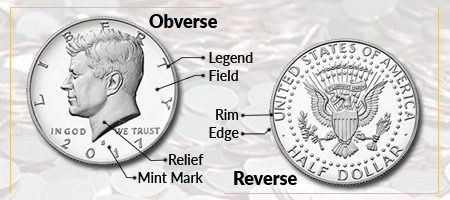
Why is the Flip Side 'Flipped'? In other words, why, when you flip a coin over after looking at the heads side,
is the picture on the tails side upside down?
All U.S. coinage is produced with what is commonly called a "coin turn." That means that the reverse side
(tails) of the coins is upside down to the obverse side (heads). While we have researched the history of this practice,
we have been unable to determine the exact reason for this custom. The Mint still produces U.S. coinage in this manner
for traditional reasons and not due to any legal requirement.
What portraits are shown on our circulating coins?
United States coins currently in circulation show the following portraits: Abraham Lincoln on the one-cent coin; Thomas
Jefferson on the nickel; Franklin D. Roosevelt on the dime; George Washington on the quarter; and John F. Kennedy on the
half-dollar coin. The one-dollar coin, which was last produced in 1981, bears the portrait of Susan B. Anthony. A new
one-dollar coin, which will be released into circulation in 2000, will bear a portrait of Sacagawea.
Why does the portrait of Abraham Lincoln on the cent coin face to the right when all other portraits of Presidents on
U.S. circulating coins face to the left?
The likeness of President Lincoln on the one-cent coin is an adaption of a plaque executed by Victor David Brenner,
an outstanding portraitist and sculptor. President Theodore Roosevelt was so impressed with Mr. Brenner's design of a
Lincoln plaque that he recommended to the Secretary of the Treasury that this design be placed on a coin to be issued
in the Lincoln Centennial Year, 1909.
The direction that Lincoln faces on the cent was not mandated -- this was simply the choice of the designer.
Can you explain the policy about the dates that are stamped on United States coins?
Traditionally, all United States coins have been dated in the year of their production. This policy was
interrupted, though, because of the coin shortage and the speculation in rolls and bags of coins that took
place in 1964. As a result, Congress passed legislation so that after the calendar year 1964 coinage was
produced, the United States Mint could still use the 1964 date. Starting in 1965, therefore, all
denominations of United States coins continued to be struck with the 1964 date.
When the
Coinage Act of 1965 was passed, it became mandatory that
the Mint continue to use the 1964 date on all 90 percent
silver coins (half-dollar coins, quarter-dollar coins,
and 10-cent coins). Therefore, all of the 90 percent
silver coins that the Mint manufactured in 1964, 1965,
and 1966 bears the date 1964. The last of the 90 percent
silver quarter-dollar coins was struck in January 1966,
the last of these 10-cent coins was struck in February
1966, and the last of these half-dollar coins was struck
in April 1966. The Coinage Act of 1965 also made it
mandatory that the clad coins be dated not earlier than
1965. Therefore, all of the clad coins actually
manufactured in 1965 bear the 1965 date. All of the clad
coins made through July 31, 1966, bear the 1965 date.
The first clad 10-cent coin was struck in December 1965,
the first clad quarter-dollar coin was struck in August
1965 and the first clad half-dollar coin was struck in
December 1965. In December 1965, the decision was made
to change the 1964 date on the five-cent coins and the
one-cent coins to 1965, as one step in catching up on
normal coin dating. From December 1965 through July 31,
1966, all one-cent coins and five-cent coins were struck
with the 1965 date.
All
denominations of United States coins minted from August
1 through December 31, 1966, carried the 1966 date.
Normal dating procedures were resumed on January 1,
1967, and continued through 1974. Legislation was
enacted in 1973 authorizing design changes in the
reverse designs of the one-dollar coins, the half-dollar
coin and the quarter-dollar coin in observance of the
Nation's Bicentennial, and the adoption of a symbolic
date (1776-1976) in place of the usual single year
designation. The only single-dated coins issued during
1975 and 1976 were the 10-cent coin, the five-cent coin,
and the one-cent coin. Beginning on January 1, 1977, the
Bicentennial designs were retired and both the designs
and dating procedures in use prior to the national
celebration are now in force.
What can you tell me about the words "E
Pluribus Unum" on our coins?
The motto
"E Pluribus Unum" was first used on our
coinage in 1795, when the reverse of the half-eagle ($5
gold) coin presented the main features of the Great Seal
of the United States on the scroll of which this
inscription belongs. The same device was placed on
certain of the silver coins in 1798, and so the motto
was soon found on all of the coins made out of precious
metals (gold and silver). In 1834, it was dropped from
most of the gold coins to mark the change in the
standard fineness of the coins. In 1837, it was dropped
from the silver coins, marking the era of the Revised
Mint Code.
The Act of
February 12, 1873, made this inscription a requirement
of law upon the coins of the United States. A search
will reveal, however, that it does not appear on all of
the coins struck after 1873, and that not until much
later were the provisions of this Act followed in their
entirety. From facts contained in records at the United
States Mint, it appears that officials did not consider
the provisions of the law to be mandatory, but rather,
discretionary. The motto does appear on all coins
currently being manufactured.
The motto
as it appears on United States Coins means "One Out
of Many," and doubtless has reference to the unity
of the early States. It is said that one Colonel Reed of
Uxbridge, Massachusetts, was instrumental in having it
placed on our coins.
When is the Treasury Department going to change
the designs on our coins in circulation? What is the process that is involved?
This is a
topic about which we get many inquiries. It is important
to note, first, that the designs chosen for United
States circulating coinage are, for the most part,
mandated by the Congress. The coin redesign issue has
generated significant Congressional interest in recent
years. There have been many legislative proposals
introduced in Congress providing for the redesign of
U.S. circulating coinage. The most recent such
legislation that was enacted by Congress and signed by
the President provides for the production of 50
"Statehood" quarters that will be manufactured
over the next 10 years. Each one will bear a reverse
design honoring one of the 50 states. Also, beginning in
2000, the Treasury Department will begin circulating a
new one-dollar coin. The law provides that no change
shall be made in the design of any United States coin
more often than once in 25 years. The alternative is
specific authority from the Congress. The law also
permits the Director of the United States Mint to
determine what designs shall be placed upon United
States coins as they become eligible. However, the
Secretary of the Treasury generally defers to Congress
in this matter, and there is no intention to alter this
arrangement. The last administrative changes to our coin
designs were many years ago. First, in 1946 the likeness
of President Roosevelt was placed on the ten-cent coin.
Also, in 1959 the reverse of the one-cent coin changed
to honor the 150th anniversary of President Lincoln's
birth.
Sometimes
when a new design is approved, a number of sculptors are
invited to submit models. On other occasions national
competitions have been held. Also, through the years the
Mint's sculptors have prepared the designs. The
components of the design may be prescribed by law, or
the artists allowed latitude in creative preparation.
The designs are then placed before the Commission on
Fine Arts for consideration of their artistic merits and
submitted to the Secretary of the Treasury for final
approval. All details of execution and manufacture are
handled by the Director of the Mint.
Always to
be considered in preparing a design are the inscriptions
and devices that are required by law. Title 31, Section
324 of the United States Code states that "Upon the
coins there shall be the following devices and legends:
Upon one side there shall be an impressions emblematic
of liberty, with an inscription of the word
"LIBERTY" and the year of the coinage and upon
the reverse shall be the figure or representation of an
eagle, with the inscriptions UNITED STATES OF AMERICA
and E PLURIBUS UNUM and a designation of the value of
the coin; but on the dime, 5-, and 1-cent piece the
figure of an eagle shall be omitted; and the motto IN
GOD WE TRUST shall be inscribed prior to May 18,
1908." The Act of July 11, 1955, amended the last
provision and provides that IN GOD WE TRUST shall now
appear on all United States coins and currency.
Generally speaking, these requirements are
followed.
|